
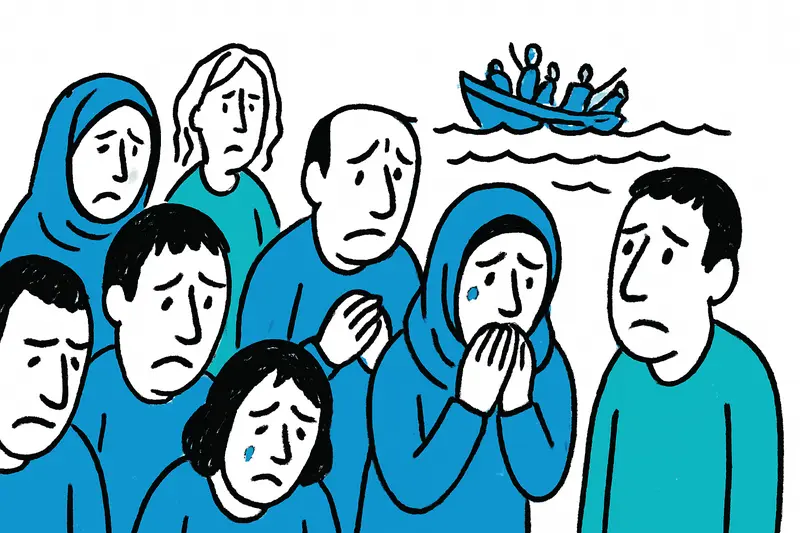
18 People Missing off Mallorca — A Call to Politics and Society
After nine days adrift in the Mediterranean, five survivors were found south of Cabrera — 18 people remain missing. Why does this route repeatedly become a death trap, and what is missing on Mallorca and in Europe to prevent such tragedies?
18 People Missing off Mallorca — A Call to Politics and Society
On 21 November 2025, south of the island of Cabrera, only five people were rescued from a small, stranded boat. The rescued say that many more had boarded the vessel — currently 18 people are reported missing. Nine days on the open sea, the cold, the thirst: those who live here know the hard stories of the sea, but this case raises a painful, central question: why does this route repeatedly become a death trap? Further details are available in Nine Days on the Mediterranean: How Could Help Arrive So Late?.
What the survivors tell — and what is lacking
The five people who received medical care in Ibiza report exhaustion, hypothermia and despair. Some fellow passengers jumped into the water, apparently hoping to reach land by swimming. Whether they ever made it ashore is unclear. Such images remain in the harbors: the clinking of cups in the café at the marina, fishermen mending their nets on the mole of Colònia de Sant Jordi, and the distant call of a coast guard setting out — all of it reminds us how close life and death lie here.
The search — logistical and political limits
Boats and aircraft scoured the sea areas south of the Balearic Islands for days. Yet the search is expensive, weather-dependent and often politically entangled. Official sources speak of cooperation between Spanish sea rescue and the Guardia Civil. Aid organizations warn in parallel that there have been several missing boats heading for the Balearics in recent months, including incidents such as Patera Capsizes Near Portopetro — One Dead, Three Missing and Many Unanswered Questions and Two Dead on Balearic Coasts: When the Sea Withholds Answers. This raises questions: are the local rescue capacities sufficient? Are there adequate early-warning systems? And how is the search coordinated across international waters without gaps arising from unclear responsibilities?
What is rarely discussed
Four aspects are often underexposed in public debate. First: the mental state of the survivors. Weeks at sea leave traumas that often only become visible after days of rest. Second: the burden on volunteer helpers in Mallorca, who are often first contacts, search for interpreters, and provide clothing and hot drinks. Third: the forensic and bureaucratic challenge of identifying missing persons — without DNA matching and international registers many cases remain unresolved. Fourth: the role of information campaigns in the regions of origin — who warns about the risks and how credible such warnings are perceived is rarely discussed.
Concrete proposals — what could help now
The situation requires concrete measures, not slogans. Short term: more coordinated search-and-rescue operations around the Balearics, better satellite and AIS analysis to detect small boats early, and mobile medical teams on Ibiza and Mallorca for first aid and trauma care. Medium term: regional agreements for speedy information and DNA exchanges so families receive certainty faster. Also urgently needed: safe, legal alternatives to life-threatening crossings — humanitarian corridors and accelerated visa procedures for those in need of protection could relieve pressure on smuggling routes.
A question of solidarity off our coast
On the streets of Palma, in small bars and on the beaches people quietly speak about the images of overcrowded rubber boats. Some want more control, others more humanity. Both require political decisions: investments in sea rescue and social services cost money, as do diplomatic efforts that are often uncomfortable. But every delayed measure has a name: people who disappear in the Mediterranean.
For Mallorca this means concretely: we must name the weak links in the rescue chain, better protect volunteer helpers and create long-term prospects for arriving people — not only as short-term emergency aid, but with integration and legal pathways that offer real prospects. Only in this way can the recurring tragedy on this route be sustainably reduced.
The search for the 18 missing continues. The island breathes between everyday life and sirens — and asks: do we only want to react, or finally act? We will continue to follow the story and report as soon as new information is available.
Frequently asked questions
What happened to the boat south of Cabrera near Mallorca?
Why are migrant crossings near Mallorca so dangerous?
What do survivors of the Mallorca boat incident say happened at sea?
How are missing boats off Mallorca normally searched for?
What help do migrant survivors need after arriving in Mallorca or Ibiza?
Why is Colònia de Sant Jordi mentioned in stories about sea rescues in Mallorca?
What can Mallorca do to reduce deaths on the Mediterranean route?
Are there legal and safe alternatives to dangerous boat crossings toward Mallorca?
Similar News

When coercive fines aren't enough: Could holiday rental owners soon face prosecution?
The island administration is stepping up action against unauthorized holiday rentals: high daily coercive fines up to €5...

Palma Airport on an Expansion Course — Who Decides How Much Growth the Island Needs?
Aena and Madrid are planning multi-million euro investments for Son Sant Joan and project higher capacities. Concern is ...
Who Gets Left Out? Why Overbookings Will Hit Many Mallorca Travelers This Summer
On hot check-in days at Son Sant Joan, frustrated travelers pile up. New figures from Reclamador.es show that a large sh...
When the Handyman Came: How an Engagement Ring Disappeared in Mallorca and What It Says About Trust
During a repair in Andratx a highly personal engagement ring went missing — a case that calls not only for punishment bu...
How Burglars Test Fincas in Mallorca — and What You Can Do About It
The Spanish National Police warn of a simple but effective trick: small markings on doors reveal whether a finca is occu...
More to explore
Discover more interesting content

Can Cap de Bou

Townhouse Lleo 72
