
Nine Days on the Mediterranean: How Could Help Arrive So Late?
A plane spotted a boat 40 nautical miles south of Cabrera: five survivors, around 18 missing. Why did the boat drift unnoticed for nine days?
Nine Days on the Mediterranean: How Could Help Arrive So Late?
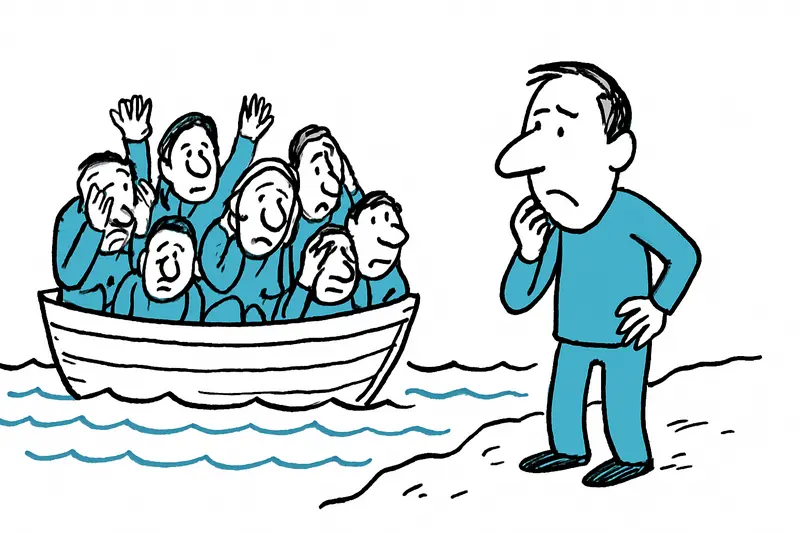
Late on Wednesday afternoon a surveillance plane discovered a small boat about 40 nautical miles south of Cabrera. On board: five exhausted survivors. According to them, the boat had departed from Algeria and originally carried about 23 people. Around 18 people have since been declared missing. The question now directed at the piers in Palma and the ports of Ibiza is simple yet hard to answer: How can a boat drift for nine days — and why does help reach people so late?
What we know — and what remains unclear
The five rescued were brought to Ibiza on a rescue ship, handed over to the national police and examined as a precaution at Can Misses hospital; no severe injuries were reported. A Frontex aircraft had made the emergency visible. The survivors' statements are fragmented: some said fellow passengers had fallen or jumped into the water days earlier. Others could not give precise times. Investigations are ongoing, with interviews and forensic steps — but the overall picture remains fragmentary.
Rescue by chance — or a sign of a system
That a randomly looking aircraft and a passing passenger ship have now saved five people is consoling — and alarming at the same time. On Mallorca's promenade these days you can still hear the wailing whistle of the Gregal in your ears; the waves slap against the breakwater, passersby stop and stare at a sea that swallows so many stories. The waters around Cabrera are a busy transit axis; wind and currents can carry boats far within a few hours. But what if no one is permanently searching along that transit route?
Aspects rarely on the radar
Public debate often revolves around numbers, laws and political blame; recent multiple arrivals documented in Six boats, 75 people: When the nights on the coasts grow denser illustrate the pressure. Less visible are practical gaps: there are time windows without a constant SAR presence (Search and Rescue), unclear responsibilities between authorities and delays from alarm to actual localization. Commercial ships sometimes hesitate to share positions for fear of legal or bureaucratic consequences — a circumstance that does not appear in any statistic, but costs lives, as in the case of Patera Capsizes Near Portopetro — One Dead, Three Missing and Many Unanswered Questions.
Equally underappreciated is the psychological dynamic on board: overcrowded people standing in the sun for days react with panic or despair. That can lead people to go into the water — not only from exhaustion, but also in hope of being noticed more quickly by a passing ship. Such scenarios complicate the reconstruction of events and the search for the missing.
Concrete opportunities: What could change now
The tragedy indicates concrete starting points. In the short term, clearer communication channels are needed: automatic forwarding of sightings (AIS, phone chains between aircraft, merchant shipping and SAR centers), binding reporting obligations without legal pitfalls for shipmasters, and faster activation of response units. Ports should have interpreters, basic medical care and psychological emergency teams ready so that rescued people are not left alone.
In the medium term, permanent civilian SAR bases along the Cabrera–Ibiza axis would be useful — permanent boats, drones for search operations and training programs for port police and volunteers. Technically, closer integration of satellite data, AIS feeds and drone footage into a shared search network that fills gaps between traditional services is conceivable.
In the long term, the only sustainable solution remains mitigating the root causes of flight: legal access routes, international cooperation against smuggling networks, and regional prevention projects in departure areas. Without this work the Mediterranean remains a deadly bottleneck — and islands like Mallorca and Ibiza will continue to feel the human consequences.
What the islands can do now
For Mallorca and Ibiza this means specifically: better equipment and training for port police, regular exercises with SAR partners, permanent contacts for relatives and transparent information channels about investigations. In neighborhoods with large migrant populations, outreach and trust-building could help reduce dangerous crossings. People sit on the piers in the evenings and listen to the wind — perhaps with the same uneasy feeling as on the day the Gregal howled through the streets. The response to such events is neither quick nor simple. It begins with the realization that chance must not be a rescue strategy.
We will continue to follow this and report as soon as investigations and rescue plans shed more light on the situation.
Frequently asked questions
Why do migrant boats sometimes drift for days in the waters near Mallorca?
What happens when rescue services find a migrant boat near Mallorca?
How far is Cabrera from Mallorca, and why is the area important for rescues?
Can people swim safely in the sea around Mallorca when the Gregal wind is blowing?
Why are there sometimes delays before rescue teams reach boats near Mallorca?
What is Can Misses hospital in Ibiza used for after sea rescues near Mallorca?
What should ports in Mallorca have ready for rescued migrants?
What long-term solutions are being discussed for migrant crossings to Mallorca?
Similar News
The End of the Cheap Ride? Why Mallorca Is Hit Harder by the Fuel-Price Shock
Gasoline and diesel average close to two euros per liter. What this means for commuters, supply chains and renters in Ma...
Relaxed liquid rules in Munich: What Mallorca travelers will notice
At Munich Airport the 100-milliliter rule will be lifted at all checkpoint lanes — thanks to new CT scanners passengers ...
For 45 Years on Mallorca — and Then This: How a Market Visit in Santa Ponsa Became a Lesson
A woman who has lived on the island for decades lost money and important documents at the Mercat Setmanal in Santa Ponsa...
10 percent surcharge on the beach: How legal and transparent is the extra charge at Playa de Muro?
A German part-time resident noticed days after a restaurant visit in Playa de Muro that the bill included a flat ten per...

Body near the Llevant Market: What this death says about our city
A man was found dead on Sunday afternoon near the Llevant Market. Police say the death appears natural. The scene raises...
More to explore
Discover more interesting content

Can Cap de Bou

Townhouse Lleo 72
