
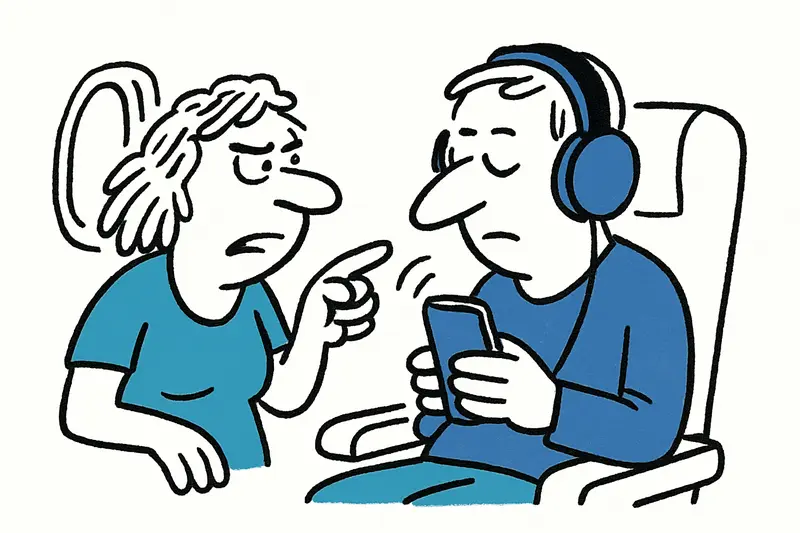
Headphone requirement on board: United tightens rules — what travelers to Palma should know
Headphone requirement on board: United tightens rules — what travelers to Palma should know
United now requires headphones for audio played on board and threatens flight bans in extreme cases. A reality check for travelers to Palma.
Headphone requirement on board: United tightens rules — what travelers to Palma should know
Quiet consumption or sensible rule? A look at the new practice, its limits and consequences for flights to Son Sant Joan
Key question: Does the new instruction to ban the use of speakers on board really serve the protection of quiet or does it open the door to blanket, hard-to-enforce sanctions against travelers?
In short: A major American airline has revised its conditions of carriage and now explicitly requires passengers to use their own headphones when playing audio. The planned Newark–Palma route is upcoming, so the rule will also affect passengers flying to Mallorca.
Critical analysis
At first glance the intent is understandable: nobody likes loud videos from the seat behind, and cramped cabins can make conflicts escalate quickly. The challenge lies in implementation. First, the wording is broad: 'when audio is played, headphones only' leaves little room for misunderstandings or exceptions (for example for small children or hearing aid users). Second, the question of proportionality arises: single violations, accidental loud conversations or technical problems with headphones are not the same as disruptive or aggressive behaviour. Third: sanctions such as a permanent flight ban raise legal and practical questions — how is 'repeated misconduct' documented, what hearing options exist, who decides? For similar legal considerations, see Judges in Palma strengthen passenger rights — a win with open questions.
What is missing in the public debate
The discussion often focuses on the mere idea of a rule rather than its application. Answers to key points are missing: how does the airline inform passengers in advance, how does the crew document incidents, and how can passengers lodge objections? The social component is also rarely examined: travelers from different cultures have different notions of volume and privacy; standardized sanctions can foster injustice.
Everyday scene from Palma
A Friday morning in Palma: families haul suitcases through Son Sant Joan’s hall, the scent of freshly brewed coffee rises along the Paseo Marítimo, in a corner of the gate someone taps feverishly on a smartphone with the volume at the edge of audibility. This is exactly where the small conflicts the airline wants to regulate arise. Yet in the rush of departure not everyone is prepared with spare headphones or a quiet solution.
Concrete solution approaches
- Transparency before the flight: clear notices at booking, check-in and at the gate; short info on boarding passes or via SMS so no one is surprised.
- Proportionate enforcement: start with a verbal request, provide free disposable headphones or earplugs if needed; documented escalation steps for repeated, provocative misconduct instead of immediate permanent bans.
- Human conflict resolution: train crew in de-escalation, set clear rules for documentation and a transparent complaint procedure for passengers.
- Airport infrastructure: sell or rent inexpensive headphones at shops and vending machines at gates – many travelers to Mallorca are spontaneous; a reminder audible at the gate would avoid trouble, as described in Ryanair Hand Luggage Checks: Between Efficiency and Frustration at Palma Airport.
- Consideration and education: campaigns that indicate simple onboard etiquette – short, local and in several languages.
What airlines should consider
Legally, conditions of carriage are a legitimate instrument, but they must be fair and enforceable. A rule that is blind to exceptions or lacks a transparent sanctioning chain creates more conflicts than it solves. A recent example of changes in carriage rules can be seen in Discover Airlines bans the use of powerbanks on board. For airports like Son Sant Joan, solutions work better when they start on the ground rather than only in the air.
Concise conclusion
The idea of preventing speaker disturbances on board is understandable. What matters is how strictly and how humanely the new requirement is applied. Those who want considerate passengers should inform them, equip them and treat them fairly — otherwise the rule risks politicizing the issue and unfairly affecting travelers.
Frequently asked questions
Can I use my phone speaker on a flight to Mallorca?
Why are airlines asking passengers to wear headphones on board?
What happens if I do not follow the headphone rule on a United flight to Palma?
Do I need to bring my own headphones for a flight to Mallorca?
Are there exceptions to the headphone rule on United flights?
What is Son Sant Joan Airport like for flights arriving from Newark?
What should I pack for a long flight to Mallorca if I want to avoid cabin noise problems?
Will headphone rules on flights to Mallorca be enforced strictly?
Similar News

"Expensive chaos" and many open questions: What clients can do when a lawyer suddenly stops responding
Several clients complain that a well-known German lawyer in Mallorca has been unreachable for months. Key question: What...

TV tip: 'The Last Problem' — Mallorca as the setting of a classic crime
A classic whodunit on Mallorca: A new miniseries set in spring 1959 brings storm, an isolated hotel and a dense web of s...

Nipping Sea Creatures: Why Bathers in Cala Major and Elsewhere Should Be Cautious
In Cala Major, bathers have reported being nipped by small fish. What is behind it, how can problems be avoided — and wh...
Forced eviction in Santa Catalina: When a 65-year-old slept in her car and showered on the beach — a question of responsibility
The story of Pilar López from Santa Catalina represents a problem affecting many Mallorcans: How can an island with a bo...

New traffic rules from October 1: What Mallorca visitors and locals need to know
From October 1, 2026, Spain will implement far-reaching changes to traffic regulations. Important for Mallorca: greater ...
More to explore
Discover more interesting content

Can Cap de Bou

Townhouse Lleo 72
