
Chaos at Plaça d'Espanya: Why a Bus Rammed a Taxi — and What's Missing Now
Chaos at Plaça d'Espanya: Why a Bus Rammed a Taxi — and What's Missing Now
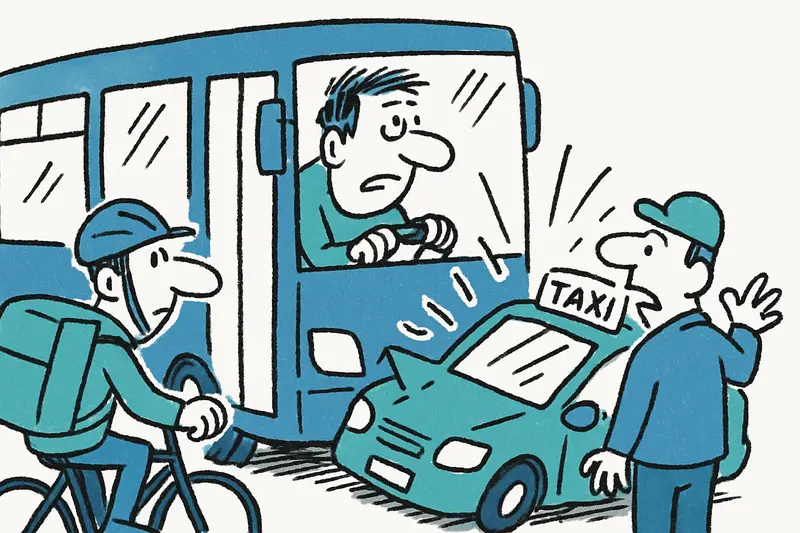
A bus on line 19 collided with a stationary taxi at Plaça d'Espanya in the early afternoon. A reversing camera filmed the incident. We ask: was it driver error or a systemic problem? A critical assessment from Palma.
Chaos at Plaça d'Espanya: Why a Bus Rammed a Taxi — and What's Missing Now
Reversing camera captured the moment, investigations underway — but the questions are bigger than the single accident
Just before 2:40 p.m., Plaça d'Espanya was as lively as ever on an ordinary afternoon: delivery riders with open jackets, the bus lane humming, and the small kiosk opposite smelling of freshly brewed café con leche. Similar local episodes have previously raised questions, for example Pere Garau: Market and delivery traffic — why the coexistence became dangerous.
My guiding question is: was this a one-off driving mistake or does the incident reveal a deeper safety problem in the urban public transport system? This is not an academic question. If public transport cannot maneuver reliably and predictably in tight, traffic-heavy areas like Plaça d'Espanya, it affects not only individual taxi drivers but all pedestrians, commuters and students on their way to university.
The facts we can reconstruct from eyewitness reports and the video: the bus passed the stop and collided with the taxi-like vehicle that was stopped with active hazard lights just before the stop. A passing car's reversing camera recorded the scene; that footage is now with the police. Other incidents have also relied on captured footage to clarify events, as in Nighttime Escape on the Camí dels Reis: An Accident, Many Questions.
Critical analysis: in the footage the manoeuvre does not look like a light bump — it appears directed toward the stationary vehicle. Whether it was intentional, an avoidance manoeuvre, a technical malfunction or driver stress can only be clarified by the investigation. What is already noticeable: the situation at Plaça d'Espanya is defined by narrow lanes, numerous bus stops, heavy pedestrian flows and a timetable pressure that can put drivers under time constraints. When schedules, staff shortages or unclear right-of-way rules combine, dynamic driving risks increase.
What is currently missing from the public debate: the structural conditions under which bus drivers work. Individual incidents are discussed, but rarely duty rosters, fatigue, training standards or the quality of onboard technology (brakes, assistance systems, cameras). Equally under-discussed is the handling of video recordings: who may view footage, how it is archived, and how transparent investigations are when municipal transport operators are involved.
Concrete gaps that could be addressed on the island: first, mandatory telematics in all scheduled buses that record speed, braking events and steering inputs and can be analysed after incidents. Second, clear rules for stops: no parking or taxi zones in critical areas, separated bus bays and visible markings. Third, regular, publicly accessible safety audits of fleets — including driver training for critical manoeuvres in urban environments.
An everyday scene from Palma for context: in the evening residents stand on Rua de l'Olivar and hear the constant beeping of buses; during the day Plaça d'Espanya becomes a bottleneck when delivery vehicles block entrances and cyclists try to weave between buses and the pavement. This is the real backdrop in which such an incident occurs — people, noise, short reaction times.
Concrete solutions: temporary measures could reduce danger quickly — increased police presence at peak times, mobile barriers for pedestrian islands and improved signage. Medium-term measures need mandatory crash and incident reporting for municipal operators, anonymised publication of incident statistics and independent reviews of accident causes. Long-term, a discussion about working conditions is necessary: realistic duty schedules, mandatory breaks and psychological support for drivers operating under stress.
Legally, securing and analysing the reversing camera footage is important — it can clarify more than questions of guilt: it helps reconstruct sequences, identify areas for improvement and assign responsibilities. High-profile cases including After head-on crash in Palma: Fleeing and many questions – 31-year-old dies show the need for transparent handling and thorough investigation.
Punchy conclusion: a single accident image is not just the result of a brief action at the wheel, but often the consequence of daily routines, systemic pressures and a lack of transparency. Investigations must thoroughly clarify what happened that afternoon at Plaça d'Espanya. Even more important would be visible improvements resulting from the incident — for safety on our streets and for the public's trust in public transport.
What matters now: prompt clarification, clear communication from those responsible and an honest discussion about structural causes. Palma can no longer afford such accidents — not from a human perspective.
Frequently asked questions
What happened at Plaça d'Espanya in Palma when a bus hit a taxi?
Why are accidents in Plaça d'Espanya, Mallorca such a concern for pedestrians and commuters?
Can bus camera footage be used to investigate an accident in Palma?
What safety improvements could help buses operate more safely in Palma?
Is Plaça d'Espanya in Palma dangerous during busy times of day?
Could driver stress or tight schedules play a role in bus accidents in Mallorca?
What is missing from the public debate about bus safety in Palma?
What should Palma do after a bus accident at a busy place like Plaça d'Espanya?
Similar News

More water than last year: Mallorca's reservoirs breathe easier
September rain refilled the Tramuntana's reserves: overall fill around 35 percent, Cúber at 40.42 percent, Gorg Blau at ...

Three Luxury Hotels in Banyalbufar: Lots of Money, Many Questions
A Danish investor plans three exclusive accommodations in Banyalbufar — including the historic Son Valentí. The announce...
2.1 tonnes of cocaine on sailing yacht off Spain's coast – a reality check for the coastguard
A 14-metre yacht was seized with 2.1 tonnes of cocaine. Who monitors the ports, how does the international hunt succeed ...

Heat Bonus in Mallorca: 100 Euros Extra for Outdoor Staff at MarSenses
MarSenses pays employees who worked outdoors in August an extra €100 as recognition. Lighter uniforms, reduced hours for...
Renovating in Mallorca: What You Really Can Do Without Neighbour Consent
Many think they can do whatever they want in their apartment. That's partly true — but only as long as structural elemen...
More to explore
Discover more interesting content

Can Cap de Bou

Townhouse Lleo 72
