
Nighttime Escape on the Camí dels Reis: An Accident, Many Questions
Shortly after 2:30 a.m.: A car crashes into a parked vehicle on the Camí dels Reis, and the driver disappears into the crowd in front of a nightclub. No serious injuries — but a sting to the sense of safety among night-goers. What is missing in Mallorca to make such scenes rarer?
Accident on a summer night: honking, laughter — then a bang
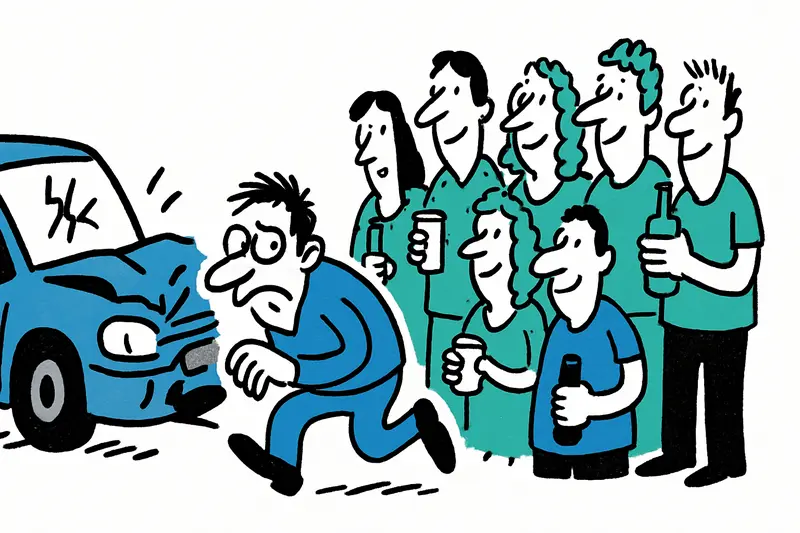
It's about 2:30 a.m., the air is still warm, somewhere a DJ is playing a bass line, taxi horns mix with the murmur of voices. On the Camí dels Reis a dull bang cuts through the scene: a car hits a vehicle parked at the roadside. The driver gets out, glances briefly at the collision — and disappears into the crowd in front of a nightclub, between security staff, dancing guests and smoking bouncers.
Key question: Why do people decide to flee after an accident?
Fleeing quickly is not only foolish, it is symptomatic. Why don't people get out after a collision, call for help or wait for the police? Part of the answer lies in the moment: shame, fear of costs or simply the hope of getting away unnoticed. On Mallorca, infrastructural reasons add to this: late parties, gaps in night transport and the distance between club strips and hotel areas, as shown in Nighttime accident on the Paseo Marítimo: alcohol, a tripping hazard and many questions. In short: someone who is drunk and standing in the middle of the night thinks only short-term — and often makes poor decisions.
What is missing in the public debate
Discussions usually revolve around punishments: fines, penalty points, loss of a driving licence. That is important, but not everything. Less visible are structural causes: missing reliable night bus lines, uneven taxi rates depending on district and time, unclear information for tourists with rental cars and the lack of responsibility shown by some event organisers; similar questions were raised in Fatal accident in Alcúdia: Who is responsible — and what needs to change?. Club guests are released late, stand in groups on the street — and often choose what seems the quickest way home: the car.
The case on the Camí dels Reis — facts in brief
The police identified the fleeing driver during the night. A breathalyser test showed levels well above the legal limit. Fortunately there were no injured persons — but the incident shook residents and night-goers. Legally, the 50-year-old driver faces fines, penalty points and a possible criminal proceeding for driving under the influence and leaving the scene of an accident, as outlined in DGT guidance on alcohol and driving penalties.
Who bears responsibility — and why prosecution alone is not enough
Of course the individual driver must be held accountable. But punishment does not fix the causes: when practical, affordable alternatives are lacking, the likelihood increases that people will see their car as the only option late at night. The police can carry out checks, impose fines and create deterrence. What is missing, however, is a coordinated strategy by municipalities, clubs, taxi organisations and rental companies.
Practical solutions to reduce nighttime escapes
Saying simply 'more checks' falls short. Better are concrete measures that have an immediate effect.
1) Night buses and shuttles: Extended schedules on weekends and seasonal shuttles between major club areas and hotel zones — visibly advertised at venues and in several languages (TIB Mallorca night bus schedules).
2) Transparent taxi pricing: Fixed prices for night routes or official taxi stands in front of nightclubs reduce bargaining pressure and uncertainty.
3) Mandatory information: Rental companies and event organisers should provide clear guidance on getting home safely at handover or entry — not as moralising, but as a service: 'How to get home sober'.
4) Coordination with clubs: Partnerships between organisers and transport providers — discounts for shared transfers, coordinated closing times, more doormen who watch for safe departures.
5) Visible, informative checks: Checkpoints have a deterrent effect. Even more effective are combined measures: checks plus information teams that immediately offer alternatives ('There is a shuttle in 10 minutes').
A view from the neighbourhood
A resident puts it pragmatically: 'You can hear the music from here, but someone simply running away — that was new. It shows that not everyone thinks about the consequences.' You can hear the faint rustle of cicadas in the palms, see the lights on the promenade, and know: nights like these are part of island life. But they must not become the norm, where the sense of safety becomes a variable.
Outlook: More than one incident — an opportunity
The legal process will have consequences for the individual. For the community, the incident on the Camí dels Reis should be more than a loud episode on a warm summer night: it can be the trigger to rethink routines in night-time operations and close concrete gaps. Police, municipalities and businesses are called upon — other episodes, such as the Nighttime collision at the border of Son Banya: One dead, several fleeing — questions remain, underline this: the memory of this night could be the impetus needed so that in future fewer cars flee and more people get home safely.
Frequently asked questions
Why do some drivers leave the scene after a late-night accident in Mallorca?
Is it safe to drive in Mallorca after a night out at a nightclub?
What are the penalties for drink driving and leaving an accident scene in Mallorca?
What transport options are available in Mallorca late at night?
What should tourists know about driving a rental car in Mallorca at night?
What is the Camí dels Reis in Mallorca known for?
Are taxis in Mallorca reliable late at night around nightlife areas?
What can Mallorca nightlife venues do to help guests get home safely?
Similar News

Maribel: Five Decades of Service – Housekeeper from Peguera Celebrated with a Special Honor
Over 50 years in the hotel business: María Isabel “Maribel” Molinos was honored in Palma at the Nit del Turisme by Unive...
Orange Alert over Parts of Mallorca: Are We Prepared?
Dark clouds and an announced wet spell have triggered an Orange alert in parts of Mallorca. A reality check: what's miss...

Sundair & Co.: Sale speculation and what it could mean for Mallorca
Rumors about a possible sale of the airlines Sundair and Fly Air 41, which belong to Schauinsland-Reisen — and whether b...
Anne Wünsche in Mallorca: A job offer with a catch — who fits the role of personal assistant?
Influencer Anne Wünsche has left Berlin and is urgently looking for a full-time personal assistant in Mallorca. Why the ...
Daily from New York: Palma Between Boom and Strain
United will increase the Newark–Palma route to daily flights in 2027 using Boeing aircraft (231 seats). What does the in...
More to explore
Discover more interesting content

Can Cap de Bou

Townhouse Lleo 72
