
Hidden Images and Battlements: New Life for Palma's Torres del Temple
Hidden Images and Battlements: New Life for Palma's Torres del Temple
During restoration work on the 12th-century Torres del Temple gate in Palma's old town, Islamic wall paintings, medieval battlements and old staircases were uncovered. The gate is planned to become a museum of the city's history.
Hidden Images and Battlements: New Life for Palma's Torres del Temple
Islamic wall paintings, original battlements and medieval stairs uncovered beneath plaster
You're standing on the Calle Temple, where the old town still feels narrow and a little rough: handcarts roll by, a café sets out its first chairs, a construction crane appears among the roofs, a reminder of other works such as Demolition in Palma: When Reconstruction Replaces the Original.
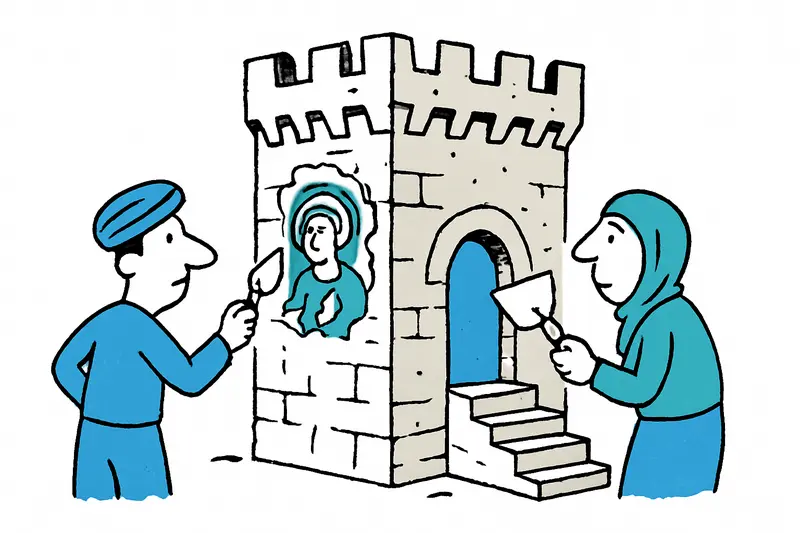
The restoration has revealed more than fresh mortar joints: experts uncovered traces of Islamic wall painting beneath old coats of paint. Color fragments in ochre and red, ornamental stripes that show the hands that painted here long before the 19th or 20th century.
Original battlements also emerged — those angular, chessboard-like structures crowning a wall — along with various arches that make the gate's medieval construction readable. Parts of old staircases that had been left inside the building and covered by later layers are visible again.
For the neighborhood, these are small sensations. Anyone who last stood on a corner of Calle Temple will now notice how the dust from the construction site mixes with the scent of freshly baked ensaimadas and how the clatter of tools has become the new background music. It is an everyday picture: a ladder, a bucket, a restorer working with a fine brush — and behind them remnants of a history that suddenly begins to speak again.
The city councilor and heritage officers have a concrete idea: the gate is to be transformed into a museum presenting Palma's history from prehistoric times to the Middle Ages. It's a big promise, because such a place brings a piece of the city's history back to a location that is itself historic.
Why is this good for Mallorca? Because such projects combine two things: local memory and visitor interest. A small museum on Calle Temple would create space for schools, residents and tourists who seek more than postcard views. It helps strengthen the old town ensemble and preserve crafts — stonemasons, restorers, conservation techniques — that would otherwise rarely be publicly visible.
What is still missing from Palma's discussion is a clearer idea of how the museum will operate: Which objects will be displayed? How much space will be left for temporary exhibitions? How will educational offers for children and residents be organized? These questions need answers before the last scaffolding comes down.
Practical steps that now seem sensible include transparent interpretation plans, a participation process with the neighborhood and schools, and a focus on conservation follow-up — because exposed paintings need long-term climate management, not haste (see Collapse at Palma's City Wall: What Needs to Happen Now).
The mood on site is optimistic. In the mornings a street sweeper passes by, fishermen at the harbor keep working on their nets, and yet the city has received a small gift at this corner: a genuine view into the layers of time. For residents this sometimes means adjustment — construction work, changed access — but the prospect of an immediately tangible piece of history makes up for much.
My impression: the Torres del Temple are more than a building; they are a place where craft, memory and everyday life meet. If the restoration is guided wisely, the gate could become a small but fine training ground — for restorers, for teachers, for people who want to get closer to the city's history.
Outlook: In a few months you might walk through an opened arch and see not only stones but a small narrative of the city — from its earliest settlements to medieval fortifications. For Palma this would be an enrichment, modest and down-to-earth, without great pomp but with real benefits for the urban landscape and cultural education.
Anyone walking past Calle Temple in the coming weeks can pause more often, take in the smell of cement and pastries, and imagine how the revealed images and battlements will soon invite visitors to stop and reflect.
Frequently asked questions
What was uncovered during the restoration of Palma's Torres del Temple?
Why are the Torres del Temple in Palma important for the city's history?
Will Palma's Torres del Temple become a museum?
Can visitors see the medieval details at the Torres del Temple in Palma now?
What is the best time of year to visit Palma's old town if you want to see restoration work and heritage sites?
How does the Torres del Temple restoration affect the Calle Temple area in Palma?
What should schools and families know about a future museum at the Torres del Temple in Palma?
Why is climate control important for the newly exposed wall paintings in Palma's Torres del Temple?
Similar News
The Painter Who Lived Mallorca: Franz Taussig and His Century-Old Secret
A hundred years ago a young Viennese arrived in El Terreno, sketched the island and called himself Francis Caron. Today ...

Airport dispute: Bridge, forecasts and the question of responsibility
A video by the Spanish transport minister has ignited the dispute over DORA figures, capacities and local governance pow...
The Painter Who Invented Himself: How a Young Viennese Drew Mallorca
A hundred years ago a 19-year-old draftsman arrived in El Terreno. His diary and sheets, long known under the pseudonym ...
Released with Conditions: The Plus Ultra Suspicion and a Mallorcan Finca as Residence
A Dutch entrepreneur, sought in connection with the Plus Ultra case, was extradited to Spain after his arrest in Germany...

Haute Nuit in Puerto Portals: Fashion, Art and Indulgence by the Water
On October 2 the Lobster Club in Puerto Portals will be transformed into a stage for curated fashion, art and culinary e...
More to explore
Discover more interesting content

Can Cap de Bou

Townhouse Lleo 72
