
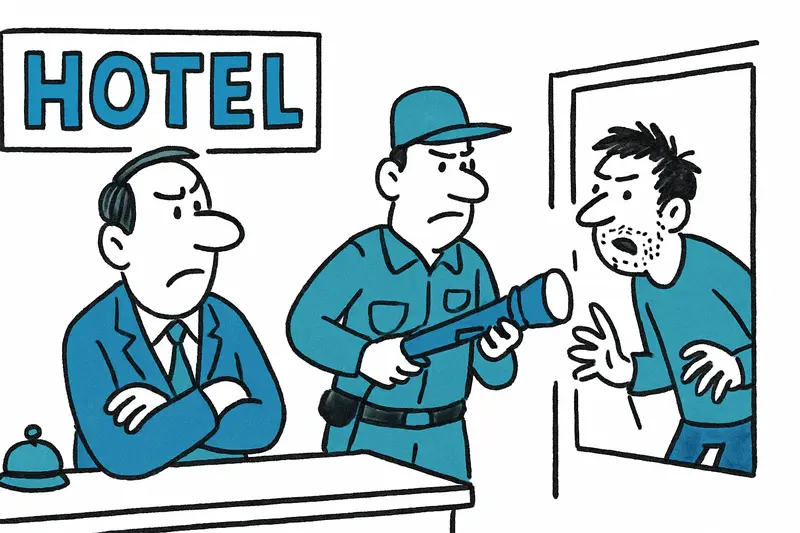
Hoteliers gear up: How effective are security firms against squatters?
Hoteliers gear up: How effective are security firms against squatters?
After squatting incidents last winter, many small hoteliers in Mallorca are taking action: surveillance, security guards and eviction firms are being used to protect properties during the low season. A reality check on what this means for hosts and guests.
Hoteliers gear up: How effective are security firms against squatters?
Key question: Do private surveillance and eviction services actually protect businesses — or do they simply push a social problem around the corner?
Summary of the situation
In recent months many hosts in Mallorca have reacted to incidents involving so‑called squatters by strengthening their security measures. Named cases include the Sol y Mar apartments in Cala Bona and a residential block in the Bellevue complex in Port d’Alcúdia. Many smaller businesses are now hiring specialized firms that handle surveillance, alarm management and, in extreme scenarios, evictions, while concerns about Illegal Holiday Listings in Mallorca: Why Enforcement Fails and How It Could Work Better persist.
Critical analysis
At first glance this sounds like a sensible response: monitor vacant apartments, control keys, and enable quick interventions when needed. The reality is more complex. Judicial evictions often take longer than expected; the police are stretched during peak times, and private security services are not allowed to forcibly remove people. The result is a mosaic of camera footage, police reports, court documents and expensive service contracts, without immediate legal certainty.
What is missing from the public debate
The debate focuses on "security" versus "costs", but rarely on prevention and the social dimension. Who are the people occupying these properties — homeless people, migrants, the unemployed (and issues such as Illegal Subletting in Mallorca: When Long-Term Tenants Become 'Inquilinos Pirata')? What role does vacancy in the low season play, in the context of trends discussed in When the Off-Season Gets Expensive: Why Mallorca's Hoteliers Keep Raising Prices? And how can municipalities, police and business owners work hand in hand to act preventively, instead of installing alarm systems after the fact?
An everyday scene
A Tuesday morning in Cala Bona: fishermen pull their nets ashore, espresso cups clink at the café on the pier, a cleaner pushes a trolley along the promenade. The owner of the Sol y Mar apartments stands at the gate, checks the lock, and makes a quick call to his surveillance company. Such scenes are now more common — less dramatic than barriers, more routine precautions against unwelcome surprises.
Concrete solutions
1) Better coordination with authorities: municipalities could set up central contact points for vacancy checks in the low season and speed up simple reporting procedures. 2) Standardized documentation: uniform protocols for photos, times and witnesses would facilitate later proceedings. 3) Neighborhood networks: neighboring businesses can share information, coordinate patrol schedules and report observed cases together. 4) Technical, proportionate measures: access controls, motion detectors and remote alarms that monitor only sensitive areas instead of lighting up entire properties. 5) Social pathways: cooperation with social services to not only remove vulnerable people but to consider offering support. 6) Legal incentives: short-term court acceleration measures in clearly defined cases could help owners act without excessive procedural hurdles, as argued in Madrid draws the line: Stricter rules for holiday rentals — and what Mallorca must do now. 7) Financial support: small businesses suffer from the costs; public subsidies for preventive measures would spread the burden.
Practical tips for hoteliers
Check locking systems regularly, keep simple visitor logs, document vacancies and agree clear reporting channels with the Guardia Civil or local police patrols. Choose security firms with transparent processes and contractually defined escalation steps so that every suspicion does not immediately lead to an eviction.
Punchy conclusion
More cameras and a security service are reassuring in the short term, but hardly solve the underlying problem. If Mallorca wants to remain a hospitable holiday island, we need a combination of sensible prevention, faster administrative procedures and social responsibility. Otherwise many hosts will end up pioneers of an expensive island strategy that benefits no one in the long run — except the companies that install the alarm systems.
Frequently asked questions
Do private security firms in Mallorca actually remove squatters?
What should Mallorca hoteliers do if a vacant apartment is occupied?
Is it worth hiring a security company for a Mallorca holiday property?
How can Mallorca businesses reduce the risk of squatters in the low season?
Why are squatters such a problem for hotels and apartments in Mallorca?
What are the best security measures for a vacant property in Cala Bona?
What happened at the Bellevue complex in Port d'Alcúdia?
Can Mallorca municipalities help owners deal with squatters faster?
Similar News
Palma, Palma de Mallorca, Palma‑Mallorca: What is it really about?
The debate over the city's name is more than grammar: it concerns identity, law and branding policy. A sober reality che...

Warning to Bathers: Nipping Fish in Cala Major and Other Coves — a Reality Check
In Cala Major and several beaches around Mallorca, bathers report painful “nips”. Who are the animals, why are they gett...

Rental Car Theft in El Arenal: What This Incident Reveals About Our Gaps
A teenager steals a running rental car in El Arenal, flees on foot, climbs over walls and is caught by the Guardia Civil...

Red Rope in Palma's Library: What Helps Against Selfie Tourism — and What's Missing
Palma's city library cordoned off an area with a red rope to keep selfie tourism away from reading and working activitie...

Fort San Carlos: Museum, Harbor Dispute — and a Conflict That Demands Answers
The military museum at Fort San Carlos sits right on Palma's harbor, with unexpectedly quiet rooms filled with cannons a...
More to explore
Discover more interesting content

Can Cap de Bou

Townhouse Lleo 72
