
House over a 4,000-year-old burial cave in Colònia de Sant Pere - Who protects our soil?
House over a 4,000-year-old burial cave in Colònia de Sant Pere - Who protects our soil?
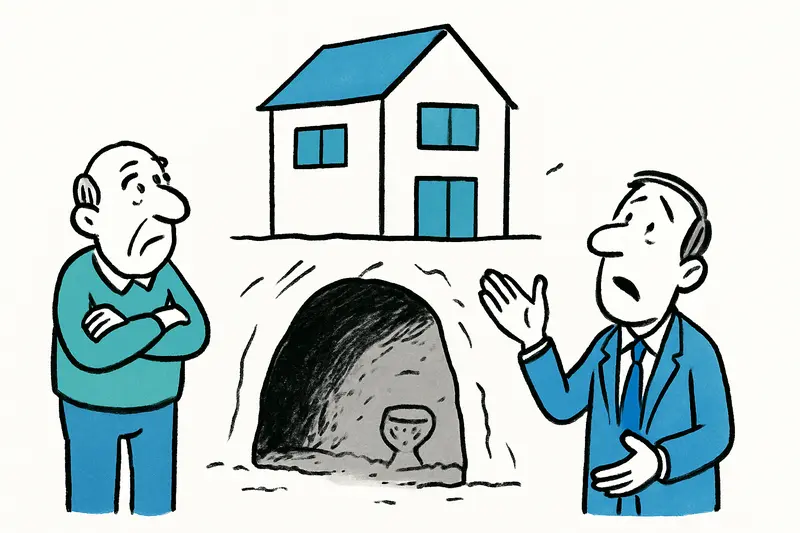
In Colònia de Sant Pere a residential building now stands directly above the 4,000-year-old Cova des Molí des Turó. The situation raises questions about the protection of archaeological assets — and about the responsibilities of owners, authorities and neighbours.
House over burial cave: a construction site on historic ground
In Colònia de Sant Pere, where the Mediterranean surf brings a salty scent along the promenade early in the morning and fishermen on the jetty check their nets, a residential building now stands on private land, directly above a prehistoric, roughly 4,000-year-old burial cave – the Cova des Molí des Turó. An access to the cave has been left open at the side of the property. It is still unclear when the cave will be accessible to interested visitors.
Key question
How could construction take place in such a sensitive spot, and what protections are now in place for the cave and the neighbourhood?
Critical analysis
The basic issue is easy to see: a historic find lies directly beneath new development. That alone raises doubts about the care taken before construction began. Archaeological sites are sensitive to pressure and moisture; vibrations from construction work, changed drainage and even minor ground movements can damage material that has endured for millennia. The fact that an access to the cave was "left free on the side" sounds good, but it does not explain what measures are now in place to protect the cave from moisture, uncontrolled access and possible structural loads.
On Mallorca one is used to narrow plots and creative solutions – but creativity must not be used as a pretext to build over historical substance. Without publicly available information on archaeological assessments, protection conditions or monitoring, the impression remains: decisions were made behind closed doors, residents and coastal walkers learn little, and the cave remains in a kind of limbo.
What is missing from the public debate
Publicly, usually only the narrative "house stands, access is available" is communicated. The following is rarely discussed or is not known: Was there an archaeological excavation before construction began? Were finds documented and secured? What protection conditions were imposed on the owner? And who monitors in the long term to ensure the building does not endanger the cave? The balance between private property and the public interest in cultural heritage deserves a more open debate – especially in sensitive coastal places like Colònia de Sant Pere, where every building decision also affects landscape and tourism.
Everyday scene on the island
Imagine the street that runs from the village square to the small pier: bicycles click over cobbles, an old woman pulls her shopping trolley by, and an espresso machine rattles in a café. Such a place does not suddenly become a museum — it remains a home, a meeting place, a living environment. And this is exactly where interests collide: neighbours want peace, owners their privacy, and culture enthusiasts want to know if and how they can see the cave; similar tensions are described in Hole in the Roof of Valldemossa Charterhouse: Wake-up Call for a Historic Quarter.
Concrete approaches
1) Immediate and transparent documentation: Authorities should publish whether archaeological monitoring has taken place, which reports exist and what protection measures apply. That increases trust among neighbours and prevents speculation.
2) Temporary construction pauses and technical inspections: Until an expert assessment by independent archaeologists and geotechnical engineers, activities that cause vibrations or changes to groundwater should be restricted.
3) Protective buffers and structural adjustments: A buffer zone around the cave entrance, controlled ventilation, moisture protection and structural decoupling of the house foundations from the cave are practical measures.
4) Publicly accessible plan: A simple site plan and short report for residents and interested parties – without legal jargon – would allay many fears. There can also be a regulated visitation solution: set tour times, guided visits by qualified professionals and limits on visitor numbers; examples of local debates on monument protection and community needs include Occupied and Crumbling: Illetes Fort Between Monument Conservation and Human Rights.
5) Long-term monitoring: Sensors for humidity, CO2 and movement can report damage early. A local steering committee with residents, archaeologists and municipal representatives would create transparency.
Conclusion – short and pointed
A house over a 4,000-year-old burial cave is not just an aesthetic issue; it is a responsibility. Private property and cultural heritage need not exclude each other, but they require clear rules, openness and technical care. Colònia de Sant Pere is small enough that solutions can succeed through cooperation – if authorities, owners and residents do not remain silent now, but treat the open cave as a mandate: preserve rather than hide; for contrast, see discussions around Sencelles saves a piece of the past: Municipality buys prehistoric cave.
Frequently asked questions
Can you visit the burial cave in Colònia de Sant Pere?
Is it safe to build a house above an ancient cave in Mallorca?
What is the Cova des Molí des Turó in Colònia de Sant Pere?
What protections should an archaeological cave under a house in Mallorca have?
Why are people concerned about the house built over the cave in Colònia de Sant Pere?
What archaeological checks are usually done before building in Mallorca?
What is the best time of year to visit Colònia de Sant Pere in Mallorca?
What should you know before swimming near Colònia de Sant Pere in Mallorca?
Similar News

Magaluf: Watchtower Alarm – Lifeguards Pull Unconscious Beachgoer from the Water
After a drama in the late afternoon, two lifeguards at Magaluf beach rescued an unconscious 44-year-old man. He was stab...

Turquoise in the City: How dangerous is the color play of the Sa Riera?
The Sa Riera in Palma suddenly turned turquoise — a pretty motif, but behind the effect lies a discharge of saline waste...

Jeckliner at Sunnesching: Cologne spirit sets sail from Palma
In September 2027 the Mein Schiff 2 briefly becomes a floating carnival stage: four days with Cologne bands, comedy and ...
Finally Home: Mike and Leyla Heiter Buy Villa with Sea View in Mallorca
The reality TV couple Mike and Leyla Heiter have bought a house in Mallorca with a roof terrace and sea view. An Instagr...

Arrest after series in Palma: Who protects apartments from repeat offenders?
The National Police arrested a man in Palma who investigators say may have broken into several apartments. In one incide...
More to explore
Discover more interesting content

Can Cap de Bou

Townhouse Lleo 72
