
Hole in the Roof of Valldemossa Charterhouse: Wake-up Call for a Historic Quarter
A portion of the roof has crumbled from an outbuilding of the Charterhouse — outdoor toilets closed, residents unsettled. Fragmented ownership and lack of funds hinder quick solutions. What is needed now: immediate securing, clear responsibilities and concrete financing paths.
Hole in the Roof of Valldemossa Charterhouse: Wake-up Call for a Historic Quarter
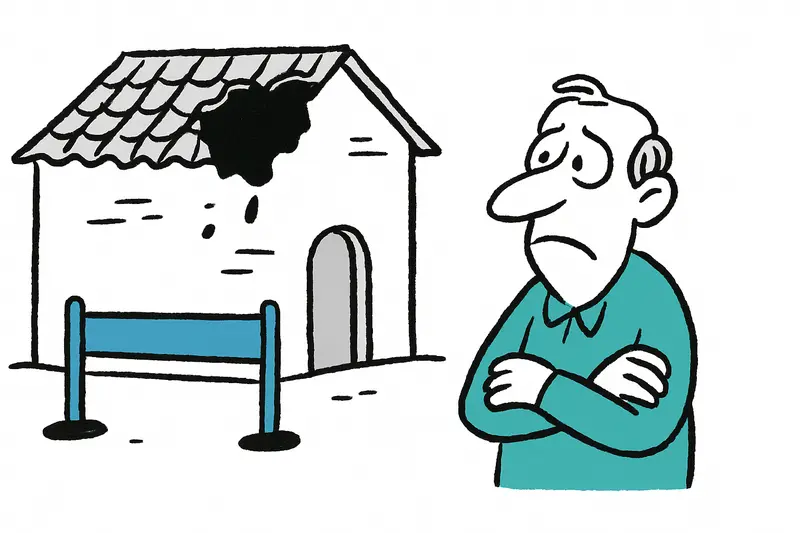
On Saturday evening, shortly after 8 pm, dust and pieces fell from the roof of an outbuilding of the Charterhouse. What remained was a gaping hole in the outer wall of the chapter hall and a feeling many here know well: concern for what gives the place its character. This echoes recent problems elsewhere, such as the Collapse at Palma's City Wall. The outdoor toilets were immediately closed, barriers were put up, and Mayor Nadal stressed that people must be kept away until experts have checked the stability.
The place itself — narrow lanes, the ringing of the church, the smell of wet stone after a brief shower — felt on Sunday like a place in transit: curious visitors, residents with worried looks, and the quiet clatter of cups in a café on the plaza. A neighbor dryly summed it up: "The roof has probably needed a holiday for some time." A touch of irony, but also a serious reminder that beauty and substance are not the same.
Complicated ownership: Who pays, who decides?
The Charterhouse is not a single ownership but a patchwork of municipal land, church areas and private parcels. This fragmentation makes quick decisions difficult. According to the municipality, the affected building fabric belongs to the church area — but financing and responsibility questions often hang in the air. What is missing in practice is a clear coordinator for emergencies: who commissions the immediate measures, and who bears the costs for scaffolding, securing or temporary roof coverings?
Public discussion has often overlooked how bureaucratic hurdles and differing ownership rights block each other, as shown in other local incidents such as the Alarm in Son Bauló: When an escar loses its roof. It is not enough to request expert reports; what is needed afterward are quickly implementable agreements so that a protective roof, netting or temporary scaffold does not fail due to questions of responsibility — a lesson echoed in the case of the Occupied and Crumbling: Illetes Fort Between Monument Conservation and Human Rights.
Risks for tourism and local identity
Valldemossa lives off its historic ensemble: the small shops with handmade ceramics, the bars, the summer flows of visitors. Closing parts of the Charterhouse for an extended period affects not only the cultural appearance but also the local economy. Residents fear that visible damage will change the image of the place and deter visitors in the long term — a vicious circle if revenue for preservation dries up.
More than that: for many, the Charterhouse carries identity. If cracks and crumbling facades become the norm, that provokes not only anger but alienation. "It is not just a hole, it is an alarm signal," said a resident, pointing to discoloration on the masonry.
Concrete steps needed now
The next days should be pragmatic but decisive: first, emergency stabilization — protective netting, provisional coverings against rain and secured walkways for visitors. Second, an accelerated public expert report with a clear deadline and a plan for immediate measures. Third, the establishment of a temporary coordination body made up of the municipality, representatives of the diocese, residents and an independent heritage protection expert to set responsibilities in writing.
Financing ideas range from a quick municipal bridging payment and a joint aid fund from church and municipality to targeted grant applications to cultural heritage programs, including potential support through the Spanish Ministry of Culture heritage grants. Practical, cost-effective measures include: CyArk 3D documentation resources of the damage for later funding applications, local specialists for immediate conservation aid and transparent information boards for visitors so uncertainty does not turn into rumours.
Wait, secure, act
Valldemossa must now weigh its options: stay calm and secure professionally rather than rely on slow agreements. The hole in the roof is less a singular event than a wake-up call. Those who want to preserve the cultural fabric need not only reports but a fast, reliable structure — so the next ringing of the church bells is not accompanied by new flakes of crumbling plaster.
If you plan to visit the Charterhouse: check ahead, the main areas are mostly accessible, but some outbuildings remain closed. And for those who live here: report visible damage early, document it, and take part in the upcoming discussions — this is not just about a building but the face of the place.
Frequently asked questions
Is Valldemossa Charterhouse still open to visitors after the roof damage?
What happened at Valldemossa Charterhouse when part of the roof collapsed?
Why is the damage at Valldemossa Charterhouse such a concern for locals?
Who is responsible for repairs at Valldemossa Charterhouse?
What safety measures are being taken at Valldemossa Charterhouse?
What should visitors know before going to Valldemossa Charterhouse now?
How could the roof damage affect tourism in Valldemossa?
What needs to happen next to protect Valldemossa Charterhouse?
Similar News

Death in the Gorge: Key Questions on the Safety of Rallies on the Ma-10
A Porsche plunged into a ravine during the 550 Challenge near Mortitx. Who bears responsibility, what safety gaps were r...

Eighth BAF surge: Why freight costs in Mallorca are rising now — and what it means for us
Fuel surcharges (BAF) for ferries between the mainland and the Balearic Islands rose by around eight percent in October....
O'zapft is! Island Oktoberfest in Santa Ponca: Ten Days of Bavaria on Mallorca
From October 23 to November 1, Santa Ponca will turn blue and white again: Hofbräu beer, Schuhplatteln, a dirndl contest...
Sudden end at the gate: A 70-year-old dies at Palma airport — what now?
A 70-year-old French tourist collapsed at the gate of Palma airport and died despite resuscitation. Who is responsible f...
Rafa Nadal brings tennis greats to dinner in Port Verd – an evening at Sa Punta
For the anniversary of his academy, Rafa Nadal invited international tennis stars to his favourite restaurant on the eas...
More to explore
Discover more interesting content

Can Cap de Bou

Townhouse Lleo 72
