
Humid Heat and Aching Ears: What’s Really Happening in Mallorca
Humid Heat and Aching Ears: What’s Really Happening in Mallorca
In the summer weeks, ENT doctors report more external ear infections. Key question: Is it caused by humidity or by improper behavior at the beach? A critical overview with practical everyday tips for Mallorca.
Humid Heat and Aching Ears: What’s Really Happening in Mallorca
Key question: Why do ear infections increase in hot, humid summers – and what is missing from the public discussion?
On the promenade in Palma, when the wind from the sea brings humidity and the scent of sunscreen, you see it everywhere: people tugging at towels in their hotel rooms after swimming, parents inspecting their children's ears, older people cautiously probing the ear canal with a finger. Notably, more people this summer (see Mallorca swelters once more: Short heatwave brings late-summer warmth) are visiting clinics with painful ears.
An ENT doctor from the Rotger Clinic, Guillermo Til, summed up the problem: the combination of heat and high humidity promotes so-called otitis externa, an inflammation of the skin of the external ear canal. This should be understood: not dramatic, but irritating and painful. Typical symptoms are a deep, pulling ear pain; when caused by fungi there is often noticeable itching.
Brief analysis: Why are case numbers rising? Water in the ear alone is not a sufficient explanation. Crucial is that wet skin softens and the ear canal's natural acidic protection is altered. This creates an environment where bacteria or fungi can grow more easily. Everyday mistakes add to the problem: cotton swabs, fingernails or other scratching irritate the softened skin, causing tiny injuries – ideal entry points for germs.
It is often claimed that pool chlorine is more dangerous than seawater. The reality is more complicated: heavily contaminated water can bring more problematic germs, but fundamentally it is less the type of water than how long the ear remains wet and how it is treated afterwards.
What is missing in the public discussion is not just the warning, but practical help on site. A sign at the beach with simple behavioral rules would help. Also missing at many bathing spots are directions to where medical help can be found – especially for tourists who do not know Spanish contact points (see Heat alert on Mallorca: How well is the island prepared for infernal heat days?).
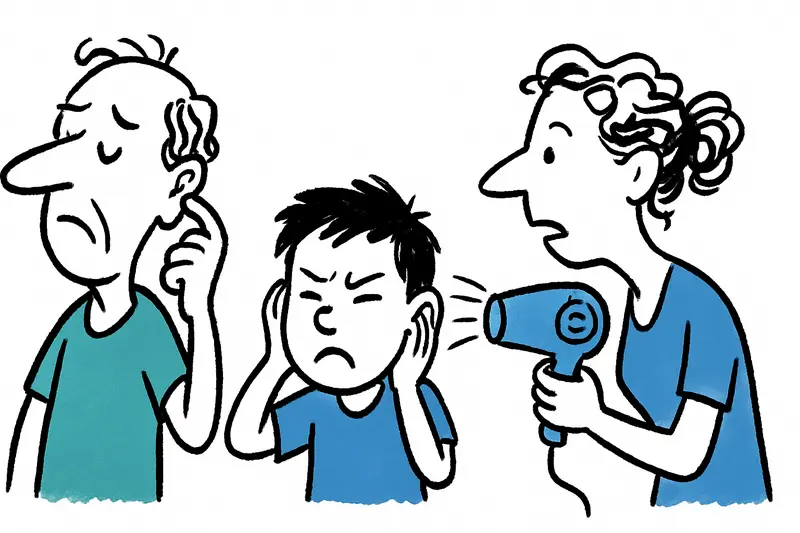
Everyday scene: On the way to the bus at Playa de Palma I hear a lifeguard calling, the clatter of deckchairs and see a mother gently blowing into her small son's ear from a safe distance with a hairdryer over her shoulder. Harmless-looking gestures, but they show that people are looking for simple, practical solutions.
Concrete approaches that help immediately: 1) After swimming, gently pat the ears dry with a clean towel or a cotton pad (do not insert into the ear canal); 2) use a hairdryer on low setting from about 20–30 cm distance, never hold it directly in the ear canal; 3) alcohol-based drying agents (Otowipes or drops available in pharmacies) can help restore the pH and reduce soaking; 4) avoid cotton swabs and scratching – the risk of micro-injuries is high. These measures are particularly useful during extreme heat events (40 Degrees This Weekend: Mallorca Faces a Heat Test – What Matters Now).
If it becomes uncomfortable: in most cases medically prescribed ear drops are sufficient. ENT doctors report that many patients feel better after three to four days; most cases are healed within a week. Important: do not experiment with unsuitable home remedies and seek prompt medical advice if redness increases, pain intensifies or fever appears (see NHS guidance on swimmer's ear (otitis externa)).
At the municipal level, simple measures would be effective: information leaflets in hotels, signs at busy beaches and training for lifeguards so they can advise those affected correctly. In clinics and practices, short, multilingual checklists for tourists explaining when a visit is necessary are helpful.
Conclusion: Humid heat makes the ear more vulnerable; the solution lies less in panic than in everyday hygiene and clear information. Those who routinely dry their ears after swimming in the evening, avoid cotton swabs and consult an ENT at the first signs usually spare themselves a week of unpleasant symptoms. In Mallorca, between boat engines in the harbor and the calls of beach vendors, this is a small but useful habit.
What remains: the island is not a medical exception. The causes are known, the means are simple. What is most often missing is a reminder – and a few signs in the right places.
Frequently asked questions
What is Mallorca's weather like throughout the year and when is the best time to visit?
What should I pack for a trip to Mallorca?
Can you swim in Mallorca year-round, or are there certain seasons for swimming?
What are the best outdoor activities to do in Mallorca?
Is Palma the best base for exploring Mallorca?
What should I know about hiking in the Serra de Tramuntana near Sóller?
Are there family-friendly beaches near Alcúdia?
What day trips from Palma are worth it for first-time visitors to Mallorca?
Similar News
More water than last year: Mallorca's reservoirs breathe easier
September rain refilled the Tramuntana's reserves: overall fill around 35 percent, Cúber at 40.42 percent, Gorg Blau at ...
Three Luxury Hotels in Banyalbufar: Lots of Money, Many Questions
A Danish investor plans three exclusive accommodations in Banyalbufar — including the historic Son Valentí. The announce...
2.1 tonnes of cocaine on sailing yacht off Spain's coast – a reality check for the coastguard
A 14-metre yacht was seized with 2.1 tonnes of cocaine. Who monitors the ports, how does the international hunt succeed ...
Heat Bonus in Mallorca: 100 Euros Extra for Outdoor Staff at MarSenses
MarSenses pays employees who worked outdoors in August an extra €100 as recognition. Lighter uniforms, reduced hours for...
Renovating in Mallorca: What You Really Can Do Without Neighbour Consent
Many think they can do whatever they want in their apartment. That's partly true — but only as long as structural elemen...
More to explore
Discover more interesting content

Can Cap de Bou

Townhouse Lleo 72
