
Ibavi renovates six terraced houses in Santa Maria – a drop in the ocean?
Ibavi renovates six terraced houses in Santa Maria – a drop in the ocean?
The housing institute Ibavi is investing €581,400 in six terraced houses in Santa Maria de la Salut — for under-35s with at least ten years' residency. A start, but the conditions and the sum raise questions.
Ibavi renovates six terraced houses in Santa Maria – a drop in the ocean?
€581,400 for young people, but who really benefits?
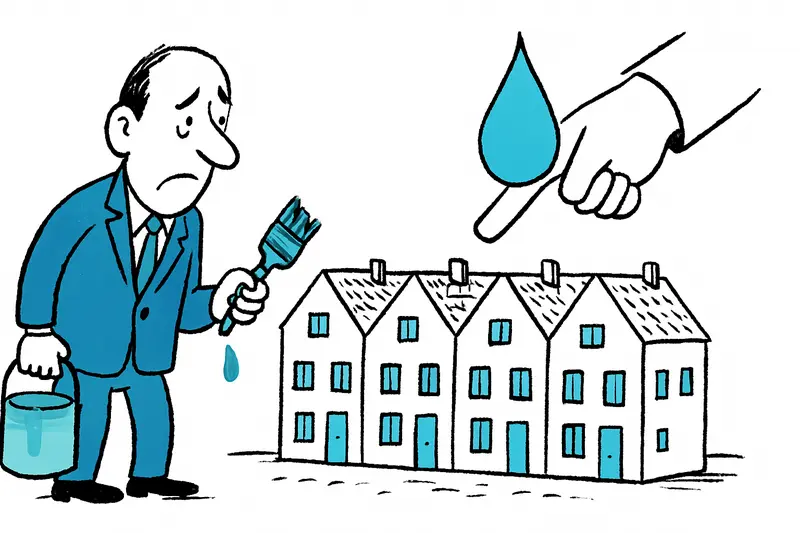
At the Plaça Major of Santa Maria de la Salut, where the church bells still regularly announce the midday break and the bakery smells of freshly baked ensaimadas in the morning, young people have been talking about the same problem for years: affordable housing is missing. Now the Balearic housing institute Ibavi has announced it will modernize six terraced houses and allocate €581,400 for this — a topic also covered in Ibavi grows — 171 new apartments: A drop in the bucket?. The facts are clear: six houses, two floors, private parking, living areas between about 90 and more than 130 square metres, renovation duration around four months. The houses were purchased in 2024 and are to be rented as social housing to under-35s — but only to those who have been registered in the municipality for at least ten years.
Key question: Are €581,400 and six houses enough to actually keep young people in the town, or will this remain piecemeal?
The numbers are simple mathematically: on average, about €96,900 of investment per property. That sounds substantial until you consider what "modernization" must mean today: energy efficiency, new building services, insulation, barrier-free access, electrical installations, kitchen and bathrooms — and structural work if necessary. In a building stock with partly outdated fabric, the budget can quickly reach its limits. The announced duration of about four months seems ambitious; craftsmen are fully booked in many towns in Mallorca, material prices fluctuate, and permits for changes to the fabric take time.
Another critical point is the target group: the rule that applicants must have been registered in the municipality for at least ten years excludes many young people — for example newcomers, young couples who moved to Santa Maria in recent years for work or training, or young returnees coming back after studying. The criterion does strengthen long-term residents but does not necessarily promote permeability of the housing market for workers needed by the local economy, a tension also discussed in More social housing from 2026: What the Balearic Islands are really planning — and what's missing.
What has so far been missing from the public debate: concrete information on rent levels, allocation criteria beyond the registration requirement, the energy standard after renovation and local involvement in implementation. Will the apartments remain permanently in the social rental program or only temporarily? Who will ensure that the net rents are affordable for young households? And will local craft businesses and suppliers be preferred for the conversion — which would strengthen the local economy? Public discussions about renovation funding and its impact on rents have been raised in pieces such as Advancing Renovations Instead of Waiting: Government Funds Refurbs — Is That Enough for More Affordable Rents in Mallorca?.
A brief look at everyday life: in the mornings a group of young people sits on the bench next to the parish church, discusses the next job near Inca or Manacor, dreams of a small private garden — but at the same time calculates how many months' salaries would be needed for a typical rental apartment in the island's interior. This scene repeats itself in many villages; here it is not only the church bells but also the almond trees that remind us that the island is changing — and fast.
Concrete solutions that would make sense now: first, more flexible allocation criteria: in addition to long-term residence, also recognise proof of employment or a degree, possibly with staggered priority. Second, transparent rent calculations and binding caps so that renovation does not lead to rents that push young households out of the market. Third, plan mandatory energy upgrades: lower utility costs make apartments affordable in the long term and reduce CO2 emissions. Fourth, actively involve local craft businesses — short distances, local jobs and faster service after renovation. Fifth, consider mixed use: one or two units could be used as co-living or transitional housing for early-career workers until long-term solutions are found.
It would also be wise to communicate the allocation practice openly: an easily accessible list of criteria, deadlines and possible appeals builds trust. And the municipality could set up small parallel support programmes, for example for young families who can prove proximity to work.
Concise conclusion: the Ibavi programme is a long-overdue step, but it is not a cure-all. €581,400 for six houses is more than symbolism, but the devil is in the details: allocation criteria, energy standard, rent level and the involvement of local actors will decide whether young people can actually stay. If the administration now works transparently, flexibly and in local networks, renovated stone houses can become real opportunities. If the approach remains bureaucratically rigid, it risks becoming what has been seen here too often: a good intention that is not enough to stop outmigration.
And at the Plaça Major people will keep discussing over coffee, with a view of the almond trees — until someone finally finds a flat that adds up.
Frequently asked questions
Why is housing such a problem for young people in Santa Maria de la Salut?
What does Ibavi plan to do with the terraced houses in Santa Maria de la Salut?
Who will be eligible for the new social housing in Santa Maria de la Salut?
How much is Ibavi spending to renovate the homes in Santa Maria de la Salut?
Will six social housing units in Santa Maria be enough to keep young people in the village?
What should renters in Mallorca check before applying for renovated social housing?
How long will the renovation of the Santa Maria de la Salut houses take?
Why does the social housing project in Santa Maria de la Salut matter for Mallorca’s villages?
Similar News
Why the End of "Los Últimos Mohicanos" Is More Than the Closing of a Bar
With squealing tires and one last glass, an icon on the Palma–Manacor expressway closes. Why the demise of this German b...
Protest camp on Plaza España: Who asks for solutions to the right to housing?
Around 30 activists set up a tent camp on Palma's Plaza España to push for stronger tenant rights. Our analysis asks: Ar...

In the Name of a Gang: Alleged Extortion in El Molinar and What It Reveals About the Protection of Sex Workers
A man is accused of posing as a member of the Hells Angels and extorting two women at accommodation in El Molinar. The s...

When Chile Meets the Mediterranean: A New Flavor at Can Bordoy
At Can Bordoy in Palma's old town, Chilean chef Jhonatan Maldonado combines Patagonian seafood with Mediterranean island...
End of an Era on the Ma-15: Why the Biker Hangout at Son Gual Is More Than Just a Restaurant
"Los Últimos Mohicanos" closes unexpectedly. A meeting place for motorcyclists on the Palma–Algaida border is disappeari...
More to explore
Discover more interesting content

Can Cap de Bou

Townhouse Lleo 72
