
Ice chaos in Vienna: Why a delayed Mallorca flight reveals more than frozen runways
Ice chaos in Vienna: Why a delayed Mallorca flight reveals more than frozen runways
The winter shutdown in Vienna also affected an Austrian Airlines flight to Palma. A fact-finding look: How vulnerable is aviation to sudden icing, what information are passengers missing here in Mallorca — and what could help in future?
Ice chaos in Vienna: Why a delayed Mallorca flight reveals more than frozen runways
Key question: How well are our connections protected when de-icing is useless in the middle of winter?
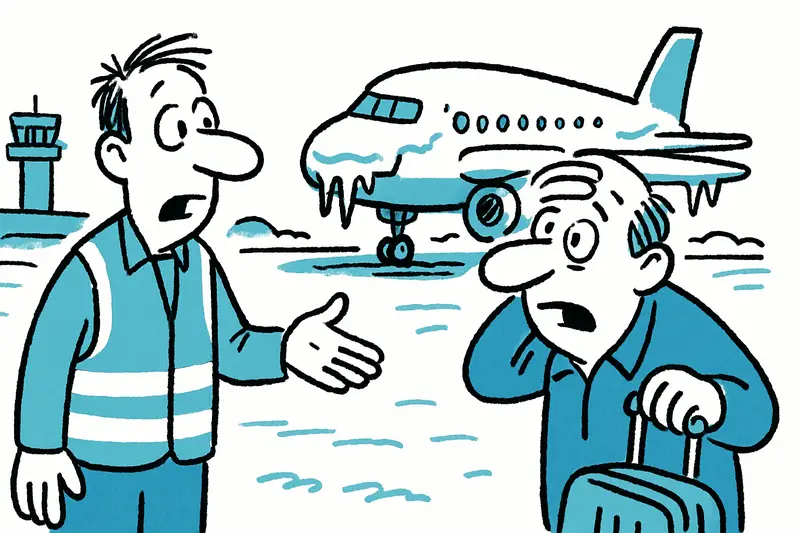
Early on Tuesday morning Austrian airports faced a problem that hits us here in Mallorca directly: an ice layer formed so quickly and so stubbornly on operational surfaces that the airport had to close temporarily. Among those affected was a flight to Palma (OS423), which was supposed to land at 11:50 a.m. but ended up delayed by around three hours.
The core message is simple: even modern airports can see surfaces refreeze immediately after de-icing. For travelers this means short-notice cancellations, diversions and the uncertain question of whether to even go to the airport. In Vienna take-offs and landings were halted for safety reasons, and numerous connections were diverted or cancelled — roughly forty arrivals were affected. Destinations such as Paris, Berlin, Rome or Athens were among the affected routes; departures to Madrid, Málaga or Tenerife were also delayed.
Critical analysis: it is not only a technical problem. Operations are tightly scheduled with little buffer. When a hub like Vienna fails, delays quickly ripple across an entire network of European destinations — and islands like Mallorca are hit particularly hard, because we depend on timely connections to serve hotels, ferries or onward flights (Storm Chaos in Palma: Why a Storm Slows the Airport So Much — and What Needs to Change).
What is often missing from public discussion: clear indications of responsibility and practical guidance for travelers. Airlines recommend checking flight status; airports advise not to come to the terminal if a flight is cancelled. That is correct, but not very specific: exactly when does the airline pay for a hotel or meals? What are your rights when rebooked onto a later flight? Such information is more important to many passengers than general warnings.
An everyday scene from Palma: an elderly couple sit at a café on Plaça de Cort opposite the town hall, their coffee steaming in the cool air. They have relatives in Germany and are waiting for messages about a return flight. In Santa Catalina hoteliers discuss possibly delayed guests; at Son Sant Joan taxi drivers call their passengers asking about arriving delays. Small everyday images, but they show the cascade of inconveniences a regional delay hotspot can trigger, as also seen during local storm-related disruptions (Weather chaos at Palma Airport: Why a thunderstorm brings more than just delays).
Concrete approaches (not wishful thinking, but practical steps): 1) Better advance information: airlines and airports should provide standardized, easy-to-understand status messages — including clear information on reimbursement and care entitlements. 2) Reserve layers in ground operations: more staff- and machine-based capacity during critical times to speed up de-icing cycles. 3) Regional contingency plans: Palma and other island destinations need coordinated contingents for onward connections and accommodation of stranded passengers. 4) Municipal coordination: hotels, taxi companies and health services should automatically receive digital alert chains during major disruptions so local infrastructure is not overwhelmed.
Practical advice for travelers: check your flight's official status with the airline and airport before leaving, document delays (screenshots), know your rights under the EU air passenger rights regulation and contact the airline immediately about rebooking or hotel claims in case of major disruptions. Avoid unnecessary trips to the airport if a cancellation has already been announced.
Concluding point: natural phenomena like sudden icing cannot be fully eliminated. What we can improve is the system around them — clearer communication, more robust procedures and pragmatic local response plans. Here in Mallorca that means: fewer anxious glances at your phone, more agreed contingency plans between hoteliers, taxi drivers and airlines. Bad winter days will remain unpleasant, but they won't automatically trigger the chain reactions that could paralyze the island.
Frequently asked questions
Why do Mallorca flights get delayed when an airport like Vienna has ice problems?
What should I do if my Mallorca flight is delayed because of bad weather or airport ice?
Can de-icing problems really stop flights even at a modern airport?
Do I need to go to Palma airport if my Mallorca flight has already been cancelled?
Which Mallorca flights are most affected when a European hub has winter disruption?
What rights do passengers have if a Mallorca flight is delayed for hours?
How do flight delays affect hotels and taxis in Mallorca?
Is winter travel to Mallorca more likely to face delays than summer travel?
Similar News
On the Edge: What Mallorca's Airport Loses If a Major Low-Cost Carrier Falters
The company that operates numerous connections from Palma to France and domestically is negotiating with creditors to re...
Ballermann star Frenzy wins 'Villa of Temptation' and donates prize money to Mallorca animal rescue
Ballermann singer Frenzy won the German reality show and donated the remaining prize money — around €14,080 — to an anim...
70 Trees Removed on Avenida Jaume I: What's Happening in Santa Ponça?
On October 1 the final redevelopment phase on Avenida Jaume I in Santa Ponça begins: 70 trees and old streetlights are t...

When a Boundary Is Crossed: The Case of Isi Glück and the Responsibility of Venue Operators
The singer from Mallorca reports an assault backstage in Halle. A clear guiding question, analysis of missing protective...
On the Brink: Volotea Fights for Survival — What Palma Can Expect Now
Volotea is negotiating its debts and plans to downsize its fleet. What consequences does this have for Palma, employees ...
More to explore
Discover more interesting content

Can Cap de Bou

Townhouse Lleo 72
