
Illegal Turtle Breeding in Llucmajor — What Happened and Why We Need to Take a Closer Look
Illegal Turtle Breeding in Llucmajor — What Happened and Why We Need to Take a Closer Look
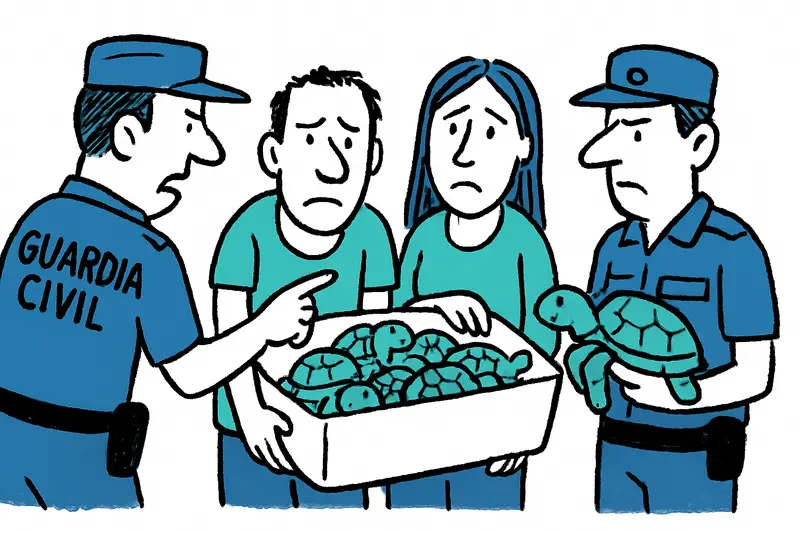
In Llucmajor the Guardia Civil seized more than 1,000 turtles. The investigation targets a German couple — the case reveals gaps in species protection and in the regulation of the animal trade.
Illegal Turtle Breeding in Llucmajor — What Happened and Why We Need to Take a Closer Look
More than 1,000 animals, many strictly protected: key question, background, problems and solutions
Key question: How could what appears to be Europe’s largest illegal turtle-breeding operation develop on a property in Llucmajor — and what must authorities, animal lovers and neighbors do to prevent it from happening again?
On a windless morning in Llucmajor, when delivery vans roll onto the Plaça des Església and the scent of freshly baked ensaimada fills the streets, Guardia Civil vehicles entered a remote property. Officers seized 1,063 turtles from more than 70 species. According to investigators, many of the animals are listed as protected; some were apparently resold — from Mallorca to mainland Spain.
The numbers are striking: over a thousand individual animals, dozens of species, and a patchy trail of buyers and sellers. The public prosecutor’s office cites charges such as violations of species protection laws, smuggling and money laundering; prison sentences of five and a half years are being sought for the accused. Behind these legal facts lie concrete questions about oversight, penalties and buyer responsibility.
Critical analysis: It was not nature’s laws alone that failed here, but the interaction of sustained oversight, border controls and market transparency. Where were the controls bypassed? Obviously large numbers of juveniles could be kept, bred and brought to market. That points to professional structures: systematic breeding, warehousing, logistical routes to buyers. Authorities often react; in this case they acted only after a larger suspicion and a concluding operation. Specialized units such as SEPRONA, the Guardia Civil unit for nature protection handle wildlife crime investigations.
What is missing from the public debate: discussion too often stays at the headlines — "seized" or "prison sentence sought" — and loses sight of the causes. Why is demand for exotic pets in Spain and Europe still high? What role do online platforms, classified ads and often unclear documentation in animal sales play? Who monitors animal transports between the Balearic Islands and the mainland? And finally: how are seized animals cared for and rehabilitated? The debate echoes concerns raised after the third sea turtle nest at Cala Calderer.
A daily-scene from Mallorca: at the market in Santanyí you do not hear them — the turtles are quiet. Yet in garden fences and backyards there are neighbors who for years have noticed strange delivery vans, boxes with animals being moved late at night. Such observations often remain isolated facts because neighbors are unsure whom to trust. A neighbor in Llucmajor said he had noticed unusual activity at the property for two years but did not report it, fearing the complicated procedures with the authorities. Small stories like these show: prevention also begins with the neighborhood. Similar concerns about abandoned or illegally kept land turtles surfaced in the case of a land turtle rescue on the Passeig in Palma.
Concrete solutions: First, tighten registration requirements. Owners, breeders and traders of exotic species need clear, centrally managed documentation with genetic identification for endangered species. Second, strengthen checks at departure points and ports; regular spot checks instead of only reactive raids. Third, better cooperation between Balearic authorities, the Guardia Civil and mainland agencies, including a joint database of seized animals and suspected cases. Fourth, digital controls: platforms where animals are traded must verify sales data and report illegal listings. Fifth, expand rescue and rehabilitation facilities in the Balearic Islands — seized animals need space, staff and expert care. Instances such as the 62 loggerhead hatchlings at Can Pere Antoni show the pressure on local facilities.
Sentencing also deserves attention: in large-scale cases penalties should be structured to be economically deterrent and make reinvestment in illegal trade unlikely. Money laundering allegations target exactly this economic side — criminal law must interrupt the profit flows, not only secure the animals.
What the island can do: increase visibility of reporting channels. A simple hotline, information at weekly markets, cooperation with veterinarians and local associations. The Balearic Islands live from their nature — and at the same time from people who want to keep exotic animals. Awareness campaigns with clear guidance on which species are legal and which documents are required would remove much of the gray area.
Conclusion: The Llucmajor case is not an isolated accident — it is a symptom. When capital from thousands of kilometres away, hidden storage and a functioning sales market come together, an ecological risk arises that extends beyond the island borders. Those who want to protect nature must do more than impose fines; they must ensure trade, oversight and citizens work together. For Mallorca this means: stricter registers, better controls, more space for seized animals and neighborhoods that look out and report — before the next case once again throws the streets of Llucmajor into turmoil.
Frequently asked questions
What happened in the Llucmajor turtle case in Mallorca?
Why is illegal turtle breeding a problem in Mallorca?
How can people tell if a turtle is being sold legally in Mallorca?
What should neighbours in Mallorca do if they suspect illegal animal breeding?
What happens to turtles seized in Mallorca after an illegal breeding raid?
Which authority investigates wildlife crime in Mallorca?
Are exotic turtles popular pets in Mallorca and Spain?
What can Mallorca do to prevent another illegal turtle breeding case?
Similar News

Who Bears the Burden? Mallorca Between Tenant Protection and Landlord Fears
Madrid's new housing decrees strengthen tenant rights — but on Mallorca concern is growing: will the law drive small lan...
On the Edge: What Mallorca's Airport Loses If a Major Low-Cost Carrier Falters
The company that operates numerous connections from Palma to France and domestically is negotiating with creditors to re...
Ballermann star Frenzy wins 'Villa of Temptation' and donates prize money to Mallorca animal rescue
Ballermann singer Frenzy won the German reality show and donated the remaining prize money — around €14,080 — to an anim...
70 Trees Removed on Avenida Jaume I: What's Happening in Santa Ponça?
On October 1 the final redevelopment phase on Avenida Jaume I in Santa Ponça begins: 70 trees and old streetlights are t...

When a Boundary Is Crossed: The Case of Isi Glück and the Responsibility of Venue Operators
The singer from Mallorca reports an assault backstage in Halle. A clear guiding question, analysis of missing protective...
More to explore
Discover more interesting content

Can Cap de Bou

Townhouse Lleo 72
