
Awakened at Cala Calderer: Third sea turtle nest sparks hope — and raises questions
A nest with 25 hatchlings at Cala Calderer brings joy — and reveals how strained rescue structures on the Balearic Islands are. Why were they transported to Mallorca?
Early morning at Cala Calderer: Little shells, big responsibility
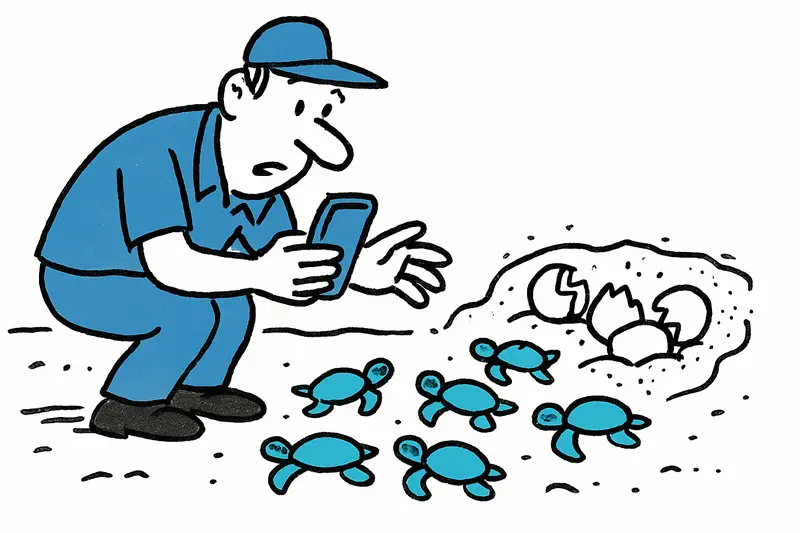
It was one of those cool mornings when the air still tastes salty, the dune grass softly crackles and seagulls exchange their shrill calls above the bay. During a patrol around seven, two hotel employees and an observant guest discovered unusual traces in the sand: disturbed eggshells, finer scraping marks in the wet fine sand. Conservationists soon confirmed it — a sea turtle nest, 25 living hatchlings, four unhatched eggs and countless empty shells.
Key question: Are the island structures sufficient to handle such finds professionally?
The number sounds positive: the third documented nest of the season in the Balearics, reported as the Cala Calderer third nest in Menorca. But behind the good news lies a tricky logistics question. Menorca — or any smaller island in general — does not automatically have the infrastructure for quarantine, veterinary care and longer-term rearing. The consequence: the newly hatched turtles were taken to Mallorca. Pragmatism helps in acute cases, but it creates dependencies and hides structural gaps.
What often goes unnoticed: the quiet risks beside the beach noise
We hear the waves, watch the sunrises and applaud the find — yet three problems are rarely heard alongside them: light pollution, beach-cleaning machines and bureaucratic hurdles. Night lighting from hotels can mislead the path of freshly hatched animals toward promenades or away from the sea; cleaning vehicles can disturb shallow nests; and intra-island transport of protected animals raises numerous veterinary-legal questions. Who is allowed to transport them? What papers and protective measures are required? These details often decide life or death.
Hidden costs and responsibility
When animals are taken to Mallorca, a rehabilitation center provides initial care — but who pays in the long term? Emergency transports, housing, care and later release add up. Without clear allocation mechanisms between island administrations, conservation organizations and the tourism sector, such operations rely on individual commitment and goodwill. Similar situations have drawn attention elsewhere, for example 62 loggerhead hatchlings in Palma, which underline the scale and complexity of rescue and care efforts.
Concrete, immediately implementable measures
No millions are needed, but clear rules and small everyday changes are: hotels and beach bars can reduce their night lighting at the beach edges or switch to downward-facing, adjustable lamps. Cleaning vehicles should avoid designated zones during nesting season; dogs should be kept on a leash at dusk. A simple sign with emergency numbers at each beach access would cost little but greatly increase reporting efficiency.
Medium-term solutions: building local capacity
A sustainable system would include a small quarantine and initial care module on Menorca: a mobile box, a cooling system for samples, basic medicines and trained first responders. Training for hotel staff, dive schools and beach guards would create a local network that can act at night. Equally sensible is a central hotline for sightings, coordinated by the island administration, with clear protocols for reports and transport.
Funding and accountability
Funding could be solved pragmatically: a small share of the tourist tax, EU environmental program grants or partnerships with local businesses could secure a starter budget. Transparency is important: who pays also partially determines priorities — therefore funds should be tied to neutral conservation bodies.
What residents and visitors can do right now
The plea from conservationists is simple and effective: lights off, dogs on a leash, no littering. If you discover a possible clutch, photograph from a distance, do not disturb and immediately inform the beach patrol or the responsible authority. Any unintentional disturbance can hinder hatching; the animals are quiet but sensitive.
A ray of hope — but not the end of the debate
Twenty-five little shells have passed their first hurdle because people were attentive. That is a reason to breathe a sigh of relief, but not to be complacent. The transport to Mallorca shows how fragile the response chains are; similar public attention followed the release of 34 hatchlings at Can Pere Antoni. When the next season begins, we should not only applaud but also take action: a basic quarantine module on the smaller islands, coordinated reporting channels, and clear rules for lighting and beach maintenance.
Conclusion: The discovery at Cala Calderer is both an opportunity and a wake-up call. With a clear head, a bit of organization and respect for the rustle in the sand, a single nest can become a catalyst for better protection of all Balearic coasts.
If you want to report something: document from a distance, switch off lights, and please inform the local beach patrol — every report counts.
Frequently asked questions
What should I do if I find sea turtle hatchlings or a nest on a beach in Mallorca?
Why are sea turtle hatchlings from Menorca sometimes taken to Mallorca?
What risks do sea turtle nests face on Mallorca beaches at night?
When is the best time to watch for sea turtle hatchlings in Mallorca?
Are dogs allowed near sea turtle nesting beaches in Mallorca?
What can hotels and beach bars in Mallorca do to protect sea turtles?
What is Cala Calderer in Menorca known for after the sea turtle nest discovery?
How can Mallorca improve sea turtle rescue and care in the future?
Similar News
Failed before the first flight: How Fischer Air's plans for Palma were ground down
Announced routes, repeated postponements and now apparent insolvency: Why the Fischer Air project for Mallorca is not me...

Seconds in the Water: 19-year-old Fights Her Way Out of Flooded Car in Palma
A 19-year-old managed to rescue herself from her half-submerged car after sliding under the Verge de Lluc underpass. Res...

Between Dream and Reality: Thorsten Legat and the Challenges of FC Germania Mallorca
The former Bundesliga pro has assembled a colorful squad in a short time. But how realistic is the grand plan for promot...

Arrest warrant at check-in: Why two travelers at Cologne/Bonn Airport suddenly had to pay
At Cologne/Bonn Airport, federal police in mid-September found two German passengers subject to enforcement measures. Bo...

Balearic Islands as a New Route: A Reality Check on Rising Boat Migration
For the first time the Balearic Islands are ahead of the Canary Islands in boat arrivals. What do the numbers really say...
More to explore
Discover more interesting content

Can Cap de Bou

Townhouse Lleo 72
