
The case "Undurchdringlich": How a visitor damaged a sculpture at Casal Solleric
The case "Undurchdringlich": How a visitor damaged a sculpture at Casal Solleric
A temporary installation at Casal Solleric was damaged during the Long Night of Art when a visitor stepped on it. Police were called; the museum considers repair not worthwhile and has temporarily covered the work with a black cloth.
The case "Undurchdringlich": How a visitor damaged a sculpture at Casal Solleric
Key question: How can museums protect ephemeral installations from carelessness — without suffocating the visitor atmosphere?
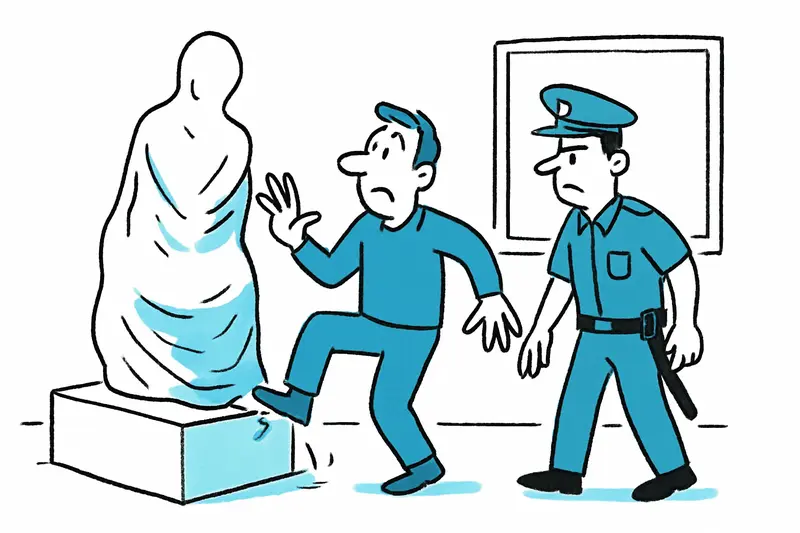
In front of a room where the voices of the old town usually lie like a distant carpet, a sculpture titled "Undurchdringlich" had stood since the Long Night of Art. The installation was intended as a temporary work but was now damaged after a visitor accidentally walked on it. According to the management of Casal Solleric, the man came from the upper floor and only realized at the entrance area that he was essentially standing on the artwork. The police documented the incident. The museum management does not consider a repair sensible — the piece was made specifically for the exhibition and is due to be dismantled soon; until then it remains covered with a black cloth.
The bare facts are straightforward. An accident, a damaged work, the decision against repair. But almost always it is the details between the facts that reveal where a system fails: visibility, access points, warning signs, placement in heavily frequented thoroughfares. Especially during events like the Long Night, when the venue has more visitors than usual, temporary works must be protected differently than permanent sculptures in a cordoned-off hall, as recent reports of tourist damage show in cases like Portals Vells in Uproar: Tourist Etches Name into Cave Wall — and Posts It.
Critical analysis: Casal Solleric apparently weighed effort against benefit. That is understandable. But from the point of view of visitors, artists and cultural work in general, the incident raises questions. Why was a walkable area placed so close to an entrance and exit? Were there clearly visible floor markings or barriers? Was the security staff given special instructions before the event? Such questions may sound trivial but are decisive in practice; similar acts of vandalism have galvanized public debate after Attack on Picornell Bust in El Molinar: Cleaning Alone Is Not Enough. A piece called "Undurchdringlich" seems ironically vulnerable when it remains unprotected amid the daily flow of visitors.
What is often missing in the public debate is an honest discussion about the cost of small protective measures and the distribution of responsibility. Museums juggle tight budgets, loans and curatorial concepts. This tension between conservation priorities and other social concerns is discussed in coverage of Occupied and Crumbling: Illetes Fort Between Monument Conservation and Human Rights. But it is not enough to point to the uniqueness of the work or the short-lived nature of the exhibition after an incident. Cultural institutions should publicly state what protection standards apply to temporary works — and why they deviate in certain cases.
A day-to-day scene to feel into: on a cool December evening a couple leaves Casal Solleric. Outside, chestnut wrappers rustle, faint laughter drifts from a side alley. A street food vendor is packing up his cart. Inside, in the foyer, a small sight stays in the memory: a black cloth hanging like a memorial. People pause briefly, read a sign, exchange shakes of the head. This happens in Palma every day: culture meets the city's pulse, and sometimes the rhythms don't quite match.
Concrete solutions: 1) Visible but unobtrusive floor markings and temporary barriers for installations in passage areas; 2) clear, multilingual notices directly at entrances and exits — not only in the catalogue; 3) additional briefing for supervisory staff on event days; 4) a small emergency fund in museums for repairs or conservation measures for temporary works; 5) advise artists in advance on placement to avoid highly frequented zones; 6) for night events, temporarily reduce flow routes so that the public does not stream uncontrolled through rooms.
Such measures cost time and some money. But they prevent embarrassing situations, spare artists unnecessary loss and protect the reputation of a city that depends on its cultural offerings; recent heritage concerns such as Collapse at Palma's City Wall: What Needs to Happen Now underline the stakes. Another not to be neglected point: preventive communication. Inform visitors before they enter — not only after something is damaged.
Conclusion: The incident with "Undurchdringlich" is more than an accident — it is a signal. It shows that museums must take visitor guidance for temporary, easily accessible works seriously. Small effort, big effect: mark better, instruct better, secure better. Until a permanent plan is in place, the damaged sculpture at Casal Solleric remains behind a black cloth — a quiet, visible reminder of how quickly art and everyday life can collide in Mallorca.
Frequently asked questions
What happened to the sculpture at Casal Solleric in Palma?
Why are temporary art installations in Mallorca more vulnerable than permanent museum pieces?
Can you usually walk through Casal Solleric during cultural events in Palma?
What should museums in Mallorca do to protect temporary artworks from accidental damage?
Was the damaged sculpture at Casal Solleric repaired?
Why do events like the Long Night of Art need extra visitor guidance in Mallorca?
What is the best way to protect artworks near entrances in Palma museums?
What does the damaged sculpture at Casal Solleric say about museum responsibility in Mallorca?
Similar News

Who Benefits from the Half‑Hourly Flight on the Edge? Aena, Investments and the Island's Interests
Almost one billion euros is flowing into Son Sant Joan. The figures show the scale of investment and expected beneficiar...

Are the Balearic Islands the Southern Border of Europe? A Reality Check on Immigration
The Balearic Islands are again calling for EU aid after a sharp rise in arrivals by sea. Conflicting priorities between ...

"Expensive chaos" and many open questions: What clients can do when a lawyer suddenly stops responding
Several clients complain that a well-known German lawyer in Mallorca has been unreachable for months. Key question: What...
TV tip: 'The Last Problem' — Mallorca as the setting of a classic crime
A classic whodunit on Mallorca: A new miniseries set in spring 1959 brings storm, an isolated hotel and a dense web of s...
Nipping Sea Creatures: Why Bathers in Cala Major and Elsewhere Should Be Cautious
In Cala Major, bathers have reported being nipped by small fish. What is behind it, how can problems be avoided — and wh...
More to explore
Discover more interesting content

Can Cap de Bou

Townhouse Lleo 72
