
First municipal charging network in Inca: Progress with open questions
First municipal charging network in Inca: Progress with open questions
Inca is installing 44 public charging points at 13 locations. A good idea — but crucial details are missing: who will charge, who pays and how resilient is the network?
First municipal charging network in Inca: Progress with open questions
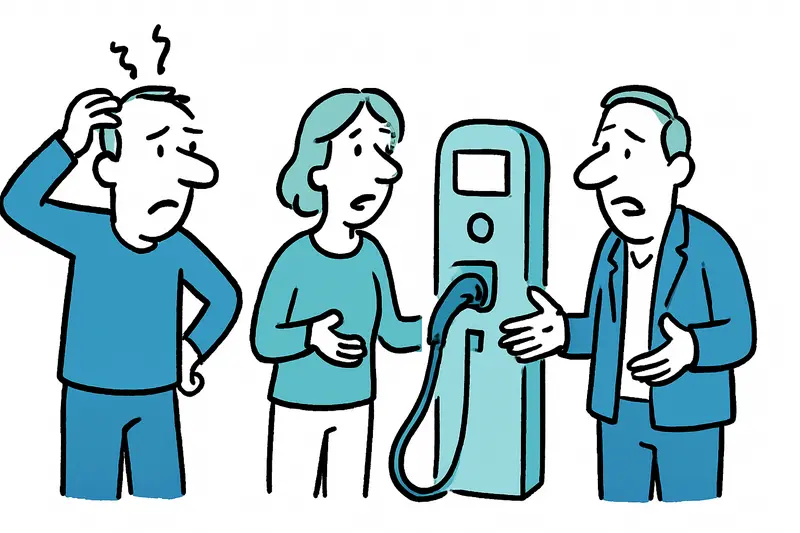
Key question: Are 44 charging points at 13 locations within a ten-year concession enough to anchor e-mobility sustainably in the island's centre — or will it remain a patchwork? (reported in Inca builds first municipal fast-charging network — a step with question marks)
Early in the morning on the Plaça de la Font Vella it smells of coffee and baked ensaimadas. Delivery vans hum by, a running club jogs past toward the Campo del Constància, and later there will be activity again at the General Luque fairground. Exactly there, on Carrer de Formentor, by the swimming pool, on Avinguda de Rei Jaume I, at the Mateu Cañellas sports complex, on the Plaça de Blanquer and at twelve other points, 44 charging points are due to be installed in the coming weeks. Six older pillars will be replaced by more powerful fast chargers; all stations will receive double sockets.
That is encouraging: the island centre will get a visible network, app access and integration into the MELIB system and regional overviews such as Driving around Mallorca in an electric car: Map shows all charging stations — and how easy driving really is. But a closer look reveals gaps. The city granted a ten-year operating concession, and the operator pays €1,807 per charging point annually to the municipality. What at first glance looks like revenue raises questions: Are these fees sufficient for permanently reliable operation, regular maintenance and rapid replacement cycles? How are penalties or performance requirements regulated if charging stations are out of service for months?
Critical analysis: A charging network is more than pillars and an app. Crucial are charging power, grid connection capacity, clear price transparency, real-time data for users and prioritisation of residents over short-term rental fleets. The decision contains a tension: Mayor Moreno sees Inca as a strategic location — not wrongly — but indications that the offer also targets company fleets and rental cars suggest that tourism and commerce could be the focus. Without quotas for residents or resident-specific tariffs, there is a risk that most charging sessions will be taken up by vehicles from outside the area or rental fleets.
What has been missing so far in the public discourse is an open look at power supply. What stability tests has the municipal grid undergone? Are there plans for smart charging (load management), integration of photovoltaics or storage batteries to smooth peaks? And what about accessibility and safe bicycle and pedestrian routes to the stations — especially at heavily used locations like the fairground or the sports hall?
A commonplace scene to put this in context: On a December evening a delivery van parks at the edge of the Plaça de Blanquer, an elderly resident pushes his walker past and asks whether the new pillar will still be free the next morning. A young woman who works for a restaurant on Carrer de Formentor sees no reserved space for residents nearby — she fears rental cars will block the spot. Such small, recurring problems determine whether infrastructure is truly adopted.
Concrete solutions: The city should publish technical minimum standards and KPIs (e.g. minimum charging power, maximum downtime, response times for repairs). Part of the annual concession fee could flow into a publicly managed maintenance and upgrade fund. Priority rules for residents, subscription plans with reduced tariffs and reserved charging bays on municipal land would prevent rental fleets from taking precedence. Also recommended: open interfaces (e.g. OCPP/OCPI) for interoperability, a public dashboard with availability data and a mandatory grid compatibility study including photovoltaic and storage options.
Conclusion: Inca is taking an important step — a municipal network is necessary and a visible sign of the local transition to a low-carbon future. But planning and contract design must be done properly, otherwise the infrastructure risks losing sight of maintenance costs and user needs. Municipal oversight, transparent data, resident reserves and a real connection to local energy supply should be the next items on the agenda before the first pillars switch on their lights for testing.
Frequently asked questions
Is Inca getting a public charging network for electric cars?
Will the new chargers in Inca be fast chargers?
Where will the charging points be located in Inca?
Is public charging in Inca part of the MELIB network?
How reliable will the new charging network in Inca be?
Will residents in Inca have priority at the new charging stations?
What should drivers in Mallorca know before using public chargers in Inca?
Is Inca a good place to charge an electric car while visiting central Mallorca?
Similar News

"Fifth Season" in Port d'Andratx: A glass-bottom pool that makes passersby stop
An unusual superyacht with a dark hull and a partially glazed infinity pool is currently at the Yacht Club of Port d'And...

Newark–Ibiza: What the new direct flights mean for Mallorca
United will operate four weekly direct flights from New York–Newark to Ibiza with the A321XLR from May 2027. For Mallorc...

Body in the Basin of Port Adriano: Who Protects People During Crossings?
In the morning, just before noon: employees of a luxury marina discovered a floating body in the basin of Port Adriano. ...

Raised from the Sand: A Late Antique Merchant Ship Tells of the Sea off Can Pastilla
A 1,700-year-old Roman merchant ship was raised off Can Pastilla. Finds such as sail fragments and amphorae provide rare...

After the Storm: Why Many Fish Died at Riuet de s'Illot — and What's Still Missing
After the severe storm, numerous dead fish were found in the Riuet de s'Illot wetland. Who is affected, why it may have ...
More to explore
Discover more interesting content

Boat Tour with BBQ along Es Trenc Beach

Private transfer from Mallorca Airport (PMI) to Pollensa
