
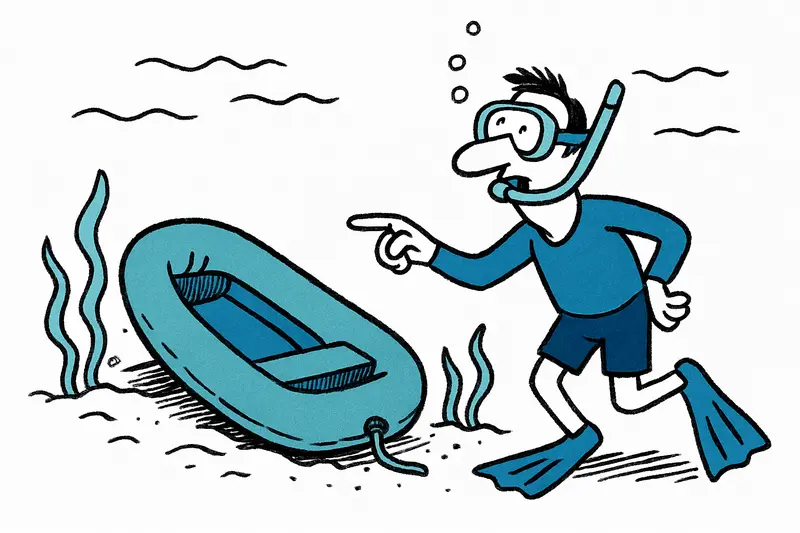
Inflatable boat on the seabed: Who will clean up Port d'Andratx?
Inflatable boat on the seabed: Who will clean up Port d'Andratx?
In front of the House of Sunset a diver lifted a sunken inflatable boat out of the water. The find shows: our coasts are vulnerable — and often left to their own devices.
Inflatable boat on the seabed: Who will clean up Port d'Andratx?
A dive find a few meters from bars and sunbeds shows how in some places the sea becomes a dumping ground – and what is missing to change that.
Main question: Whose task is it to keep the seabed in front of our towns clean — the municipality, boat owners, the hospitality sector, coastal protection authorities, or each and every one of us?
Early in the afternoon, when the terraces of Port d'Andratx quietly clink and waiters carry cups and glasses between tables, the harbour is a picture-book scene for visitors. Right next to it, however, only a few metres below the shimmering surface, an inflatable boat recently lay on the sand. The discovery and recovery were carried out by a local diver, known by the nickname 'Es Canari', with the support of the staff from the House of Sunset, a situation echoed in Seven Meters from the Mud: Volunteers Recover Boat in Puerto Portals. He brought the damaged dinghy to the surface and reported the find to the Andratx administration. The image — an inflated but useless rubber ring on the seabed — remains like a stain on the otherwise tidy postcard idyll.
The analysis is simple and painful: inflatable boats, fishing line, plastic parts, sometimes even larger wreckage end up in harbour areas. The causes are varied. Sometimes a dinghy capsizes in a storm, is forgotten or not retrieved for cost reasons. Sometimes rubbish is thrown overboard. And not least, missing controls and poorly coordinated cleaning programmes play a role (see Drunk Boats, Battered Bays: When Private Boat Rentals Put Mallorca's Coasts at Risk). A single diver with a camera can document conspicuous spots, but he cannot replace a systematic survey or regular recovery operations.
What is often missing in the public discussion is commitment: there are sporadic actions, photos and outrage — but little that has a lasting effect. Data on recurring find spots are lacking, there is no uniform reporting and recovery process for lost dinghies, and responsibilities between harbour authorities, the municipality and the coast guard are not clear enough in all cases. The consequence: often the task falls to volunteers — divers, fishers, restaurateurs — who help because they see the damage on their doorstep (see Who cleans up the sea? Almost eight tons of waste off the Balearic Islands — and the uncomfortable answers).
An everyday observation from Port d'Andratx: in the mornings anglers fish below the promenade; between their rods lie tangles of line and occasionally small plastic pieces, which they dispose of with tired hands. Opposite, in the restaurant, plates are wiped clean, eyes and conversations turn to the water; no one immediately notices how a lost inflatable slowly settles on the seabed. This creeping normality is a problem: people get used to the sea taking more than it gives.
Concrete solutions should therefore be practical and locally implementable: First, regular sonar and dive checks coordinated by the municipality in sensitive areas, especially after storms. Second, a simple, uniform reporting procedure for lost boats and larger waste — a central phone number or app through which finds can be reported and short-notice recoveries scheduled. Third, an incentive model: a deposit or registration for small inflatable boats, linked to an obligation to recover them if lost, could more clearly distribute costs and responsibilities. Fourth, subsidies or contract models for certified recovery companies, so that recoveries do not fail for cost reasons. Fifth, expansion of local cleanup programmes with seasonal financial support, so volunteers do not have to bear in the long term what should be municipal responsibility.
In addition, transparency is needed: a public map with reported find spots would make visible where problems repeatedly occur. And communication: hotels, boat rental companies and restaurants could briefly inform guests about appropriate behaviour and reporting channels upon arrival. Such small measures create a different awareness than isolated images of outrage on social networks.
The story of the raised inflatable is not an isolated case, but a symptom. As long as structures for prevention and recovery are missing, the seabed remains vulnerable. Helping hands like those of the diver are valuable — but they must not replace the system.
Conclusion: Port d'Andratx shows how close cleanliness and neglect are to each other. It is not enough to share outraged pictures. We need clear responsibilities, a simple reporting system, financial incentives for recoveries and more regular inspections. Otherwise the next find will again only celebrate the personal achievement of an individual — and change nothing fundamental.
Frequently asked questions
Who is responsible for cleaning the seabed in Mallorca harbours?
What usually ends up on the seabed in Mallorca harbour areas?
Why do lost inflatable boats sometimes stay on the seabed in Mallorca?
What is the best way to report a boat or large object found underwater in Mallorca?
Why do volunteers end up cleaning the sea in Mallorca so often?
Is Port d'Andratx a problem area for seabed litter?
What would help prevent underwater rubbish in Mallorca harbours?
What can boat owners in Mallorca do to avoid leaving waste behind?
Similar News
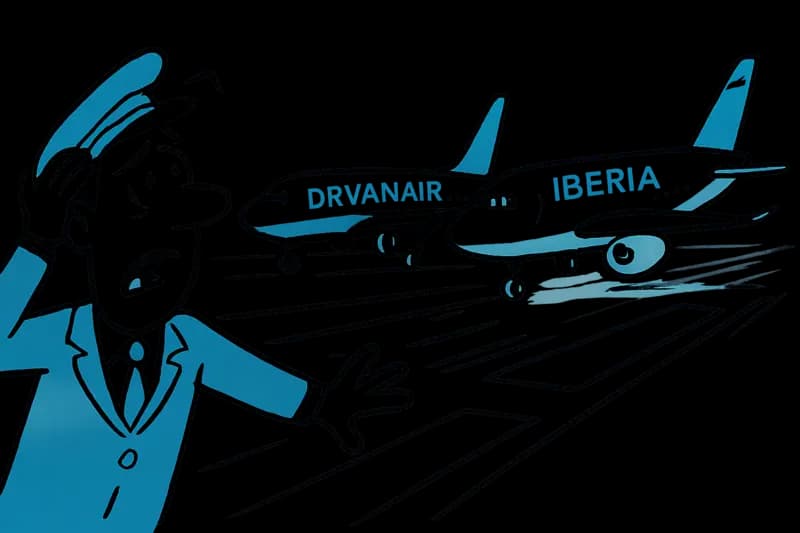
Near-miss on Lanzarote: Landing Ryanair Jet and Iberia Takeoff — what really went wrong
On Lanzarote there was a dangerous incident: A Ryanair flight (FR5910) from Dublin landed on runway 03 while an Iberia E...

Eurowings introduces new Premium Business seats on Mallorca routes
From December 1, selected Eurowings flights to Palma and other destinations will feature eight particularly generous sea...

Car on MA-13 near Inca in flames – a safety check for the island
A vehicle caught fire on the MA-13 towards Alcúdia on Tuesday afternoon. The driver was uninjured, the car was destroyed...

Real Estate in Mallorca: Fewer Buyers, Higher Prices — What's Behind It?
Sales on Mallorca are falling, yet prices continue to climb. Why fewer transactions do not equal relief — and what shoul...

Just Bought — Already Trouble: Water Damage in the Heiters' Villa and What Owners in Mallorca Should Know Now
A newly purchased sea-view property — and within days a water damage. What risks lurk in new properties in Mallorca, and...
More to explore
Discover more interesting content

Can Cap de Bou

Townhouse Lleo 72
