
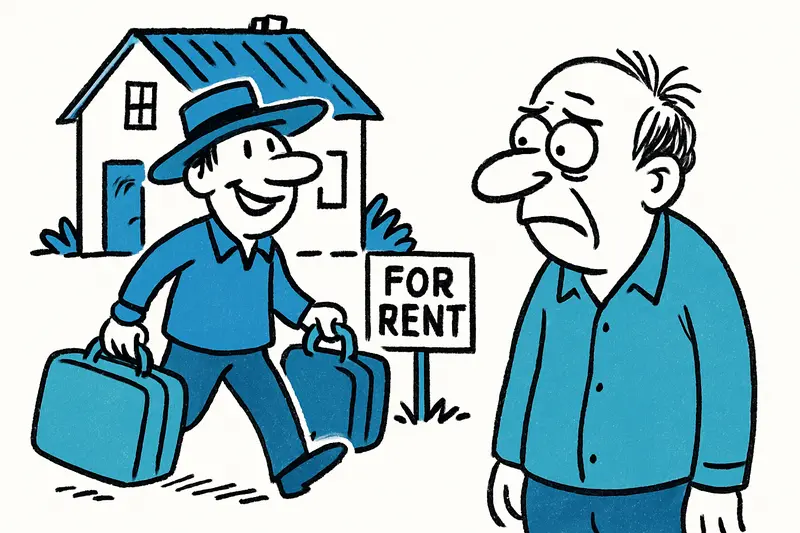
When Houses Are Suddenly Rented Away: How Foreign Tenants Are Changing Neighborhoods
Monthly house rents of €4,000–6,000 are no longer unusual on Mallorca. What does this mean for families, neighborhoods and the island's future — and what solutions are there?
When Houses Are Suddenly Rented Away: How Foreign Tenants Are Changing Neighborhoods
On the Paseo you can hear the sea in the morning, later the clatter of coffee cups, and in the evening somewhere a child's bike screeches down the pavement. But in many neighborhoods of Palma and along the west coast, the soundscape is no longer only Mallorcan. In Santa Maria del Cami, Calvià or Andratx neighbors tell similar stories: a detached house changes owner or tenant — and with it the balance of people in the quarter shifts. Monthly rents of €4,000 to €6,000 are long since no exception. This tension is also examined in When the Neighborhood Gives Way to the Market: Paths Out of Mallorca's Housing Shortage.
Central question: Who is allowed to live on Mallorca — and at what price?
This is the central question being debated in the streets and village squares now more than ever. Why are people suddenly paying such sums? In short: remote work, longer seasonal stays and the search for privacy. A local agent puts it bluntly: many no longer come for just two weeks, they work here, use the house as a second residence for months — and do not want to buy. For landlords that is the ideal mix: solvent, long-term tenants without the hassle of a change of ownership.
Less visible but effective: many offers are not listed on major portals. Houses are allocated through networks — to colleagues, friends, contacts from abroad. That often automatically excludes locals without connections. If a friend of a friend wants to use the pool, the listing never goes online in the first place. This dynamic is similar to cases described in When Long-Term Tenants Turn into Holiday Landlords: The Inquilinos Pirata in Mallorca.
Who is affected — and how does daily life change?
The consequences are practical and social. Families report that relatives have to move away because the rent for the parents' house becomes too high. Young couples think twice about staying — or move to the countryside for cheaper rents. School enrollments change, local craft businesses notice different customer demands. What may look like a price development on paper affects neighborhood festivals, football teams and shop opening hours in everyday life.
It's not just a matter of the number on the lease. It's about empadronamiento, about the possibility of being rooted in a place, about the feeling that neighborhoods are not completely interchangeable. When the baker suddenly receives more British emails than Mallorcan conversations, you notice: culture and daily life are shifting here.
What is often missing from the public debate
We talk a lot about holiday rentals, but too little about the gray area in between: long-term, well-paid rentals to expats and temporary residents. Also little examined is how landlords make decisions: security, bank guarantees, language barriers and bureaucratic facilitations for international tenants play a role. Also rarely mentioned are municipal prerogatives, such as the right of first refusal by municipalities, which are often not used — for lack of money or political will.
And then there is the question of infrastructure: more large houses with foreign tenants do not automatically mean more local tax revenue, but often higher water and energy consumption. That can lead to additional tensions in dry summers when local supply becomes scarcer. Instances of covert subletting illustrate another side of the problem, as reported in Illegal Subletting in Mallorca: When Long-Term Tenants Become 'Inquilinos Pirata'.
Concrete approaches — what could help now
There is no silver bullet, but several levers that can work together:
1. Use and finance municipal pre-emption rights. Municipalities should build reserves or establish funds to secure properties specifically for social or local use. This works particularly well where development plans allow for densification — these mechanisms are a form of the right of first refusal.
2. Promote cooperative housing. Housing cooperatives or municipal developers can create long-term affordable housing for locals — with transparent criteria on who may move in.
3. Stricter rules for the conversion of residential space. Owners who permanently rent to short-term holiday renters or to international long-term tenants should be treated differently in tax and licensing terms than the classic local resident. This includes better licensing controls and harsher sanctions for circumvention.
4. Incentives for sales to locals. Tax benefits or grants for first-time purchases by people with long-term empadronamiento can help make ownership more accessible again.
5. Transparency in offers. A public register of long-term rental offers — digitally accessible — could break up networks and give local families a chance before properties are quietly allocated.
Looking ahead
The island is too beautiful to be treated only as a holiday destination. If you visit the market in Campos in the morning, you feel the mix of tourism and everyday life: fishmongers call, an older woman folds her lunch, the breeze from the Tramuntana mixes with exhaust. It is possible to find solutions that combine the added value new residents bring with the protection of the local community. That requires courage — from municipalities, owners and from us citizens.
In the coming weeks I will dig deeper, meet those affected and present examples of successful local policies. If you live on Mallorca and have a story from your neighborhood, get in touch. This topic concerns the tone of our streets, the laughter in schoolyards and, ultimately: our home.
Frequently asked questions
Why are rents in Mallorca rising so quickly?
Are foreign tenants changing everyday life in Mallorca neighborhoods?
Why do some Mallorca rental houses never appear on big property websites?
What areas of Mallorca are seeing the strongest pressure from high rents?
How does the housing shortage affect local families in Mallorca?
What can Mallorca municipalities do to keep housing more affordable?
Does renting to expats in Mallorca affect water and energy use?
What should you consider before renting a long-term home in Mallorca?
Similar News
Taking Off Differently: Pilot, Pere Garau Resident and Rock Musician
Andreas Thiele flies an Airbus A320 for Lufthansa, has an apartment in Pere Garau — and will release an alternative-rock...

Palma takes to the streets: Thousands demand 'Housing as a Right'
Around 3,000 people marched through Palma on Saturday to demand affordable housing. The protest followed the rejection o...

Beatings in Palmanova: Two British tourists injure taxi drivers — what needs to happen now
In Palmanova, two taxi drivers were attacked at night by apparently drunk tourists. One suffered severe facial injuries ...

Village Festivals of Art: ArtinSal, TastArt and Canal'Art Bring Culture to Mallorca's Streets
In October Ses Salines, Porreres and Santanyí turn their squares into exhibition spaces: three art nights, plenty of cra...

Christmas Market Conflict in Palma: Who Owns the Christmas Season?
The relocation of a privately organized, German-influenced Christmas market to Parc de la Mar is causing anger among loc...
More to explore
Discover more interesting content

Can Cap de Bou

Townhouse Lleo 72
