
Lightning Strike Ignites Brush Fire Between Alaró and Consell: A Reality Check
Lightning Strike Ignites Brush Fire Between Alaró and Consell: A Reality Check
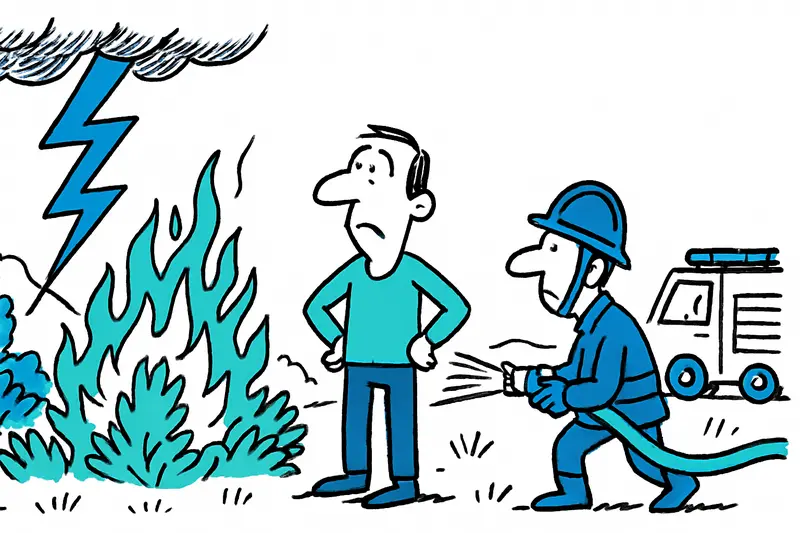
A lightning bolt sparked a fire on Saturday afternoon near Es Putxet. 2.1 hectares burned; six aircraft and 34 personnel fought the blaze. Time for honest questions about preparedness.
Lightning Strike Ignites Brush Fire Between Alaró and Consell: A Reality Check
Key question: Are we prepared for Mallorca's dry seasons when a single lightning strike can destroy hectares of nature within hours?
What happened on Saturday
Around 3 p.m. a lightning strike hit the Es Putxet area and set dry brush alight. The flames spread within a few hours; the responsible ministry recorded 2.1 hectares of burned scrubland. The operation continued into the early evening: at 6:25 p.m. emergency services reported the fire was under control, and similar rapid incidents elsewhere have been documented, for example Wildfire in s'Albufera: Six Fires Quickly Extinguished — but Questions Remain.
How the extinguishing operation looked
Authorities deployed 34 wildfire fighters to the scene, including three technicians and three environmental officers. Six aircraft were involved from the air, and three firefighting vehicles supported operations on the ground. The helicopter La Milana also assisted in extinguishing; the Inca fire station was on site. Security forces from Consell, Binissalem and Alaró as well as civil protection volunteers supplemented the personnel. Even so, operations can be hazardous — for instance a recent heavy deployment in Inca resulted in a seriously injured firefighter, as reported in Heavy Deployment in Inca: Firefighter Injured — and the Big Questions That Follow.
Critical analysis
The numbers initially sound reassuring: crews on site, aircraft in the air, regional representatives present. But 2.1 hectares are not just statistics. At a time when lightning strikes are becoming more frequent and vegetation is drier than before, this incident shows that a single natural event can quickly become dramatic locally. The official rating of the "potential danger level" as 0 appears contradictory to the reality on the ground. How can an alert level show zero while six aircraft are simultaneously mobilized? The islands have at times raised higher warnings, highlighting the contrast in assessments, see Alarm Level 4 in the Balearic Islands: Why Every Spark Counts Now.
What is missing from the public debate
There is much talk about extinguishing, less about prevention. Few speak loudly about maintaining transition zones between cultivated land and wild growth, about reliable firefighting water reservoirs inland on the island, or about how many roads are truly passable for tanker trucks if fires threaten from two sides at once. Also scarce are clear answers on prioritizing drone surveillance, lightning detection and local alarm chains for residents of remote fincas; similar concerns about equipment and access were raised after the Ma-15 operation, as detailed in Field fire near Manacor: What the operation on the Ma-15 reveals about Mallorca's fire risk.
A scene from everyday life
In the afternoon the streets of Alaró smelled of smoke. On Plaça sa Veïnat conversations about the next festival abruptly changed to whispers: "It's getting closer." Cinamomos and the chirping of crickets mixed with the dull thud of helicopters over the orchards. An elderly farmer checking his olives shook his head: "One lightning strike — and a year's work is ruined." This mix of normality and sudden threat is a common reality on the island during the hot months.
Concrete proposals
Prevention needs money, planning and local knowledge. First: more consistent maintenance of firebreaks along access roads and at the edges of settlements; this reduces the speed at which fire reaches houses. Second: widespread, semi-automatic lightning and smoke detectors at strategic points; linked to a regional control center they would shorten response times. Third: more small water reservoirs inland so aircraft and tankers can refill faster. Fourth: regular exercises with communities — especially in remote villages — so volunteers and police can cooperate seamlessly. Fifth: support for extensive grazing or carefully planned controlled burns in consultation with environmental experts where ecologically appropriate.
What must be done now
Not every lightning strike can be prevented. But we can ensure that a single strike no longer suffices to destroy large areas. That requires hard work: mowing plans in spring, targeted plantings of less flammable species near settlements, additional water basins, and above all an honest discussion about priorities between nature conservation and the protection of life and property.
Conclusion
The fire at Es Putxet shows that firefighting actions work — the fire service acted within hours. But firefighting is second-line. The first line is planning and maintenance. If we continue to only react, every new dry season will surprise us again. Now it is up to politicians and municipalities to implement the few but effective measures that will prevent a single lightning strike from eating away entire slopes in the future.
Frequently asked questions
What is the best time to visit Mallorca for warm weather and outdoor activities?
Is swimming in Mallorca possible year-round, or are there seasonal sea conditions I should know about?
What should I pack for a Mallorca trip that includes beach days and outdoor exploring?
Are there good day trips from Mallorca to see mountains and villages?
What are some family-friendly activities to do in Mallorca?
How does Mallorca's climate vary across the island, and how should I plan?
Which Mallorca beaches are best for snorkeling or calm swimming?
How can I travel around Mallorca without renting a car?
Similar News
Plaza of Biniaraix: When a Party Overshadows the Village Fair
In Biniaraix a private party on the central village square during the patron saint's day substantially disrupted the off...

Chromed Jaguar on the Bow: the "Kismet" Appears off Palma
The 122-metre superyacht "Kismet" of industrialist Shahid Khan is anchored off Mallorca. A look at the technology, luxur...
Beach emergency in Portals Nous: What went wrong during the rescue?
A roughly 60-year-old woman was recovered from the beach at Portals Nous on Friday evening with cardiac arrest. This tex...

Palma as Home Port of the Super-Rich: Four Seasons' Gigayacht Brings Money — and Questions
The 207-meter "Four Seasons I" makes Palma the starting point for luxury journeys. A lot of money flows into the city — ...
Brazen Jersey Theft in Palma: What the Case on Calle Jaume II Tells Us
A man was arrested in Palma after allegedly stealing three Real Madrid jerseys (Mbappé, Vinícius, Bellingham) worth €420...
More to explore
Discover more interesting content

Boat Tour with BBQ along Es Trenc Beach

Private transfer from Mallorca Airport (PMI) to Pollensa
