
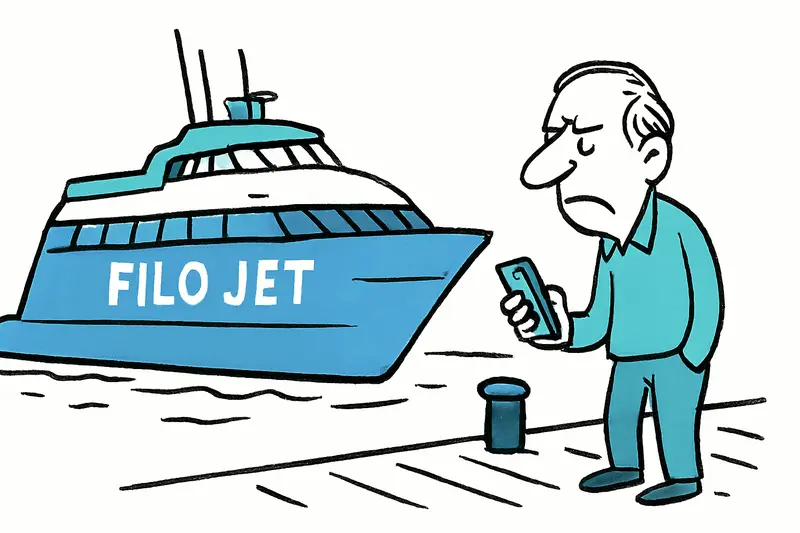
From Iris Jet to Filo Jet: A Catamaran with a Dark Past and What Mallorca Must Learn
From Iris Jet to Filo Jet: A Catamaran with a Dark Past and What Mallorca Must Learn
The catamaran that sank off northern Cyprus once operated as the Iris Jet between Mallorca (Cala Rajada) and Menorca in the early 2000s. Repeated breakdowns, later collisions and allegedly improper repairs raise questions about responsibility and safety. An assessment and clear demands from a Mallorcan perspective.
From Iris Jet to Filo Jet: A Catamaran with a Dark Past and What Mallorca Must Learn
Key question: Could earlier defects, incomplete repairs, or the ownership and operator changes of the past two decades have contributed to the disaster off northern Cyprus?
The reports from the eastern Mediterranean feel like a déjà-vu for many people here in Mallorca: a fast passenger catamaran, which had sailed for years under different names and operators, has sunk. Several dead, missing persons, hundreds rescued — and accounts of incoming water as well as explosions perceived by passengers in the bow area. According to the data available so far, there were 267 people on board in total; at least eight died, 18 are still missing, and 237 were rescued. The captain and several crew members have been arrested, and survivors are accusing the crew. Investigations are ongoing.
From a Mallorcan perspective one detail stands out sharply: between 2001 and 2003 the same vessel regularly operated as Iris Jet on the Cala Rajada–Ciutadella route. Back then breakdowns were not uncommon: reports speak of sudden power or engine failure in the middle of the Menorca Channel, hours adrift without propulsion and severe seasickness among passengers. Later a court ruled in favor of affected passengers and awarded compensation after hidden defects were found. In the following years the vessel's trail documents further incidents, including a collision with a berth on the Turkish coast and legal proceedings that addressed missing, inadequate or improperly carried out repairs.
Critical analysis: the chronology reveals a pattern that cannot be ignored. A ship that demonstrably had problems changed owners and names several times. Were defects fully remedied, or merely patched up so the vessel could return to service quickly? If a leak remains after a collision or structural damage is only superficially repaired, risks are not merely theoretical: they accumulate. Combine such potential weak points with heavy seas and you get a dangerous cocktail. Current reports of water ingress and a possible explosion in the bow make technical causes plausible — but human error, poor emergency organization and unclear responsibilities also play a role.
What is often missing in public debate is the perspective of island harbors and regional transport planning. In Mallorca we frequently discuss tourism, beach concepts and airport capacities — but rarely how older ship fleets and high-speed connections are regulated and monitored. Also lacking is the question of transparency of maintenance records across borders: when ships undergo ownership changes, flag changes or repeated operator changes, inspection and repair histories must remain fully traceable. There is also too little discussion about how EU-wide mandatory inspection criteria are strictly enforced before a ship carries passengers again.
Everyday scene from Mallorca: early in the morning on the Passeig Marítim in Palma fishermen sit on the quay, read the news on their phones and shake their heads as the first boats depart. In a cafe at the Mercat de l'Olivar tourism workers quietly discuss safety standards at sea; at the bus stop in Cala Rajada an elderly woman who once took the ferry to Menorca asks: 'Wasn't that the same boat already?' Such conversations show that on the streets concern mixes with worry that rules are applied too laxly as long as the operator's balance sheet or quick profits react.
Concrete solutions — from practice for practice: (1) Complete, public maintenance and repair documentation: every major repair and every certificate of convenience must be accessible in a central European database; ownership and operator changes must not leave gaps in the inspection record. (2) Two-stage safety checks on operator change: in addition to formal classification, independent inspectors should require spot load tests and dive expert assessments at sensitive points. (3) Minimum crew requirements: regular emergency training, documented onboard evacuation plans, and mandatory evacuation drills for passengers on longer routes. (4) Better port cooperation and rescue plans in coastal regions: local coast guards must be able to access international information more quickly; joint exercises between neighboring states strengthen the rescue chain. (5) Tougher liability rules: when repairs were demonstrably botched, those responsible must be held more accountable personally and financially to make prevention economically attractive.
A few practical thoughts for anyone traveling at sea: stay alert when checking in, take photos of the safety card, avoid seats in the bow area if there are worrying reports, and insist on an alternative crossing if in doubt. Authorities should offer passengers low-threshold reporting channels for safety concerns and evaluate complaints collectively.
Concise conclusion: the disaster in the eastern Mediterranean is not just a tragic isolated event. It is a reminder for Mallorca: safety culture does not end with a stamp in the logbook. Systems that favor ownership transfers, operator changes and rapid recommissioning without seamless control are accelerants. Those who want to make money on seasonal waves must ensure that both the equipment and the people on board can withstand it. Otherwise passengers pay with their lives and the community pays with grief.
Frequently asked questions
What lessons should Mallorca take from the Iris Jet disaster for safer ferry travel?
How can travelers assess the safety of a Mallorca ferry crossing before boarding?
Why are ownership or operator changes risky for ships serving Mallorca, and what can be done?
What role should European authorities play in maintaining ship safety near Mallorca?
How do older fleets and rapid re-commissioning affect safety in Mallorca’s coastal waters?
What practical safety tips should travelers consider when taking ferries in Mallorca’s region?
How does Mallorca’s climate and sea conditions affect ferry travel and packing?
What concrete safety measures are suggested to prevent similar incidents in Mallorca’s coastal transport?
Similar News

Water, Horses, Outrage: Who Bears Responsibility in Palma's Carriage Dispute?
A dispute about thirsty horses, a video and a determined tourist: the incident in Palma raises questions about the respo...
125 euros for two sunbeds: When beach comfort displaces the commons
At Cala Major beach, new premium prices — 125 euros per day for two sunbeds and an umbrella — are causing discontent. Wh...
Up to 400 euros a month: When parking spaces in Palma become a luxury
Parking spaces in Palma's old town are scarce — rents have risen significantly over a decade. Who pays, who is left out,...

After the large demonstration: Human chain in Palma — can perseverance move politics?
On Saturday activists in Palma plan to form a human chain from Plaça d'Espanya to La Lonja. Chairs, pens and conversatio...

Dead Dolphin in Peguera — a Lesson for Beach Protection
A young dolphin was first seen alive at Palmira Beach in Peguera and was found dead at the boat dock the next day. The s...
More to explore
Discover more interesting content

Boat Tour with BBQ along Es Trenc Beach

Private transfer from Mallorca Airport (PMI) to Pollensa
