
More than 13,600 Participants: Island Council Summer Sports Programs 2025 – A Summer in Motion and the Open Issues
Over 13,600 people took part in the Island Council's summer sports programs from June to August. A successful model — but how sustainable and accessible are the offerings in the long run?
More than 13,600 on the island in motion – a summer with music, laughter and reflection
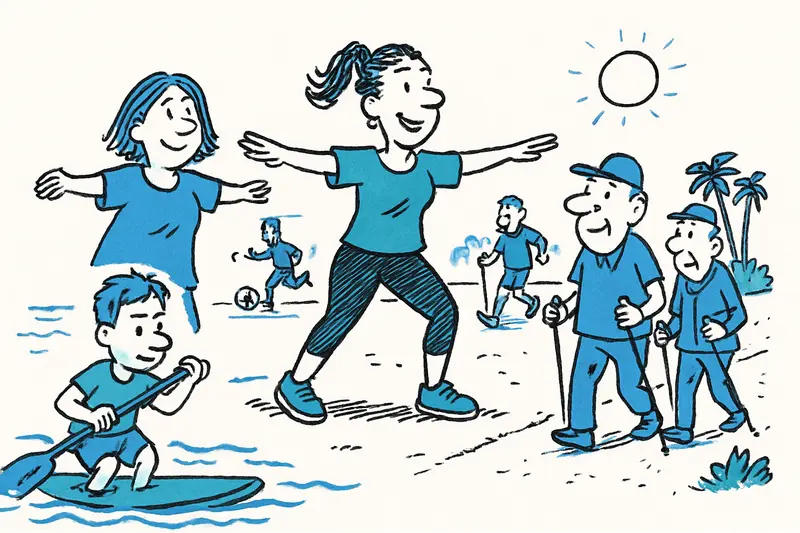
Between damp benches, sun umbrellas and the distant motorboats at Platja de Palma something beautiful happened this summer: more than 13,600 people took part in the Island Council report on more than 13,600 participants. I saw children coming out of the sea with wet hair, seniors taking a last round of Nordic walking before the bus, and town squares in the evening smelling of paella and drums. That is the picture of an active summer — but it is only half the story.
The key question: Are the offerings enough for everyone — and are they sustainable?
Behind the number lies a central question: Are these programs sufficient to strengthen long-term physical activity, social participation and club life on the island — or are they pretty seasonal blossoms that bloom once a year and then fade away? It is the question that keeps coming up in conversations in Campos or at the market in Sineu.
What went well: variety, village culture and new water sports offers
The strengths are obvious. The format "Fires i festes" attracted almost 7,000 participants — football tournaments, Zumba on the town square, dance evenings. The atmosphere was loud, joyful, lively. New and well received were targeted water sports offerings for young people. Surfing, stand-up paddling safety guidance, small sailing trips — especially at Platja de Palma the kids were wet and happy all day. Overnight sports camps gave families relief and fun, as described in a report on over 850 children in Island Council holiday programs. Excursions for seniors ensured that older people were not left out.
The downsides that few see from the festival grounds
But under the loud music and cheers lay problems that are less photogenic. Registration processes in some places were slow and cumbersome. At some meeting points there was a lack of shade, so parents with dripping children waited in the blazing sun. And: the numbers say nothing about distribution. Who uses the offers? Are they mainly families with time and a car — or do the programs also reach young people from socially disadvantaged neighborhoods, seasonal workers and people without Spanish language skills?
Another often overlooked point: reliability. Many instructors work as volunteers or only on project-based contracts. That leads to turnover. Children who train with an instructor for three weeks and then never see them again quickly ask: why sign up at all? Long-term commitment to clubs is therefore difficult to achieve.
Concrete opportunities and solutions
The good news: the basic building blocks are there. Festivals, beaches and community spaces can provide more than just summer fun. What is now missing are targeted adjustments. Three practical proposals:
1. Connect digital and local: A unified, simple online registration portal with offline support on site (municipal offices, youth centers) would reduce waiting times and frustration; examples and guidance on digital club tools can be found in Sport England guidance on digital club tools. Mobile registration teams at popular events could register interested people on the spot.
2. Shade, water, transport: Temporary sun sails at waiting areas, additional water stations and coordinated shuttle buses from remote villages would increase participation — especially in heat, following WHO guidance on heatwaves and health, and for people with mobility restrictions.
3. Sustainable coach and club development: Small grants for local clubs, UK Coaching resources for coach development and mentorship programs could stabilize volunteering and promote long-term commitment. Festivals and summer camps should be used consciously as recruitment platforms for clubs.
A look ahead: more than a summer highlight
The record reads well at first glance: activity in many places, encounters between generations, laughter in the marketplace. If the Island Council and the municipalities want to preserve this energy, however, more than good intentions are needed. Measurable goals, lasting structures and a focus on accessibility would turn a successful summer into a lasting benefit for the island.
I think of the children who walk home with wet feet and already ask whether the next camp will take place again soon. Such questions should not be answered only with a smile and a flyer — but with concrete paths so that sport in Mallorca becomes not just fleeting fun, but part of everyday life.
Frequently asked questions
Why were so many people taking part in Mallorca’s summer sports programs in 2025?
Are Mallorca’s summer sports activities suitable for children and families?
What should you bring to outdoor sports events in Mallorca during summer?
Is it too hot to do sports in Mallorca in summer?
What kinds of sports and activities were most popular in Mallorca’s summer programs?
Were Mallorca’s summer sports programs accessible for people without a car?
What was happening at Platja de Palma during Mallorca’s summer sports season?
Why do Mallorca’s summer sports programs matter beyond the season?
Similar News
Cafetería San Siro: A Meeting Place on Schinken Street Since 1966
In the middle of Schinken Street, Cafetería San Siro has been offering Mallorcan hospitality for more than six decades —...
From Ballermann to Prison: What the Verdict Against the Femina Operator Means for Palma
The Munich Regional Court convicted a German operator for subsidy fraud. What does the verdict mean for the Femina Club,...
Underpass Verge de Lluc: 19-year-old fights her way out of flooded car – a warning sign for Palma
A 19-year-old recently escaped swimming from her car after the Verge de Lluc underpass held up to one and a half meters ...
When the Floodgates Open Again: Why Palma's Floods Aren't a Coincidence
A sudden heavy downpour around 5 p.m. brought Palma to a standstill: flooded streets, full basements, panicked commuters...
Playa de Palma: Life-saving at Balneario 11 – Lifeguards Act Quickly
A German holidaymaker suffered cardiac arrest at Playa de Palma. Lifeguards resuscitated her on the beach; emergency ser...
More to explore
Discover more interesting content

Can Cap de Bou

Townhouse Lleo 72
