
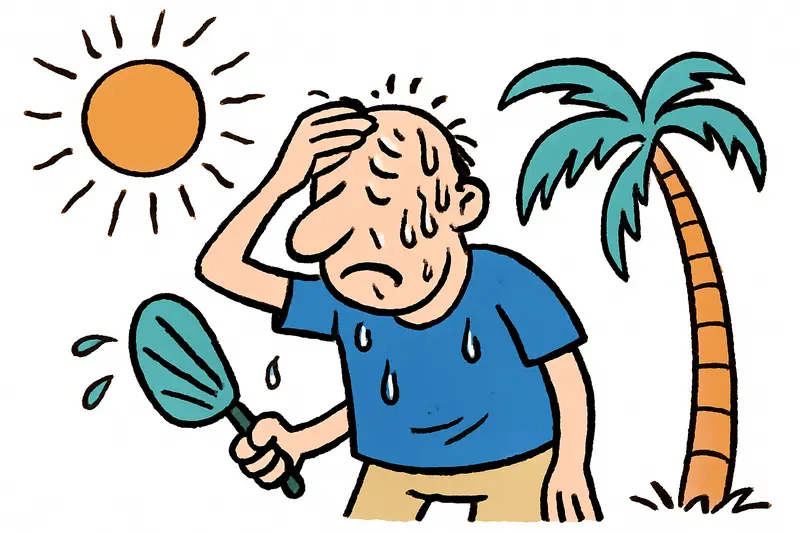
When the island sweats: Why Mallorca's heat alert is more than just weather
Up to 38°C, tropical nights and warm air from the Sahara — Aemet does not see a nationwide alert, but on Mallorca this is enough to strain everyday life and health. A reality check and practical suggestions.
When the island sweats: Why Mallorca's heat alert is more than just weather
Key question: Is the current warning sufficient to limit the impacts of nearly 40°C days on Mallorca?
It is hot — and in a different way than usual. Aemet reports up to 38°C locally for the weekend, already up to 37°C inland on Saturday; nights remain unusually warm at around 25°C. The air carries southern heat from North Africa, reinforced by a stable high-pressure system and strong sunshine, as outlined in African air brings up to 37 °C, Saharan dust makes the sky milky. Formally, according to Aemet this is not a nationwide heatwave, but for everyday life on Mallorca that does not make much difference.
Short and concrete: this heat hits people, infrastructure and animals in places where we normally do not expect problems. Anyone walking along Passeig Mallorca can feel it: the asphalt radiates heat, scooters roar, cafés shield themselves with tarps, and at the Mercat de l'Olivar vendors look for shade under awnings — this is not a picturesque summer, this is strain.
Critical analysis: current communication focuses on temperature values and a yellow warning level (12–20 h). That is necessary, but not enough. Temperatures up to 38°C and tropical nights are not purely a meteorological issue. They affect working hours on construction sites, supply chains, energy consumption from air conditioning and not least safety on roads and in the water. Particularly affected are elderly people in old town apartments without air conditioning, seasonal workers without adequate protection and pets left in non-ventilated cars or gardens.
What is missing in public discourse: concrete, local measures. There is much talk about numbers, little about implementation: where are the emergency cooling shelters? How are construction and delivery companies informed so that heavy work can be moved to morning hours? What rules apply to municipal parks, playgrounds and markets? And how is it prevented that grid load from widespread air conditioning leads to outages?
Everyday scene from Mallorca: early in the morning vans head towards Platja de Palma, tradespeople prepare before sunrise. In Cala Major a young family with children starts the day at the beach early to escape the heat; by midday the streets are emptier, but supermarkets fill up again, people pick up cool bags or ice cream. In the evening the neighborhood sits on the steps in front of the house, fly traps hum, no one sleeps well at 25°C — ordinary scenes, with thermometer values that promise an intense night, as described in Nearly 40 °C: Mallorca's Daily Life Under Heat Stress — How the Island Can Respond.
Concrete solutions that can be implemented quickly:
1) Signposted public cooling options: Town halls and municipalities should clearly name and sign cooling rooms or air-conditioned spaces in libraries and sports facilities in the affected districts and publish opening hours.
2) Adjust working hours: Construction companies, gardeners and delivery workers need binding recommendations to avoid heavy physical labor between 12:00 and 18:00; spot checks by labor inspectors are sensible.
3) Water stations and mobile supply: In busy areas such as Passeig Mallorca, Plaça Major or at beaches, temporary drinking water stations and sun sails should be set up — municipalities can involve local associations.
4) Power grid and prevention: Energy providers should give preventive advice, plan redispatch measures and inform households about correct use of air conditioning (e.g. moderate temperature settings instead of maximum cooling).
5) Protection for vulnerable groups: Social services must call elderly and single people, pharmacies should point out heat-related medication issues, and mobile care teams should be deployed more intensively.
6) Protect animals: Simple rules: no animals left in vehicles, provide shade, refill water bowls, relieve animal shelters. Municipal campaigns can inform precisely.
7) Fire safety and open flames: Higher temperatures also mean greater fire risk in rural and scrubby areas, as warned in Mallorca on Alert: Highest Wildfire Warning Level and Scorching Heat – What to Do Now. Barbecuing in forests and open terrain should be banned and controlled.
What to do immediately (for every reader): stay hydrated, rest at midday, darken rooms, use fans sensibly, shift physical exertion. If you take medication or have elderly neighbors: call more often now. At the beach: watch for UV protection and never leave intoxicated children unattended — refreshing water helps, but do not underestimate the sun.
In the long term we should consider how our island adapts to more heat: more shade-giving trees in villages and on promenades, better insulation of old buildings, water-saving agricultural techniques and an urban heat management plan that defines clear responsibilities.
Sharp conclusion: the yellow warning is misleading. For everyday life on Mallorca this heatwave is tangible and demands more than mere temperature figures. Authorities, businesses and neighborhoods must come together now — with pragmatic, locally tailored measures. Those who can do this protect lives and spare the island avoidable consequences of this summer strain.
Practical tip at the end: Aemet updates hourly. A glance at the app or the website before planned activity helps, and a simple emergency kit (water, sun protection, list of phone numbers) in your bag never hurts.
Author: Mallorca Magic editorial team — we were at the Mercat de l'Olivar early this morning and spoke with vendors who say: 'The crates stay cold, the customers disappear at midday.' That says more than any temperature curve.
Frequently asked questions
How hot is Mallorca likely to get this weekend, and what does that mean for daily life?
What practical measures can Mallorca towns implement to cope with heat alerts?
What should I do right away to stay safe on hot Mallorca days?
Where can residents find cooling options in Palma during a heat alert?
How are work hours and outdoor jobs supposed to adapt during Mallorca heat waves?
Are there public water stations or shade structures along busy Mallorca areas?
What about vulnerable groups and animals during Mallorca heat alerts?
What long-term changes could help Mallorca cope with increasing heat in the future?
Similar News

From the Ruhr Area to the Tramuntana: Thorsten Legat and the FC Germania Mallorca Adventure
The former pro has not only taken the coaching role on Mallorca but also moved into a small island shared house, set amb...

Silent Conquest: What Mallorca's Wildlife Can Do Against Introduced Snakes
For years non-native snakes have been appearing on Mallorca. Who monitors the import routes, how effectively do authorit...
Stolen motorcycles in vacant factory: Guardia Civil finds 19 vehicles
In Inca, investigators discovered 19 motorcycles stolen between April and June. In an abandoned factory near Selva, many...
Storm in Majorca: 75 Responses, Uprooted Trees and Beached Boats – Who Will Draw the Lessons?
A sudden thunderstorm swept over the islands on Thursday evening, leaving uprooted trees, damaged boats and disrupted su...
Daily new boats: Mallorca and the Balearic Islands under pressure from rising arrivals from Algeria
For months, arrivals of boat migrants from Algeria have remained at a high level. Places are lacking, unaccompanied mino...
More to explore
Discover more interesting content

Boat Tour with BBQ along Es Trenc Beach
Private transfer from Mallorca Airport (PMI) to Pollensa
