
Arson in Manacor: Prison Sentence and the Questions That Remain
Arson in Manacor: Prison Sentence and the Questions That Remain
A man was sentenced to seven years and six months in prison for setting his partner's hut in Manacor on fire. Why are prison sentences alone not enough to prevent such violence?
Arson in Manacor: Prison Sentence and the Questions That Remain
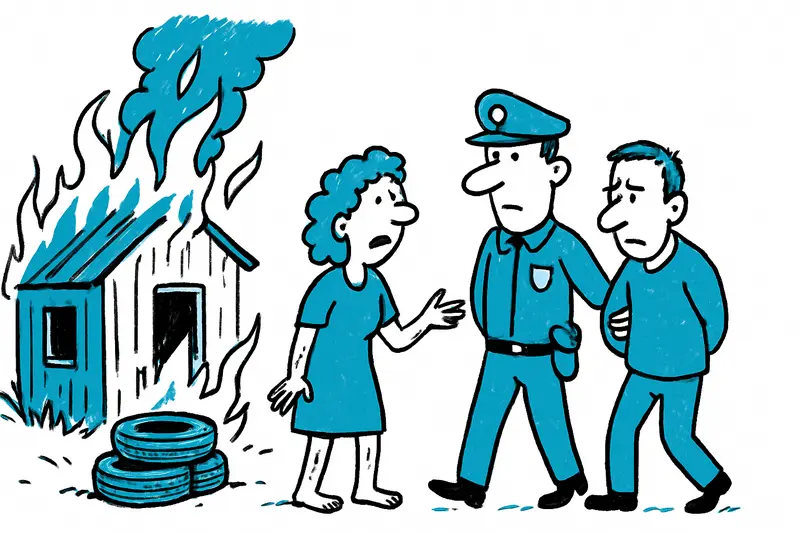
In the early morning of June 11, 2025, a makeshift hut in an industrial area of Manacor caught fire. A woman was awakened by intense heat, managed to get outside and suffered burns to her arms and legs. The 34-year-old suspect was arrested shortly afterwards. The court imposed a prison sentence of seven years and six months; there is also a restraining order of eight and a half years with a minimum distance of 500 meters. Discussion of such cases elsewhere includes Es Molinar in Shock: Attempt to Set a Housemate on Fire – What Needs to Be Done Now.
Leading question
How can a relationship crisis escalate so far in a single act during the night — and what gaps in prevention and protection remain unexamined?
Critical look at the verdict and the circumstances
The court found that the attacker started a fire near the sleeping victim. The construction of the shelter, highly flammable materials and stacked tires allowed the flames to spread rapidly. The conviction followed a guilty plea and an agreement between defense and prosecution; intoxication was considered a mitigating factor, while proximity to the victim was considered aggravating.
On its own, the conviction sends a clear signal: anyone who deliberately uses arson as a means to kill can expect lengthy prison terms. By contrast, different sentencing outcomes in related cases are discussed in Palmanova verdict: Two years in prison — and what Mallorca must learn now. But verdicts are only part of the answer. They intervene after harm has occurred. The facts of this case reveal further problems: improvised housing without fire protection, living situations in which people live in extreme proximity without a safety net, and the role of alcohol in contexts of violence.
What is missing in the public discourse
We talk a lot about punishment — but too little about the conditions that make such acts more likely. In conversations with neighbors in Manacor, people speak of makeshift shelters, nighttime noise, and endless arguments that are often everyday local life. Rarely does the discussion focus on prevention: who takes care of fire safety in informal constructions? Who provides low-threshold help for couples in crisis? Which support services reach people who live outside the formal housing market? These questions are echoed in coverage such as Suspended Sentence After Abuse in Palmanova: A Verdict That Raises More Questions.
Everyday scene from the island
Imagine the industrial area at dawn: cicadas singing above parking lots, a lone delivery van passing, ashtrays still smoking outside a workshop. Such places seem harmless, but at night they are often retreats for people without a fixed address. This is where the act took place. The neighbors who discovered the fire were not emergency crews but residents who were drinking their morning coffee on a ramp and suddenly heard fire engine sirens.
Concrete solutions
- Mobile prevention work: response teams made up of social workers, firefighters and police who regularly visit industrial and marginal areas, carry out fire-safety checks and provide contacts.
- Secure emergency shelter capacity: more short-term, supervised sleeping spaces with smoke detectors and clear protection rules so that people do not have to sleep in makeshift, dangerous structures.
- Low-threshold counseling services: hotlines and on-site counseling for domestic conflicts, especially in evening and night hours, combined with alcohol intervention programs.
- Faster protection orders: simplified mechanisms so that restraining orders take effect immediately, accompanied by technical help such as phones or personal alarms for those affected.
- Local education: fire-safety workshops for residents of informal shelters and storage recommendations so that tires or wood are not kept nearby. See also reporting on systemic protection failures in Shock in Costitx: Knife Attack on Ex-Partner — What Fails in the Protection System.
Why this matters
Prison sentences punish offenders — but they do not per se prevent similar cases from occurring. On an island like Mallorca, with seasonally fluctuating employment, tourism pressure and a mix of formal and informal housing, social tensions often meet precarious living conditions. Such constellations increase the risk that disputes escalate into violence.
Conclusion
The verdict in Manacor sends a clear criminal-law signal. But if we as a community want to prevent the recurrence of such acts, we must think further: fire protection in improvised shelters, better around-the-clock crisis counseling, low-threshold support services and rapid protection mechanisms for those affected. Otherwise the answer to the leading question remains incomplete — and the dawn over Manacor could again be pierced by fire-engine sirens.
Frequently asked questions
When is the best time to visit Mallorca for a beach holiday?
What should I pack for a trip to Mallorca?
Is the water good for swimming most of the year in Mallorca?
What are popular activities to do in Mallorca?
What is Palma de Mallorca known for?
Is Sóller worth a visit and how do you get there from Palma?
Is Alcúdia good for a family beach trip?
What’s a day trip to Cap de Formentor like?
Similar News
Body in the Basin of Port Adriano: Who Protects People During Crossings?
In the morning, just before noon: employees of a luxury marina discovered a floating body in the basin of Port Adriano. ...
Raised from the Sand: A Late Antique Merchant Ship Tells of the Sea off Can Pastilla
A 1,700-year-old Roman merchant ship was raised off Can Pastilla. Finds such as sail fragments and amphorae provide rare...
After the Storm: Why Many Fish Died at Riuet de s'Illot — and What's Still Missing
After the severe storm, numerous dead fish were found in the Riuet de s'Illot wetland. Who is affected, why it may have ...
Fire in Can Picafort: Family Rescued at the Last Minute – a Safety Check for the Promenade
A fire in a sports shop on the Can Picafort seafront forced the evacuation of a mother with four children. How safe are ...
Nine-year-old rescued after cliff fall at Cala Murada — How safe are Mallorca's coastal paths?
A boy fell roughly five meters down the rocks near Cala Murada. The dusk rescue was elaborate; a helper also had to be r...
More to explore
Discover more interesting content

Boat Tour with BBQ along Es Trenc Beach

Private transfer from Mallorca Airport (PMI) to Pollensa
