
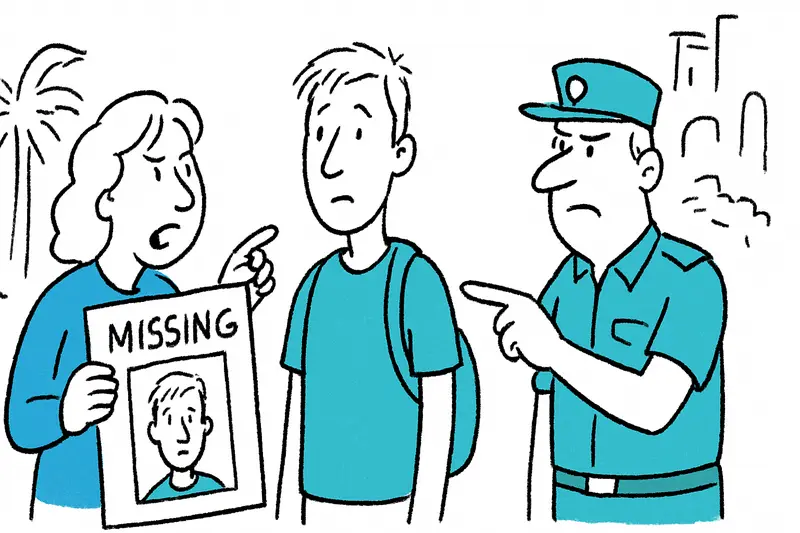
Missing in Palma: A reality check on the search for 22-year-old Dario
Missing in Palma: A reality check on the search for 22-year-old Dario
Since late December the 22-year-old Dario has been missing on Mallorca. A reality check: what is going wrong in the search and coordination — and how can the island help concretely?
Missing in Palma: A reality check on the search for 22-year-old Dario
Key question: Why can a young man remain untraceable for months — even though family, police and neighbors raise the alarm?
Since the end of December 2025 the family from Mecklenburg-Vorpommern has had no sign of life from Dario, 22 years old. According to information available to us, he traveled from Hamburg Airport to Palma at the beginning of January and then disappeared. He is slim, about 1.77 meters tall, blond, has brown eyes and a scar above his left eyebrow. After a hospital stay in Germany he was apparently registered briefly near Son Sant Joan Airport; later his account activity stopped and his bank card remained unused. An uncle filed a missing-person report with the National Police in Palma at the end of April. Since then there have been no public clues to his whereabouts.
Restating the key question clearly: What gaps allow a young person on a populated holiday island to remain missing for months without the search making noticeable progress?
Critical analysis: The search for missing persons depends on time, information and visibility. On Mallorca additional factors come into play: many short-term visitors, interrupted communication chains between German relatives, Spanish authorities and local support services, as well as data protection and bureaucratic hurdles that can delay rapid information. The National Police conduct the official investigation; the family has filed a report; similar delays are discussed in New leads in the Malén Ortiz case: Why answers in Mallorca are taking so long. Yet the public, local neighborhoods and community services are often poorly connected to the investigations. When account movements or location data are only briefly and fragmentarily available, the search becomes a bottleneck — too few tracking dogs, too little systematic checking of hostels, shelters, hospitals and border points.
What is missing in the public discourse: We talk a lot about individual cases and sensational moments, such as Missing in Palma: Instagram Update Raises Questions — Community Calls for Rally at the Train Station, but too rarely about practical gaps. There is no easily accessible, multilingual point of contact for relatives that clearly states which steps are possible — from blocking bank cards to submitting digital location data to checklists for conduct in cross-border missing-person cases. Local support networks such as warming centers, soup kitchens, hostels or private Facebook/WhatsApp groups are also insufficiently and systematically involved. Finally, little is said about the emotional toll on families who live for months in uncertainty.
An everyday scene in Mallorca: mid-morning in the arrivals hall at Son Sant Joan — rolling suitcases, the hum of the air-conditioning, voices in several languages, a café frequented equally by travelers and shift workers. In front of the terminal are buses, taxis and car rental companies. If someone stayed there longer, such a person would quickly stand out. At the same time the island's outer areas are less monitored: small coves, abandoned commercial buildings on the periphery of Palma or public sleeping places in the industrial area are locations where a person can remain unnoticed for a long time. This discrepancy between busy hotspots and quiet niches makes the search more difficult.
Concrete solutions — immediately implementable: 1. A central German-Spanish hotline or an online portal that guides relatives step by step through the procedure and collects standardized data (last known movements, bank transactions, hospital discharge data). 2. Cooperation between banks, mobile operators and police: timely queries of suspicious transactions and SIM activities, of course observing legal provisions. 3. Visibility on site: poster campaigns at airports, bus stops, hostels and popular meeting points — with clear contact routes for witnesses. 4. Activate volunteer networks: local groups, beach-cleaning teams and taxi drivers can report tips; simple reporting channels are needed. 5. Better coordination between the consulate, National Police and local social services — regular status updates for relatives and a designated contact person in Palma. 6. Checklists for hotels and landlords: what to do when a guest no longer appears? Who to inform? How to document?
Practical advice for eyewitnesses: Note the place, date and time, take a photo if possible and report tips directly to the National Police in Palma or to the family if contact addresses are available. Every small observation can be a piece of the puzzle — especially if the appearance may have changed (longer hair, beard).
What authorities can do: more visible communication about ongoing mechanisms for missing-person cases and clearer information about what relatives should expect. What society can do: neighborhoods and tourist communities should consider awareness programs so that reporting a missing person is not omitted out of shame or uncertainty.
Pointed conclusion: It is not enough to shout "missing" — you must be able to search. On an island with millions of visitors a year, disappeared people are not merely private tragedies but a logistical and humanitarian problem; this is underscored by broader incidents such as 18 People Missing off Mallorca — A Call to Politics and Society. Dario's family has provided information and informed the relevant contact points; now more networking, faster information flows and concrete, locally anchored measures are needed. Only then does the chance increase that people like Dario are found and returned safely.
If you have seen anything or can provide tips, please contact the competent authorities in Palma directly or use the contacts listed on the family's poster. Every report counts.
Frequently asked questions
When is Mallorca's best time to visit for warm weather without the peak crowds?
Can I swim in Mallorca year-round, and when is the sea most comfortable?
What should I pack for a Mallorca trip?
What outdoor activities are best in Mallorca?
How can I experience Mallorca's culture away from the tourist spots?
Are Mallorca's beaches family-friendly?
Is Mallorca good for a quick weekend break or a longer holiday?
What should I know about Mallorca's weather and sea conditions for swimming or boating?
Similar News
When Shopping Weighs Heavier: Mallorca Demands a Tax Pause on Food and Fuel
Rising prices are putting pressure on households and agriculture. The Balearic Islands are calling for temporary tax rel...
Almost 70 Euros for Just Under Three Hours of Parking: The Trap at Son Sant Joan
A short work errand at the airport ended with a surprisingly high parking bill. Why the two-hour tariff limit raises so ...
Goodbye Megayachts: Why Palma's Port Is Now Focusing on Small Luxury Liners
Four smaller luxury liners berthed in Palma at the same time recently — around 1,600 passengers on board, plus about 2,0...
Fear in the Sa Teulera Forest: Youth Groups Harass Cruising Zone in Palma
In the wooded area of Sa Teulera, those affected report verbal attacks, property damage and intimidation. How safe is th...
Axa opens first health center in Palma: €3 million, 650 m² and more local access for La Vileta
In the heart of La Vileta, Axa has opened its first own health center in Mallorca. On around 650 square meters and with ...
More to explore
Discover more interesting content

Can Cap de Bou

Townhouse Lleo 72
