
January in Mallorca: Festivals Without History? A Reality Check
January in Mallorca: Festivals Without History? A Reality Check
Sant Antoni, Sant Sebastià, the Three Kings — in January fires and lights shine across Mallorca, but do they still reach the hearts of young people? A critical assessment with an everyday scene, gaps in the discourse, and concrete proposals.
January in Mallorca: Festivals Without History? A Reality Check
Central question: Why do the traditional January festivals hardly move many young people anymore?
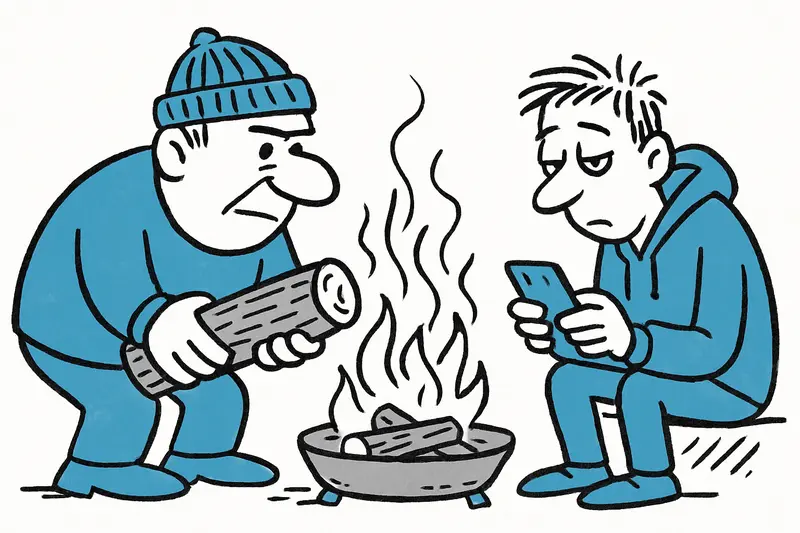
In the early morning before January 17, smoke from grills rises into the cool air in Sa Pobla. Old men carry logs, children run with sparks in their hair, and the air smells of sobrasada and damp charcoal. At the same time, teenagers on the Plaça Major of Palma scroll through short videos in which the same scenes appear as “content.” This coexistence — lived tradition versus consumed surface — is not a flourishing culture but a contradiction that deserves a closer look.
Critical analysis: The festivals are lively, loud and often spectacularly staged. Yet form dominates: fire, music, costumes, large portions of food. Questions about origin, meaning and relevance to life are asked less often. For many young people the central message of the saints remains invisible. They perceive the rituals as events, not as stories that reflect or challenge their own lives. When religion or the biographies of the patron saints serve only as a backdrop for music and grilled sausages, the result is a ritual without reintegration, a tradition without meaning.
What is missing in the public discourse: First, the narrative. Most coverage reports on dates, street closures and traffic, not on background or human stories. Second, spaces for dialogue with young people are lacking: How do young people today connect ideas like solidarity, loneliness or identity with these festivals? Third, institutional responsibility is often shifted onto municipalities and brotherhoods, without systematically involving schools, clubs and cultural centers. As a result, the interpretive authority remains with those who have always been in charge.
Why the problem is more visible locally: On the Balearic Islands the preservation of form works particularly well. Small villages develop a remarkable capacity to keep processions and customs alive. That is valuable. But when preservation becomes automatic, tradition turns into museum practice — careful, respectful, but without impact on the life questions of the next generation.
An everyday scene from Mallorca: A few days ago I stood at the edge of the Sant Antoni fire in Son Servera. Young people sat in a group, jackets over their knees, their gazes more fixed on their phones than on the flames. An older neighbor explained to a boy in the group who the saint was; the boy nodded politely, as if it were a historical duty. Afterwards everyone moved on together — to an improvised DJ booth in the village square. This scene says more than any statistic: respect exists, understanding often does not.
Concrete approaches: 1) Tell stories, don’t preach: Local initiatives should develop targeted storytelling formats — short videos, street theater, podcast conversations — that show the human core behind figures like Sant Antoni or Sant Sebastià. 2) Link schools and festivals: Project weeks in January in which students develop their own approaches to a festival (interviews with older residents, creative performances, research tasks) create connection. 3) Space for questions: On festival squares there could be small “story booths” where young people can exchange why they come or why they don’t. 4) Renew the ritual: Some elements can be translated into contemporary terms — visible work on community projects, environmental actions at the edge of the celebration, or solidarity fires where joint work is visible instead of mere consumption. 5) Involve new actors: Youth organizations, musicians blending folk and pop, graphic designers for explanatory material — this way traditions are not only preserved but also rethought.
What this can concretely mean for municipalities: An information poster is not enough. A small budget is needed for moderation, fees for young creatives, and technical equipment in the villages. Municipalities should allocate grants so that projects require genuine youth participation. This creates a sense of responsibility and prevents festivals from being performed only for tourists.
What often remains unexamined in the discourse: The possibility that religious depth does not automatically have to be tied to church practice. Young people seek meaning in community, in justice, in rituals that allow transparency and participation. Those who recognize this can build bridges between saints’ legends and today’s lived reality.
A pointed conclusion: If we continue to assume that images without context are enough, the January festivals will remain glittering backdrops for fleeting joy. If we want more, we must tell stories, ask questions and connect. This is not a return to dogma, but a simple practice: show people why old stories might still be relevant today. That way the flame is not only visible, it becomes shareable.
A small, practical request to readers at the end: If you see a group of young people this January who are only taking photos at the fire, ask them what they feel. A short conversation by the frying pan can change more than a year of event planning. Mallorca has what many places lack: living villages and people ready to talk. Let’s use that.
Frequently asked questions
Why do January festivals in Mallorca feel less meaningful to some young people?
What are the Sant Antoni celebrations like in Mallorca?
What can young people do to connect better with Mallorca’s January traditions?
What should municipalities in Mallorca do to keep winter festivals meaningful?
Is January a good time to visit Mallorca for local festivals?
What does the Sant Antoni fire in Son Servera mean?
How should you dress for January festivals in Mallorca?
Do Mallorca’s January festivals still matter if you are not religious?
Similar News

Palma Gets a Welcoming Park: Tirador Goes Greener — and a Café Is Coming
A new green project in Es Fortí/Camí de Jesús will transform the old Voltadora into a city park with an experience fores...
Why the End of "Los Últimos Mohicanos" Is More Than the Closing of a Bar
With squealing tires and one last glass, an icon on the Palma–Manacor expressway closes. Why the demise of this German b...

Protest camp on Plaza España: Who asks for solutions to the right to housing?
Around 30 activists set up a tent camp on Palma's Plaza España to push for stronger tenant rights. Our analysis asks: Ar...

In the Name of a Gang: Alleged Extortion in El Molinar and What It Reveals About the Protection of Sex Workers
A man is accused of posing as a member of the Hells Angels and extorting two women at accommodation in El Molinar. The s...
When Chile Meets the Mediterranean: A New Flavor at Can Bordoy
At Can Bordoy in Palma's old town, Chilean chef Jhonatan Maldonado combines Patagonian seafood with Mediterranean island...
More to explore
Discover more interesting content

Can Cap de Bou

Townhouse Lleo 72
