
Jaume Anglada after serious accident in Palma: Why Joan Miró is facing renewed criticism
The well-known singer Jaume Anglada was seriously injured in a nighttime accident on the Joan Miró road. The incident again draws attention to the lack of road safety in Palma — and to the question of why bicycle and motorcycle riders remain so exposed.
Serious night accident: A well-known name, a much larger question
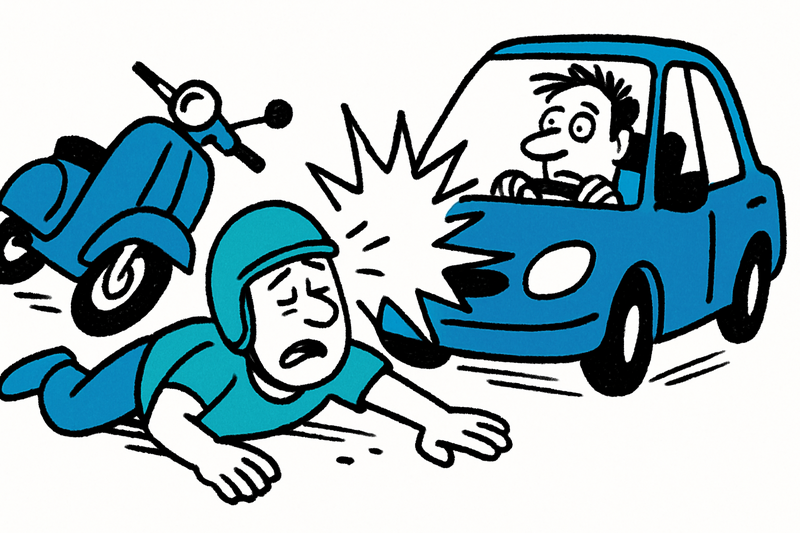
In the early hours of Friday night, around 1:30 a.m., the Joan Miró in Palma — normally dotted with streetlights and occasional taxi lights — briefly became a grim focal point for the island, as reported in After accident with Jaume Anglada: How safe is Avenida Joan Miró?. According to eyewitnesses, singer Jaume Anglada was struck on his Vespa by a car. The driver initially drove on but was later detained by police; coverage that follows the case in detail can be found in Bail for Jaume Anglada's Accident Suspect: Too Much Trust in the Justice System?.
Anglada's condition is critical
Rescue teams transported the 52-year-old to Son Espases hospital. Medical sources report that he is still fighting for his life. Witnesses said Anglada had been wearing a lightweight helmet — a protection that likely prevented even worse injuries but was not enough to stop the severe head traumas he now faces.
What this accident says about our streets
Of course, the injury of a prominent musician moves many people: fans, colleagues, neighbors. But the case raises a fundamental question that goes beyond a single accident: why do stretches like the Joan Miró remain so dangerous for two-wheeler riders despite repeated warnings?
The road connects the city center with busy neighborhoods and, late at night, is a mix of commuters, taxis, delivery vans and young people coming from bars. The asphalt reflects the lamplight, the wind carries sounds from the sea — and it is precisely in such places that the unclear situations occur, which we should have long since defused.
Too few visible measures, too great risks
Residents have been talking for years about missing speed controls, poor shoulders and insufficient lighting at critical spots. There is a lack of physical protection for motorcyclists: lowered curbs, clearly marked lanes, protective islands at intersections. Instead, there often remains only the sense that warning signs and appeals are not enough.
Another point rarely discussed clearly enough is the driver's flight. Driving away after an accident is not a tactic for panic situations — it is a serious crime, as addressed in the Spanish Criminal Code on failure to render assistance, with consequences for investigations and psychological burdens for victims and witnesses. That witnesses were able to detain the alleged driver is a good sign of civic engagement, but no substitute for preventive safety measures.
Overlooked: emergency response and protective equipment
The response times of the rescue chain and the equipment of first responders are also decisive. How quickly can ambulances reach certain streets during the night hours? Can bystanders provide effective first aid, or is basic knowledge lacking? And finally: how much do many riders underestimate the importance of a full, certified helmet instead of a "light" model, compared with the official guidance on motorcycle helmets from the DGT?
Concrete proposals instead of a shrug
The discussion should now demand concrete steps: targeted speed controls and mobile radar on the Joan Miró, more and better lighting at danger spots, structural protective measures for two-wheelers and tougher controls against hit-and-run. An information campaign for motorcyclists — including subsidies for high-quality helmets — could save lives. Increased cooperation between urban planning, police and local neighborhood associations would also help identify hotspots and quickly defuse them.
A personal outcome uncertain — a political conversation needed
Many people's hope on Mallorca is simple and human: that Jaume Anglada recovers and perhaps soon returns to a stage, while somewhere in Palma someone turns up the radio. But regardless of the outcome of this individual fate, the island should take this event as a wake-up call.
It is not just about celebrities; it is about neighbors, couriers, students on their way home and late-night workers. If the Joan Miró makes headlines again, the response should be clearer than pity — it must consist of measures. Otherwise the next victim may not have a well-known name, and the attention will fade even faster.
Frequently asked questions
Is Avenida Joan Miró in Palma considered dangerous for scooters and motorbikes?
What should motorbike riders in Mallorca wear to stay safer on the road?
What should you do if you witness a serious traffic accident in Palma?
How safe is it to ride a Vespa in Palma at night?
Why do people in Palma keep asking for more speed checks on major roads?
Is Son Espases hospital the main trauma hospital in Mallorca?
What road safety problems do residents usually mention in Palma?
Are hit-and-run drivers prosecuted in Spain?
Similar News
After Accident in the Tramuntana: Mourning — and the Question of Rally Safety
The death of Klaus Rader at the Rally 550 Challenge Mallorca has shaken island residents and participants. His wife aske...
Does Pedro Sánchez Have Better Odds in New Elections? A Reality Check from Mallorca
Sánchez weathers setbacks, forms tactical coalitions — but is that enough in new elections? A critical look with an ever...
Ses Salines Celebrates Art: ArtinSal Turns the Village into a Gallery
More than 70 artists, open houses, music on the Plaça Sant Bartomeu and the Església Vella as an exhibition space: Artin...
More than five tons of waste from the sea: Who cleans up when plastic keeps washing ashore?
In September, response boats in the Balearics recovered over 5.3 tons of waste from the sea and coasts — almost half of ...
Loose dog on the MA-19: Rescue — and an uncomfortable question
A large dog ran across the carriageway of the MA-19 near exit 12 on Sunday morning. The Local Police captured the animal...
More to explore
Discover more interesting content

Can Cap de Bou

Townhouse Lleo 72
