
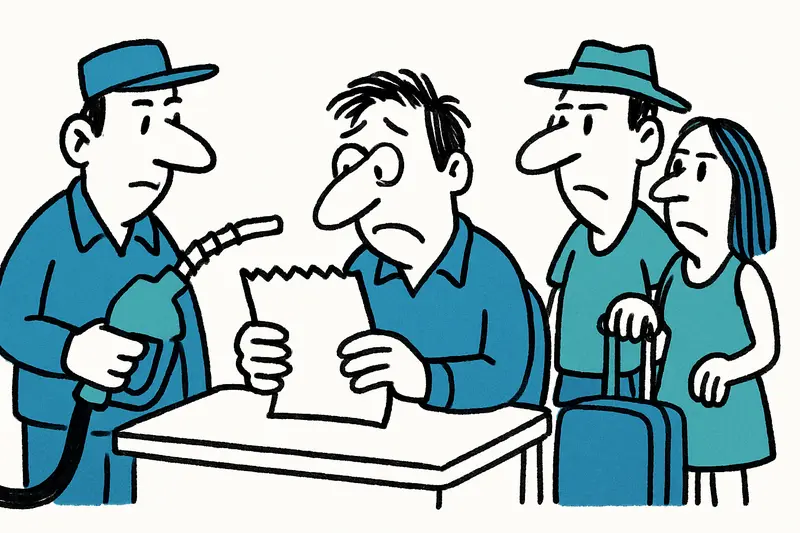
Jet Fuel, Prices, Palma: Who Will Pay the Bill for the Middle East Conflict?
Jet Fuel, Prices, Palma: Who Will Pay the Bill for the Middle East Conflict?
Jet fuel is becoming more expensive — but Spain reports that supply is secured. A reality check for Mallorca travelers: where the dangers lie, what's missing in the debate, and which measures would make sense now.
Jet Fuel, Prices, Palma: Who Will Pay the Bill for the Middle East Conflict?
Leading question
Who ultimately pays the bill for rising jet fuel prices — the holidaymakers, the airlines, or the island residents who rely on dependable connections?
Critical analysis
Since the escalation in the Middle East began, fuel markets have been less predictable than usual. For Mallorca this means: fuel becomes more expensive globally, airlines' costs rise, and the industry looks for ways to pass that burden on. Important to know: Spain itself has high refining capacity and supply chains for aviation fuel, and Aena and local operators are not currently signaling immediate supply shortages, although incidents such as the jet fuel shortage in Hamburg have shown how technical failures elsewhere can create uncertainty. That's good news — but it does not answer the crucial economic question: who bears the higher price?
Airlines respond differently. Large corporations with financial instruments for hedging and larger liquid reserves can dampen the impact in the short term. Low-cost carriers with thinner margins or regional providers are significantly more vulnerable. In practice this means: some routes remain stable, others are reduced or charged higher surcharges. In Mallorca, a core market for many airlines, basic service will probably continue — but that does not protect against price increases for tickets, fees or additional fuel surcharges.
What is missing from the public debate
The discussion currently focuses on two topics: supply security and geopolitical risk assessment. Two important points are underemphasized. First: transparency about cost distribution. Airports, airlines and fuel suppliers rarely disclose openly what percentage of a ticket directly goes to fuel costs and how hedging gains or losses are accounted for. Second: the social consequences for island residents. Many Mallorcans depend on cheap flights — whether for work, medical appointments on the mainland, or visiting family. A wave of price increases hits tourists and islanders unequally.
Everyday scene from Palma
Early in the morning, when the rush at the airport begins, the arrival hall smells of espresso from the small café. Taxi drivers at Terminal A discuss the prices: "Last week ten euros more in surcharge, and the plane was still full," says Jordi, who for twenty years has run the afternoon line between Passeig Mallorca and the airport. At baggage claim a woman with a stroller passes a young couple who are comparing the price increases on their phone. Scenes like these show: availability remains, but the mood cools as soon as the bill arrives.
Concrete solutions
1) Demand more price transparency: Airports and airlines should clearly show which parts of the fare consist of fuel, taxes, airport charges and service. This strengthens consumer rights and political pressure for targeted measures. 2) Consider targeted government interventions: In the short term, tiered support for island residents, students and commuters could help — tax relief or a limited subsidy for commuting routes would be conceivable. 3) Promote public hedging: Government and regional authorities could jointly secure fuel for state fleets or subsidized connections at more favorable conditions, similar to capacity agreements in other networks. 4) Push environmental and efficiency measures: Investments in more efficient flight routes, optimized ground operations in Palma and incentives for modern, fuel-saving aircraft and sustainable fuels such as green kerosene from Dusseldorf reduce long-term exposure to price shocks. 5) Consumer tips: Flexibility with travel dates, booking outside peak times and comparing total prices early (including all surcharges) help avoid surprising costs.
What should be watched particularly on Mallorca
The Balearics are a high-season market; many airlines prioritize routes accordingly. That protects against massive capacity cuts in summer months, but it also makes the island a target for surcharges. Authorities should therefore negotiate now — not only when the first ticket price hikes become visible. Local governments in particular could insist on transparent information about fuel storage, supply chains and price-setting mechanisms, including recent discussions on secured storage near Son Sant Joan.
Pointed conclusion
Supply security alone is not enough. Mallorca is unlikely to suffer from flight operation failures — the real danger lies in creeping price increases that distort travel behavior and everyday life. Those who remain silent now leave the field to market participants. Those who demand clear numbers, targeted aid and measures to increase efficiency protect residents and visitors alike. And in the small café at the airport, Jordi will keep serving espresso and watching the prices — without a magic formula, but with local knowledge and an eye for what works.
Frequently asked questions
When is the best time to visit Mallorca for beach weather?
Can you still swim in Mallorca outside the summer months?
What should I pack for a trip to Mallorca?
Is Mallorca good for a holiday in spring?
What is Palma like for a short stay in Mallorca?
Is Alcúdia a good place for families in Mallorca?
What is Sóller like for visitors to Mallorca?
Does Mallorca get very hot in summer?
Similar News
Warning to Bathers: Nipping Fish in Cala Major and Other Coves — a Reality Check
In Cala Major and several beaches around Mallorca, bathers report painful “nips”. Who are the animals, why are they gett...

Rental Car Theft in El Arenal: What This Incident Reveals About Our Gaps
A teenager steals a running rental car in El Arenal, flees on foot, climbs over walls and is caught by the Guardia Civil...

Red Rope in Palma's Library: What Helps Against Selfie Tourism — and What's Missing
Palma's city library cordoned off an area with a red rope to keep selfie tourism away from reading and working activitie...
Fort San Carlos: Museum, Harbor Dispute — and a Conflict That Demands Answers
The military museum at Fort San Carlos sits right on Palma's harbor, with unexpectedly quiet rooms filled with cannons a...
Old Town Under Pressure: When a Doorway Becomes a Sleeping and Shower Place
For months a woman has been living with a parasol, a clothes rack and personal belongings next to the social welfare off...
More to explore
Discover more interesting content

Can Cap de Bou

Townhouse Lleo 72
