
Tents at Can Pere Antoni: When the City Becomes an Emergency Camp
Tents at Can Pere Antoni: When the City Becomes an Emergency Camp
Three people are currently sleeping in tents on the Can Pere Antoni city beach. The scene reflects a growing housing shortage — and puts Palma in a dilemma between order, compassion and real solutions.
Tents at Can Pere Antoni: When the City Becomes an Emergency Camp
How long can a tourist destination be the new living room of the homeless?
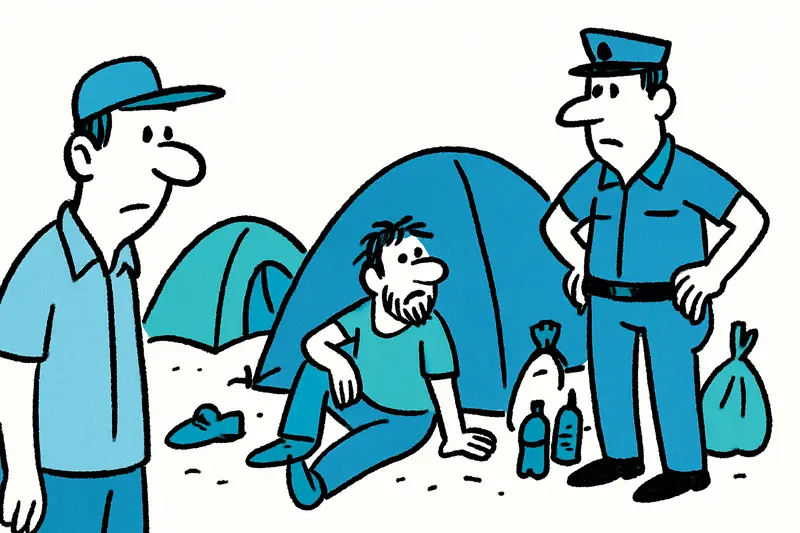
On the beach of Can Pere Antoni, just a few steps from the Paseo Marítimo, two small tents have been standing in the sand for several days. They are not photo motifs for travel guides: a smaller tent, a larger one, scattered shoes, plastic bags, water bottles — and three people who apparently sleep there. Lifeguards and municipal staff are observing the situation, the police have been informed; a possible clearance is not being ruled out in discussions. The images unsettle not only tourists: they also express a very concrete question: How does Palma deal with the city itself becoming an alternative address for affordable housing?
Key question: How should public order, humanitarian responsibility and the long-term task of creating affordable housing be balanced when people begin to live on the city beach?
Anyone who jogs along the beach in the morning knows the sound of the waves, the clatter of the bicycle chain on the bike path and the awnings slowly opening. Now another image is mixed in: tents, occasional curious glances from passers-by, children playing between blankets and sand, and the quiet question of why no one finds a flat. Can Pere Antoni is not an isolated case; makeshift encampments are appearing in various places on the island, as described in Between Promenade and Cardboard Shacks: Can Pastilla on the Brink of a Social Crisis: around the former Gesa building, in Nou Llevant, on the northern edge of Sa Riera Park, along the motorway to the airport and at the Manacor access road similar scenes can be seen. Some people live in caravans, others set up makeshift shelters. These are not slogans; these are people who increasingly cannot find a place in an expensive housing market.
The situation highlights several problems. First: the market does offer housing, but it is often too expensive. For many residents of Mallorca, those who have to get by with roughly €1,000 net are still considered typical households — the so-called 'mileuristas'. These incomes often no longer suffice to pay rents that continue to rise regionally. Second: the presence of tents in public spaces forces the administration into short-term decisions: clear them or tolerate them? Intervene or offer help? Third: there are social consequences that go beyond the obvious need: health, safety, integration and the urban image of a metropolis that lives from tourism.
What is often missing in the public debate: There is a lot of talk about figures and regulations, but less about the practical bridge between acute need and lasting solutions. Ongoing, visible services for people on the verge of homelessness are lacking: mobile social teams, transparent information about emergency shelters, low-threshold access to medical and psychological care, and coordinated transition plans from immediate protection to permanent housing. Also rarely discussed is the potential of unused spaces in the city — vacant commercial properties, underutilized residential areas or partnerships with housing companies — without ignoring property rights and legal frameworks.
Everyday life in Palma shows the urgency. On a morning at Can Pere Antoni you see bathers with towels, children building sandcastles, and a few meters away people storing their belongings in plastic bags. The lifeguards nod, cyclists ride slowly past; no one takes the scene as normal. The spatial proximity between everyday life and emergency makes the situation all the more pressing: the problem is visible, it is present and it cannot be delegated away.
Concrete approaches — pragmatic and local: First, low-threshold help on site is needed: mobile teams that regularly appear on the beach and in known encampments to provide hygiene, first aid and information. In parallel, short-term, safe emergency accommodations should be provided to stabilize people without forcibly dispersing them; recent steps such as Provisional Measures at Pier 3: Palma Sets Up Emergency Shelters in the Port illustrate this approach. In the medium term, the city must examine how vacant or underused buildings can be temporarily converted into housing; this requires clear legal pathways and financial incentives for owners. Complementary measures should include socially oriented rental models for low-income people, combined with labor market integration, further training and regional subsidies. Transparency is important in all measures: citizens must know what is planned so that fears of 'displacement' or 'decay' do not dominate the discourse.
It is also necessary to avoid the picture of 'order or clearance'. A purely repressive approach only shifts the problem; it does not solve a housing crisis. At the same time, mere tolerance without prospects is a danger for the people affected. The art lies in linking short-term protective spaces with clear transition plans.
Conclusion: The tents at Can Pere Antoni are more than a PR problem for a coastal city: they are a wake-up call. Palma stands at a simple but uncomfortable point: either one accepts that parts of the city serve as emergency camps, or one provides the political and financial means to prevent that. Both at the same time does not work. Anyone who walks along the Paseo in the morning does not only hear the waves — they also hear the city's question: Will there be investment, planning and help here, or will everything remain a view of the water surface? The answer will decide how Palma looks in a few years — and how we treat people who currently have no other place to go.
Can Pere Antoni is not an isolated case; makeshift encampments are appearing in various places on the island, as described in Tents Next to Villas: Nou Llevant Exposes the Gap Between Rich and Poor.
Frequently asked questions
What is the weather like in Mallorca in spring?
Can you swim in Mallorca outside the summer season?
What should I pack for Mallorca in the shoulder season?
Is Mallorca a good destination for outdoor activities in spring?
What is the weather usually like in Palma de Mallorca in autumn?
Is Alcúdia better for a beach holiday in Mallorca?
What is Sóller like for visitors who want scenery and a quieter stay in Mallorca?
When is the best time to visit Mallorca if you want mild weather?
Similar News
Warning to Bathers: Nipping Fish in Cala Major and Other Coves — a Reality Check
In Cala Major and several beaches around Mallorca, bathers report painful “nips”. Who are the animals, why are they gett...
Rental Car Theft in El Arenal: What This Incident Reveals About Our Gaps
A teenager steals a running rental car in El Arenal, flees on foot, climbs over walls and is caught by the Guardia Civil...
Red Rope in Palma's Library: What Helps Against Selfie Tourism — and What's Missing
Palma's city library cordoned off an area with a red rope to keep selfie tourism away from reading and working activitie...
Fort San Carlos: Museum, Harbor Dispute — and a Conflict That Demands Answers
The military museum at Fort San Carlos sits right on Palma's harbor, with unexpectedly quiet rooms filled with cannons a...
Old Town Under Pressure: When a Doorway Becomes a Sleeping and Shower Place
For months a woman has been living with a parasol, a clothes rack and personal belongings next to the social welfare off...
More to explore
Discover more interesting content

Can Cap de Bou

Townhouse Lleo 72
