
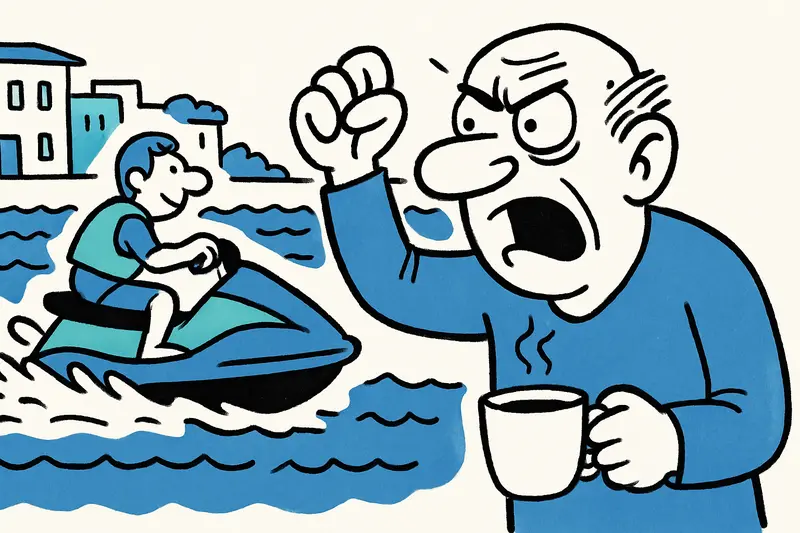
Cala Gamba under constant pressure: Residents demand stricter controls on jet skis
When the afternoon sun hangs over Es Coll d'en Rabassa, the quiet bay of Cala Gamba all too often turns into a stage for roaring jet skis. Residents, the nearby hospital and seagrass meadows suffer. Is this a staffing issue — or a structural problem of tourism?
How much leisure is the bay allowed to cost before neighbours and nature have to pay?
In the late afternoon a warm, salty breeze blows through Es Coll d'en Rabassa, cafés serve their last espressos and children still play on the sidewalks. But often a single launch from the small ramp at Cala Gamba is enough to tip the scene: jet engines cut through the air, spray lashes the seawalls, and the calm is gone. For many residents this is no longer an occasional nuisance but everyday life, as documented in local reports such as Jetskis vuelven a generar problemas en Cala Gamba – vecinos exigen más controles.
The ramp as a focal point
Originally intended for fishermen, the ramp at the pier is now a bottleneck: private riders, rental operators, and sometimes apparently providers without valid permits crowd the area. Instead of the marked transit line, one sees risky manoeuvres right in front of the houses, occasionally in immediate proximity to the Sant Joan de Déu hospital. The roaring echoes through narrow streets, open windows have become rare, and conversations on balconies are drowned out by engine noise.
Neighbours vividly describe jet skis revving at high speed through narrow waters, suddenly turning and grazing bathing areas. A resident recently called her grandson back from the balcony because a watercraft came too close: "It feels like a racetrack is running through the living room." Local coverage amplifies these accounts in Problemas en Cala Gamba: Jetskis generan ruido, peligro y preocupaciones ambientales.
Not just noise: ecology, health and reputation
The consequences are multifaceted. In addition to the direct noise protection problem, local ecosystems suffer: in the shallow areas there are Posidonia seagrass meadows that are sensitive to wave action and repeated anchoring. Motor-driven movements promote erosion, destroy juvenile fish habitats and worsen water quality — effects that only become visible later and are difficult to repair.
A hitherto little-noticed aspect is the proximity to the hospital: continuous noise burdens patients and staff, disrupts sleep and can impair recovery. At the same time, the image of aggressive watersports damages the reputation of reputable boat rental companies: guests seeking peace turn away, while the market for quick-profit operators grows.
Why controls often fall short
The demands are simple: more coast guard presence, regular checks at the ramp, harsher sanctions. But in practice it's more complicated. The coast guard and the municipality are often understaffed, rental operators change locations quickly, and identifying illegally operating providers is difficult. Violations are frequently only recorded, not immediately punished — a time window that benefits the bad actors.
There is also an economic logic: short-term rentals and day business are particularly lucrative on weekends. As long as profit comes faster than controls take effect, the incentive remains to circumvent rules or exploit loopholes.
What could help concretely
There are measures that could take effect relatively quickly and work in the long term. Some fall under the responsibility of the municipality, others with the coast guard — all, however, require clear decisions instead of paperwork.
1. Visible presence and targeted controls
More patrols during peak times, a weekend shuttle by the coast guard and mobile teams at the ramp would have an immediate deterrent effect. Checks should be documented and quickly sanctioned so that the risk for lawbreakers increases.
2. Physical and digital barriers
A time-controlled barrier at the ramp that only grants access to verified rental operators, together with clear signage of the transit route, could reduce unauthorised launches. Complementary: a simple reporting app for residents where timestamps and short videos serve as evidence.
3. Noise and speed zones
Clearly defined buffer zones in front of residential areas and around the hospital, with definite speed limits and acoustic measurement points, would make continuous noise measurable and serve as a basis for fines.
4. Licensing and transparency
Stricter permitting procedures, visible markings for approved operators and a public register strengthen the legal market and make it harder for the grey and black market to operate.
5. Education instead of just fines
Information at rental stations, in hotels and tourism offices about the sensitivity of Posidonia, the hospital proximity and local rules can prevent many violations. Not all guests know that this sea is not a racetrack.
A local experiment as a start
As a pilot project, it would be conceivable to combine time-limited no-go periods in the summer months (for example 3–8 pm near the shore) with a visible coast guard presence. A hotline for residents, a transparent sanctions catalogue and the possibility to temporarily revoke permits could have short-term effects and trigger behavioural changes in the medium term.
In the end it's about balance: Cala Gamba should remain lively, but not at the expense of sleep, safety and protected marine nature. The guiding question remains: do we want a bay that serves everyone — or a playground for profit maximisers? The answer does not lie with the residents alone, but it must be heard.
If you observe incidents: note the time, make short videos if possible and report them to the municipal environmental authority or the coast guard. For the people here, every decibel less is a gain.
Frequently asked questions
Why are residents in Cala Gamba asking for stricter jet ski controls?
Are jet skis a problem for noise in Mallorca beach areas?
What makes Cala Gamba particularly sensitive to jet ski traffic?
What can residents do if they see illegal jet ski activity in Mallorca?
Can jet skis affect Posidonia meadows in Mallorca?
Is Cala Gamba close to a hospital, and does that matter for jet ski noise?
What kind of controls could help reduce jet ski problems in Mallorca?
When are jet ski problems in Cala Gamba most noticeable?
Similar News
Magaluf: Watchtower Alarm – Lifeguards Pull Unconscious Beachgoer from the Water
After a drama in the late afternoon, two lifeguards at Magaluf beach rescued an unconscious 44-year-old man. He was stab...

Turquoise in the City: How dangerous is the color play of the Sa Riera?
The Sa Riera in Palma suddenly turned turquoise — a pretty motif, but behind the effect lies a discharge of saline waste...

Jeckliner at Sunnesching: Cologne spirit sets sail from Palma
In September 2027 the Mein Schiff 2 briefly becomes a floating carnival stage: four days with Cologne bands, comedy and ...
Finally Home: Mike and Leyla Heiter Buy Villa with Sea View in Mallorca
The reality TV couple Mike and Leyla Heiter have bought a house in Mallorca with a roof terrace and sea view. An Instagr...

Arrest after series in Palma: Who protects apartments from repeat offenders?
The National Police arrested a man in Palma who investigators say may have broken into several apartments. In one incide...
More to explore
Discover more interesting content

Can Cap de Bou

Townhouse Lleo 72
