
Nearly One Million Gone: Jewelry Heist on Paseo Borne and the Open Questions
On the busy Paseo Borne, jewelry deliveries worth nearly €973,000 were stolen. One arrest at the airport, but many questions remain: How could the perpetrators strike so precisely — and what needs to change?
Nearly One Million Gone: Jewelry Heist on Paseo Borne and the Open Questions
The Paseo Borne, usually full of cafés, clinking espresso cups and cooing pigeons, witnessed last week a scene more fitting for a thriller: delivery packages containing valuable jewelry — according to police, goods worth almost €973,000 — disappeared from a delivery van within minutes. A man has since been arrested at Palma airport after a jewelry robbery, two other suspects are on the run. But the real question remains: how was this possible, in broad daylight, on one of the busiest shopping streets on the island?
The course of events in brief
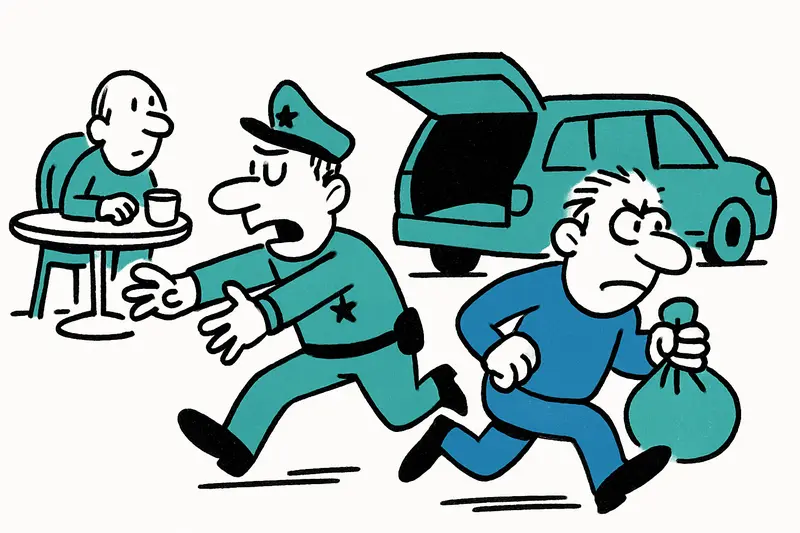
The shipment contained twelve packages with a total of 20 pieces of jewelry. According to investigators, two men followed the delivery van, apparently cut a hole in the rear door and pulled the packages out. Shortly afterwards they drove off in a gray car. Surveillance cameras recorded parts of the crime, and the trail led to a rental car. One suspect — reported by authorities to be 51 years old and from Ecuador — was arrested a few days later at the airport as he was apparently trying to fly to Barcelona. A search of an apartment in Cas Capiscol yielded nothing decisive; investigations are ongoing.
What often gets overlooked in the public debate
The incident not only shows the brazenness of the perpetrators but also reveals structural weaknesses: the practice of leaving delivery vans in short stopping zones on the Borne, the concentration of high-value goods in small shops, and the easy escape routes in a city center that is busy during the day. Less often addressed is the question of possible insider knowledge — who knew exactly when and where this delivery would arrive? Similar concerns have arisen in other local cases, for example a longtime cleaner arrested after 32 items and gold coins were found, illustrating how trusted insiders can sometimes be implicated.
Concrete risks for retailers and visitors
For jewelers and retailers in the city center, the incident leaves a bitter aftertaste: when professionals act so precisely, it increases the perceived insecurity not only for businesses but also for tourists and residents. Delivery van drivers report that mornings and afternoons can be hectic: a driver steps out, grabs a crate, briefly hears the clinking of cups from a café — and that gap is enough. Especially in the narrow streets around the Borne, opportunities arise that perpetrators can exploit.
What the police and the city should do
The National Police have declared the case a priority. Beyond that, urgent preventive measures are needed that go beyond short-term controls: increased presence during critical time windows, better networked camera surveillance with real-time analysis, and a registration and reporting obligation for time-limited transports of particularly valuable goods. Retailers could be required to have high-value shipments transported only by certified courier services that provide escort protection, encrypted tracking and secure unloading zones.
Practical suggestions for the industry
Some pragmatic approaches that could help immediately:
1) fixed delivery windows coordinated with the police in high-traffic areas;
2) locked cargo boxes and temporary double locks on delivery vans;
3) mandatory GPS trackers with geofencing and alarm notifications;
4) cooperation between jewelers for consolidated deliveries with escorts; and
5) staff awareness training to spot suspicious behavior.
A look at the underlying crime
Organized structures often lie behind such coups: rental cars used for escape, rapid resale through intermediaries and an international market for stolen jewelry. The difficulty is finding the goods before they are dismantled or exported abroad. International investigation requests, close cooperation with airport controls and a fast flow of information between retailers and police would be helpful here.
What residents and tourists can do
Anyone who saw something can help now: tips about the gray car, suspicious movements in the afternoon or observations around Cas Capiscol are valuable. A tip for visitors: stay alert, keep your eyes open — and report suspicious situations to the police. For many this sounds trivial, but often it is exactly these small details from passers-by that move investigations forward.
I was at the Borne on Saturday: the sun was low, the voices from the cafés mixed with the distant rattling of a delivery van. The street seems routine, but not invulnerable. This case is a reminder that in the pleasant bustle of Palma we must not ignore the darker side — and that there are concrete ways to close such gaps.
Frequently asked questions
Is Palma's Paseo Borne usually busy during the day?
How could a jewelry shipment disappear so quickly in Palma?
What is the safest way to deliver valuable goods in Mallorca city centers?
Why are jewelry stores in Palma concerned after the Paseo Borne robbery?
What should tourists do if they witness something suspicious in Palma?
What happened at Palma airport after the jewelry robbery?
Why do police look at rental cars in Mallorca robbery cases?
Is Cas Capiscol in Palma connected to the jewelry investigation?
Similar News

Why the Striped Breams in Cala Pí Should Be a Wake-up Call
Once again bathers in Cala Pí were surrounded while swimming by small, nippy fish — some wounds bled. Time for clear rul...

Daily from New York: How Palma's Air Traffic Is Growing — and What Must Change
United will increase the Newark–Palma service to daily flights in 2027 (Boeing, 231 seats). Strong tourist numbers clash...

When Love Ends in Shards: Destruction in Son Vida and the Questions That Remain
In Son Vida a relationship dispute escalated: a woman destroyed furniture in a luxury villa, later pressed a panic butto...

Who Bears the Burden? Mallorca Between Tenant Protection and Landlord Fears
Madrid's new housing decrees strengthen tenant rights — but on Mallorca concern is growing: will the law drive small lan...
On the Edge: What Mallorca's Airport Loses If a Major Low-Cost Carrier Falters
The company that operates numerous connections from Palma to France and domestically is negotiating with creditors to re...
More to explore
Discover more interesting content

Can Cap de Bou

Townhouse Lleo 72
