
Kegel brothers trial postponed: Why Mallorca must wait for a verdict
The trial of 13 German holidaymakers will not begin until May 2028. The long wait raises questions — for victims, defendants and Mallorca's justice system. A reality check with an everyday perspective and concrete proposals.
Kegel brothers trial postponed: Why Mallorca must wait for a verdict
Key question: Can a justice system that schedules hearings years in advance still deliver justice for victims and defendants?
The court date is now set in black and white: the trial of 13 German holidaymakers over the fire at the Playa de Palma restaurant "Why Not Mallorca" will begin on 2 May 2028 and is expected to conclude with a possible verdict on 15 May 2028. The prosecution accuses the men of having thrown burning cigarettes and alcohol onto the thatched terrace roof on 20 May 2022; as a result of the fire a brothel, a private flat and hotel areas were damaged and several people suffered minor injuries. The public prosecutor is seeking prison sentences of up to seven years per defendant and demands total damages of around €100,000. Defence lawyer María Barbancho points out that the presumption of innocence applies and says she sees exonerating indications in the files.
In short: the facts are known. The remaining question is different: what does the start of proceedings more than five years after the event mean for the sense of justice of everyone involved — and for Mallorca as a travel destination?
Critical analysis: the delay is not an isolated case but part of a broader problem of overload. Investigation files are piling up on the island, courtrooms are scarce and dates are often pushed years into the future. For victims this means memories fade, witnesses move away and evidence ages. For the accused it means psychological strain, long uncertainty and often financial consequences from legal and travel costs. For the public sector, the costs of proceedings grow when detention periods, bail rules and repeated interviews interact.
What has so far been lacking in public debate is the perspective of victims and those affected locally. Media and politics often speak of overload as an abstract condition; but it is rare to hear specifically how long those harmed must wait for compensation, how hotels or residents cope with ongoing uncertainty or how language barriers affect defence and witness statements. Also little considered is the economic underside of such proceedings — lawyers' fees, interpreters, expert reports — which place an additional burden on the island.
An everyday scene in Palma makes this tangible: on a hot afternoon guests shuffle along Avenida Playa de Palma, mopeds rattle past, a waiter on the Paseo Marítimo wipes a table and looks at his phone where another message about the case flashes. Passers-by whisper: some believe in guilt, others in misfortune. For the neighbourhood the memory of smoke and emergency vehicles remains, and for months after the fire those images fueled conversation.
Concrete solutions that could help here and now:
1) Prioritisation of sensitive cases: Fires with injuries and extensive damage should be given priority in specialised calendars so that evidence does not deteriorate and victims receive clarity more quickly.
2) Expansion of digital file management: Standardised, readily available electronic investigation files can shorten transmission times between police, public prosecutor's office and defence.
3) More interpreters and victim support: Especially in cases with foreign defendants or victims, reliable translation and advisory services are important so that legal matters do not fail because of language barriers.
4) Victim compensation fund: A regional fund could provide immediate assistance until court-ordered compensation is decided — relieving people who suffered economic losses in hotels, flats or businesses.
5) Transparent case calendars: Public information about why a hearing is scheduled far in the future builds trust. If overload is the reason, the court and justice administration should disclose this and present action plans.
These proposals are no miracle cure. They require funding, political will and time. But they would achieve one thing: fewer long shadows for victims and defendants and more trust in a rule of law on which Mallorca also depends for tourism.
Pointed conclusion: a trial date in May 2028 does not make the matter invisible. However, it exposes a weakness of the system: justice loses impact when it is delayed for years. For the people who were there that night and for the island, the task remains to find ways to enforce the law more quickly, fairly and understandably. Until then, conversations on Playa de Palma will not stop — and the memories of a night with sirens remain vivid for many.
Frequently asked questions
What’s the best time of year to visit Mallorca for warm weather and swimming?
What should I pack for a Mallorca trip, considering sun, beaches, and day trips?
Are there safe beaches in Mallorca for swimming, and what should I watch for?
What outdoor activities are popular in Mallorca beyond the beach?
Does Mallorca get windy, and how does that affect beach days?
Is Mallorca crowded in peak season, and how can I plan a quieter visit?
What’s the best way to get around Mallorca: car, train, or bus?
How can I enjoy Mallorca’s beaches responsibly and protect myself from the sun?
Similar News
Yellow Alert: Is Mallorca Prepared for the Next Rain Band?
Aemet has issued a yellow alert for the south, southwest and the island's interior. Thunderstorms and heavy rain are for...
Chaos on Palma's Runway: Why the Summer at the Airport Was So Disrupted
This summer laid bare where Palma airport is faltering: only just over half of departures were on time and seven percent...
Cocaine Offer on Ham Street: Why the Open Trade Should Ring Alarm Bells
In the middle of Pare Bartomeu Salvà a tourist was offered a packet of cocaine as part of a sunglasses deal. A short int...
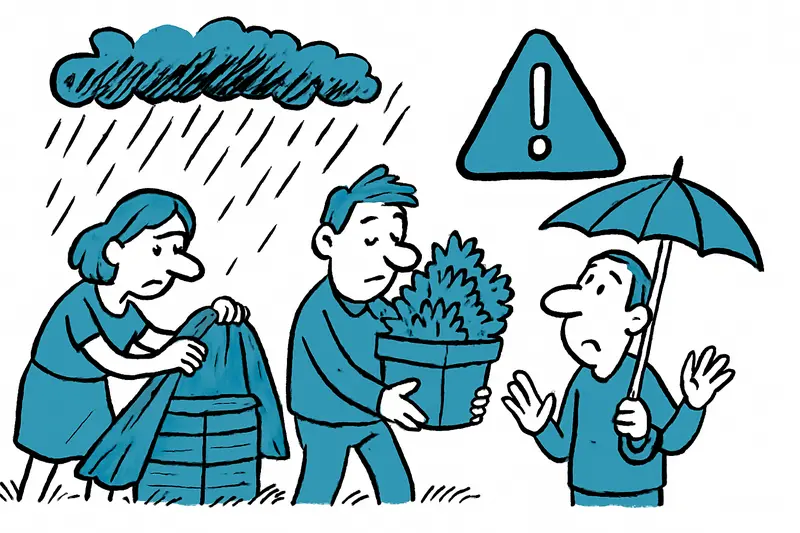
Yellow Alert on Mallorca: Next Rain Front Approaches — Is the Island Ready?
Aemet issues yellow warnings for the south, southwest and central Mallorca: thunderstorms and heavy rain will push down ...
How Burglars Test Fincas in Mallorca — and What You Can Do Right Away
The police warn: simple markers like silicone threads or small pieces of paper reveal to burglars whether a front door h...
More to explore
Discover more interesting content

Can Cap de Bou

Townhouse Lleo 72
