
With Knife and Muscle: Attack After Bakery Robbery in Palma – Four Officers Injured
With Knife and Muscle: Attack After Bakery Robbery in Palma – Four Officers Injured
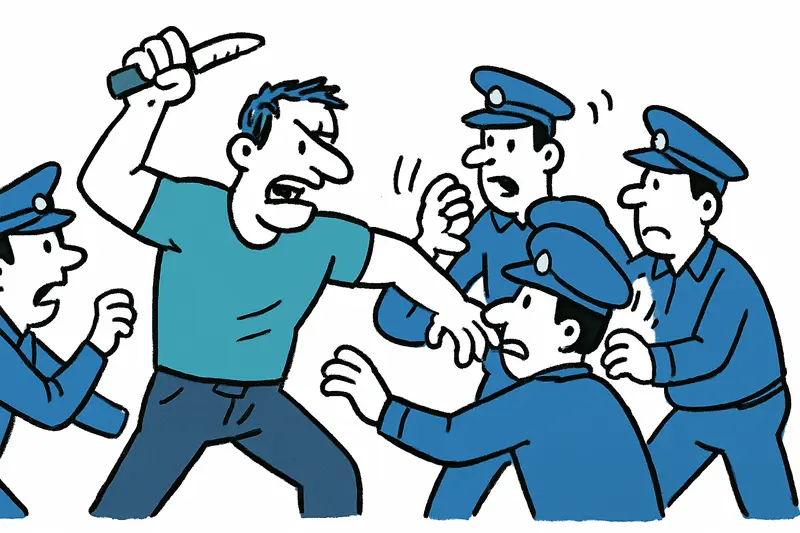
An alleged bakery robbery ended in a multi-hour siege of an apartment in Palma. The suspect is said to have been armed; four police officers were slightly injured.
With Knife and Muscle: Attack After Bakery Robbery in Palma – Four Officers Injured
Suspect allegedly robbed a bakery, barricaded himself in an apartment and resisted with a kitchen knife
The morning in Palma turned abruptly different for residents and passersby: loud commotion from a bakery, followed shortly by sirens. According to investigators, a man is suspected of having robbed a bakery in the city with a firearm. He then barricaded himself in an apartment. When officers tried to arrest him, the National Police suffered four minor injuries due to the man's significant resistance. After more than four hours the operation ended and the suspect was taken into custody.
Important to note: investigators are still searching for the allegedly used firearm. A kitchen knife was seized during the search, which the man is said to have used to threaten officers, a situation reminiscent of Arrest after knife attack in Pere Garau: How safe is Palma's neighborhood?.
Key question
How can the city prevent a single, apparently physically superior perpetrator from endangering officers and bystanders for hours — and from allowing a possibly missing firearm to remain in circulation?
Critical analysis
The sequence highlights several problems that repeatedly arise in police operations: first, the danger posed by fleeing suspects who may have access to firearms. If a weapon is not found, a residual risk for further offenses remains (see After nine burglaries in Palma: Arrest brings relief — but questions remain). Second: the challenge when suspects are physically superior and defend themselves 'militarily' — martial arts skills can complicate standard arrest techniques. Third: operations lasting more than four hours strain personnel and residents, increasing stress and the likelihood of mistakes.
The report does not clarify how quickly information on previous offenses, weapon registrations, or prior convictions was available. It also remains unclear how communication between the National Police and local police was organized in detail and whether alternative de-escalation options — such as negotiators or psychologically trained operational advisors — were involved early on, concerns similar to those raised after the Raid in Palma: Specialized keys, disguises — and many unanswered questions.
What is missing from the public debate
The debate often only describes the escalation: perpetrator versus police. It lacks a closer look at the behind-the-scenes procedures. How is it decided on site whether to storm a house or wait? How reliable are the chains of custody for weapons so that a possible pistol can be registered and intercepted quickly? And not least: what prevention measures help prevent such attacks in the first place — for example better control of stolen weapons or low-threshold counseling services for people with violent potential?
A Mallorca everyday scenario
Imagine the narrow street where the bakery is located: the smell of freshly baked bread mixed with exhaust fumes. Regular customers, tradespeople in work clothes and a young mother with a stroller stood at the counter shortly before the attack. Then a confusion of excited voices, clattering bread bags and the hoarse wailing of police sirens. Neighbors pulled shutters closed in fear, children were brought inside, and quick civilian or off-duty interventions have previously altered outcomes as in Old Town Alarm in Palma: Three Off-Duty Police Stop Handbag Robbery — Time for a Security Check?.
Concrete solutions
1) Faster weapon checks: closer networking between local police databases, weapon registers and neighboring authorities could help track leads on missing or stolen firearms more quickly.
2) Specialized tactical teams and protection against physically strong attackers: training in arrest techniques, the use of non-lethal ranged tools and better protective equipment for officers can reduce risk.
3) Operation structure with de-escalation options: negotiators, psychological advisers and clear escalation levels should be mandatory in longer sieges so decisions are not driven only by time pressure.
4) Transparency for residents: faster information for the neighborhood about danger zones and evacuation routes reduces panic and helps avoid unnecessary risks.
Conclusion
The incident in Palma is striking and troubling at the same time: an alleged robbery, a barricade, a multi-hour arrest operation and injured police officers. The facts leave questions open, especially regarding the missing firearm and operational coordination. This is not an indictment of the officers — many acted professionally — but a wake-up call: we need stronger prevention, better data coordination and tactical responses to physically superior perpetrators so that similar operations are less risky for everyone involved in the future.
Frequently asked questions
What’s Mallorca’s typical weather and how should I pack for a beach trip?
Is it safe to swim at Mallorca’s beaches year-round?
What should I do if I witness a police operation or danger in Palma?
How can residents stay informed during a major incident in Mallorca?
Why do police units in Mallorca use specialized training for physically strong suspects?
What makes multi-hour police operations challenging for communities in Palma?
What steps could improve weapon tracking and prevent firearm-related incidents in urban areas like Mallorca?
What should families in Mallorca do to stay safe during urban emergencies?
Similar News

From the Ruhr Area to the Tramuntana: Thorsten Legat and the FC Germania Mallorca Adventure
The former pro has not only taken the coaching role on Mallorca but also moved into a small island shared house, set amb...
Silent Conquest: What Mallorca's Wildlife Can Do Against Introduced Snakes
For years non-native snakes have been appearing on Mallorca. Who monitors the import routes, how effectively do authorit...
Stolen motorcycles in vacant factory: Guardia Civil finds 19 vehicles
In Inca, investigators discovered 19 motorcycles stolen between April and June. In an abandoned factory near Selva, many...
Storm in Majorca: 75 Responses, Uprooted Trees and Beached Boats – Who Will Draw the Lessons?
A sudden thunderstorm swept over the islands on Thursday evening, leaving uprooted trees, damaged boats and disrupted su...

Daily new boats: Mallorca and the Balearic Islands under pressure from rising arrivals from Algeria
For months, arrivals of boat migrants from Algeria have remained at a high level. Places are lacking, unaccompanied mino...
More to explore
Discover more interesting content

Boat Tour with BBQ along Es Trenc Beach
Private transfer from Mallorca Airport (PMI) to Pollensa
