
Heat tips from the island: How to survive 40-degree days
Heat tips from the island: How to survive 40-degree days
While Germany expects heat records this week, Mallorcans have for decades shown how everyday life and summer heat can fit together. Practical, down-to-earth tips from Palma, Pollença and the villages.
Heat tips from the island: How to survive 40-degree days
Why Mallorca’s daily routine helps keep cool heads
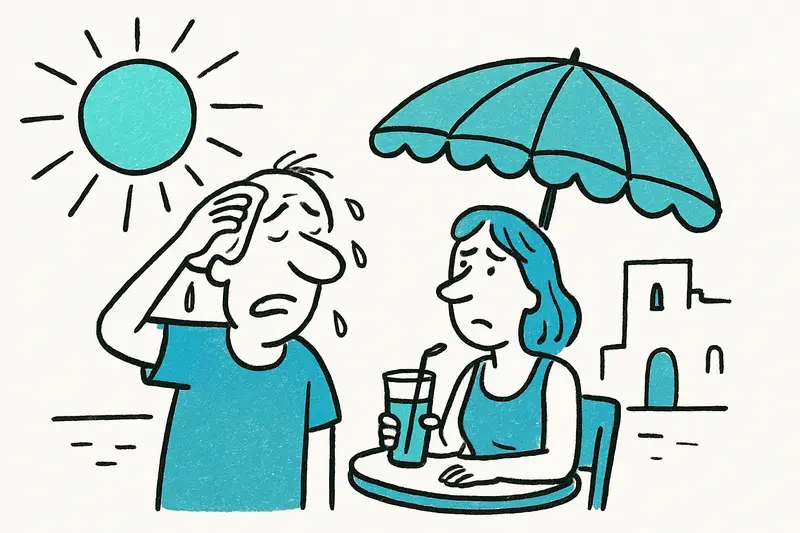
When the German Weather Service announces weekend values of around 41 °C for parts of Germany, that sounds like a state of emergency to many. On Mallorca such temperatures are no longer a fundamental novelty — Nearly 40 °C: Mallorca's Daily Life Under Heat Stress — How the Island Can Respond — and people who live here have developed a few habits that make summer more bearable. Not esoteric miracle recipes, but simple, practical measures — which can also be used in the north.
Close the blinds early in the morning and open them again in the evening: a house that stays dark during the day heats up much less. In Palma's old town — When Palma Is Sweating by Mid-Morning: Heat Alert, Risks and What's Missing Now — you can still see this everywhere: shutters and curtains closed, the light in the café stays off until it cools down in the evening. Tip: close external shutters or blinds if possible; inside, thicker curtains or blackout pleated blinds help. Turn off or unplug electrical devices when they are not needed — they also emit heat.
Proper ventilation pays off, but only during the cool hours. On Mallorca many families only open windows and doors after sunset, often not until around 9 or 10 pm, when a fresh breeze runs through the streets. For a tropical night at home: cross-ventilation as long as the outdoor temperature is below the indoor temperature. Cooling showers just before going to bed and thin bedding help against sleepless nights.
Avoid the midday hours — this is not a cliché but everyday life. Markets, craft businesses and construction sites shift work to the early morning or late evening. Families also move walks and playground visits to sunset: then squares and promenades are surprisingly lively. For tourists and commuters this means: if possible, schedule appointments in the morning or evening.
When it comes to diet: light is better. Gazpacho, salads, fruit, small portions of protein and above all lots of fluids without sugar. Refill water bottles and put them in sight — that helps you remember. On Mallorca people often drink water with a pinch of salt or a squeeze of lemon to balance electrolytes. Alcohol and high-sugar drinks increase the need for fluids.
Shade makes the difference. Pergolas, sun sails on terraces and above all greenery: trees noticeably cool small squares. Those with a balcony or terrace benefit from potted plants — they create evaporative cooling. Communities can consider adding extra shade at bus stops or playgrounds; small measures often bring great relief.
And of course: the water. The Mediterranean off Mallorca is currently unusually warm — as reported in Mallorca swelters once more: Short heatwave brings late-summer warmth — around 27.3 °C was measured on the coast of Pollença, about 26.7 °C near Cabrera. Early morning swims or late evening dips are doubly beneficial: they cool you down and extend the day without exposing you to the blazing sun.
Be especially attentive to vulnerable people: elderly neighbors, small children, pregnant women and chronically ill people need more frequent checks. On Mallorca neighbors know these routines: call briefly, bring water, coordinate shopping. Such simple neighborhood networks can be set up anywhere.
If the official warning level is high — as AEMET continues to issue for parts of Mallorca in Heat alert on Mallorca: How well is the island prepared for infernal heat days? — planning pays off: consider where in your own neighborhood there are cool public spaces (library, municipal pool, air-conditioned shopping center) and how to get there. Public authorities often publish advice; it's worth checking the messages from the relevant weather service.
Finally a small, optimistic thought: heat cannot be magically made to disappear, but you can restructure daily life so that it still works. The Mallorcan routine — shade, evening life, lighter food, consideration for the vulnerable — is not a recipe book for extreme cases, but a way of life that embraces summer and makes it less of a burden. Those who adopt a few of these habits stay cooler, more alert and often also more sociable.
Outlook: The hot days will come and go. A few practical changes in the daily routine, paying attention to older people in the neighborhood and consciously using water and shade are enough to take some of the edge off the hot weeks. And when the streets of Palma come alive again in the evening, it is a reminder that a hot day and a pleasant evening do not have to be contradictory.
Frequently asked questions
What are practical ways to stay cool in Mallorca during a heatwave?
How should I hydrate and eat to cope with Mallorca’s hot summers?
Why is it better to plan outdoor activities in Mallorca for the early morning or late evening?
Is swimming still enjoyable when the sea around Mallorca is warm, and when are the best times to swim?
How can shade and greenery help reduce heat in Mallorca's small squares and homes?
What should neighbors do to help vulnerable people during hot days in Mallorca?
What should I do if a weather warning is issued for Mallorca?
Can adopting a Mallorca-style routine help make hot days more bearable?
Similar News
Body in the Basin of Port Adriano: Who Protects People During Crossings?
In the morning, just before noon: employees of a luxury marina discovered a floating body in the basin of Port Adriano. ...
Raised from the Sand: A Late Antique Merchant Ship Tells of the Sea off Can Pastilla
A 1,700-year-old Roman merchant ship was raised off Can Pastilla. Finds such as sail fragments and amphorae provide rare...
After the Storm: Why Many Fish Died at Riuet de s'Illot — and What's Still Missing
After the severe storm, numerous dead fish were found in the Riuet de s'Illot wetland. Who is affected, why it may have ...
Fire in Can Picafort: Family Rescued at the Last Minute – a Safety Check for the Promenade
A fire in a sports shop on the Can Picafort seafront forced the evacuation of a mother with four children. How safe are ...
Nine-year-old rescued after cliff fall at Cala Murada — How safe are Mallorca's coastal paths?
A boy fell roughly five meters down the rocks near Cala Murada. The dusk rescue was elaborate; a helper also had to be r...
More to explore
Discover more interesting content

Boat Tour with BBQ along Es Trenc Beach
Private transfer from Mallorca Airport (PMI) to Pollensa
