
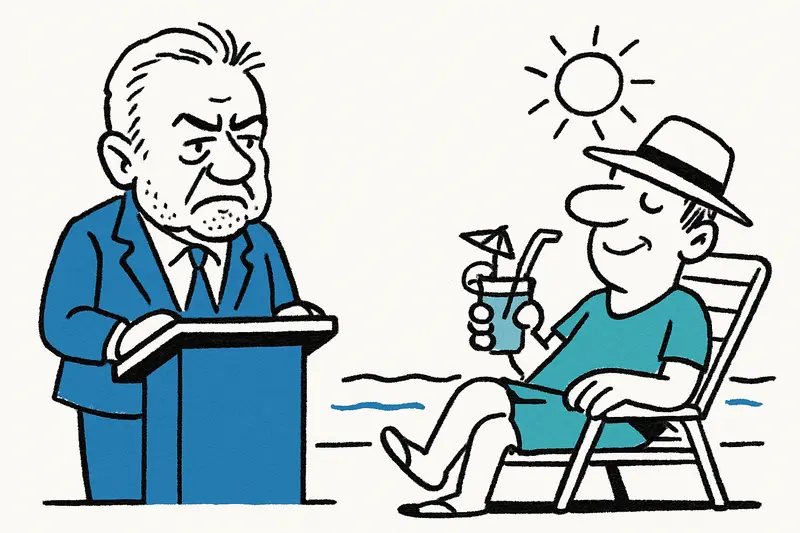
Kubicki as FDP leader: What that has to do with Mallorca — and what it doesn't
Kubicki as FDP leader: What that has to do with Mallorca — and what it doesn't
Wolfgang Kubicki is the new federal chairman of the FDP. His Mallorca connections are well known, but the island plays only a symbolic role in the party's political future. A critical assessment.
Kubicki as FDP leader: What that has to do with Mallorca — and what it doesn't
Guiding question: Can a party leader with holiday affinities solve the FDP's structural problems?
Wolfgang Kubicki was elected chairman of the FDP at the party conference in Berlin. The numbers say something about the internal state of the party: 390 votes (59.27 percent) for Kubicki, 259 votes (39.36 percent) for his challenger, four delegates abstained, and five voted no in both cases. Henning Höne received 71 percent of the votes as first deputy. At the same time, the FDP currently has no mandate in the Bundestag.
On Mallorca, Kubicki is mainly known as someone who likes to land on the southwest coast — Camp de Mar is repeatedly mentioned — and who already felt a personal connection to the island as a youth. Such stories work: they humanize a politician, create images of terraces with sea views, fishermen mending their nets at dawn, and guests slowly strolling past small cafés, and sometimes social-media anecdotes spark wider debate, as seen in 'Germany should buy Mallorca': A post from Biberach that provokes more than laughter.
Critical analysis: The narrow victory shows two things. First: the FDP is not unified internally; a notable minority openly voted against the new chairman. Second: the island connection is purely private and symbolic. Camp de Mar is not a political project, and personal ties do not replace a strategy for winning voters or building organization. A chairman who is mainly perceived through his biography or holiday stories runs the risk of remaining a figurehead without a clear program.
What is missing in the public discourse: a clear tactical line for rebuilding. There is little discussion of how the FDP wants to win back young voters, how it will be present in regions outside urban centers, or how it will make concrete offers on the housing market, tourism regulation or digital infrastructure. A plan to strengthen the organizational base — refreshing local chapters, promoting local candidates, transparent talent development — is also missing from most debates.
Everyday scene from Mallorca: On the small square of Camp de Mar early in the morning one can observe craftsmen fixing awnings, seniors carrying shopping bags and sailing yachts slowly heading out toward the open sea. There, between pine trees and the scent of sea and espresso, political buzzwords are of little help. Politics that wants to reach people here must fit into everyday life: reliable bus connections, affordable housing for seasonal workers, respect for nature so the bays do not become overcrowded, and cut through local campaign imagery — an issue explored in Posters, Provocation, Polarization: How Mallorca's Streets Become a Campaign Ground.
Concrete solutions for the FDP under Kubicki:
1) Sharpening the program: In the short term, clear, actionable proposals on central topics should be presented — for example proposals to relieve small businesses, solutions for the housing situation in tourist areas and realistic concepts for digital administration.
2) Organizational development: A roadmap to strengthen the grassroots: annual member seminars, mentoring programs for new local politicians and financial support for active local groups.
3) Target group work: Reach young people with real participation opportunities instead of mere social media campaigns; promote training and housing projects in regions like Calvià or Llucmajor as pilot projects.
4) Policy substance instead of gestures: Personal Mallorca visits remain possible and likeable, but should not determine external perception. Instead, expert forums on tourism management and coastal protection should be included in the program.
A pragmatic chairman could kick-start all of this within the first hundred days: set up working groups, communicate transparent milestones and seek local alliances — also on islands like Mallorca, where tourism, craft trades and environmental protection are closely intertwined.
Pithy conclusion: Kubicki's connection to Mallorca is a pleasant anecdote, not a political concept. If the FDP under his leadership wants to be more than a name from the past, it must deliver clear content and get to work organizationally; national dynamics also matter for local perception, as noted in Merz in Madrid: Why political differences with Sánchez are also felt in Mallorca. Otherwise, pretty pictures of promenades and yachts remain exactly that: pretty pictures without impact on people's real problems — here and there.
Frequently asked questions
What is the weather usually like in Mallorca in spring?
Is Mallorca warm enough for swimming outside summer?
What should I pack for a trip to Mallorca in spring or autumn?
When is the best time to visit Mallorca if you want fewer crowds?
What is the weather like in Palma de Mallorca in spring?
Is Cala d'Or a good place to go in Mallorca in the shoulder season?
What kind of activities work well in Mallorca when the weather is mild?
Does Mallorca still feel beach-friendly in early autumn?
Similar News
More water than last year: Mallorca's reservoirs breathe easier
September rain refilled the Tramuntana's reserves: overall fill around 35 percent, Cúber at 40.42 percent, Gorg Blau at ...
Three Luxury Hotels in Banyalbufar: Lots of Money, Many Questions
A Danish investor plans three exclusive accommodations in Banyalbufar — including the historic Son Valentí. The announce...
2.1 tonnes of cocaine on sailing yacht off Spain's coast – a reality check for the coastguard
A 14-metre yacht was seized with 2.1 tonnes of cocaine. Who monitors the ports, how does the international hunt succeed ...
Heat Bonus in Mallorca: 100 Euros Extra for Outdoor Staff at MarSenses
MarSenses pays employees who worked outdoors in August an extra €100 as recognition. Lighter uniforms, reduced hours for...
Renovating in Mallorca: What You Really Can Do Without Neighbour Consent
Many think they can do whatever they want in their apartment. That's partly true — but only as long as structural elemen...
More to explore
Discover more interesting content

Can Cap de Bou

Townhouse Lleo 72
