
Llubí in Autumn: Village Life Is More Than a Pretty Backdrop
Llubí invites visitors to take a slower look at Mallorca’s central countryside. But anyone seeking rural tranquility should remember that, for local residents, it is not a tourist attraction.
What Are We Really Looking for When We Visit Llubí in Autumn?
A village without a seaside promenade, a long row of hotels or the pace of a resort strip: Llubí lies inland, in the Pla de Mallorca. In autumn, a place like this can feel like an invitation to slow down. But when we seek “the real Mallorca,” are we genuinely interested in the village—or do we just want a pretty backdrop of peace and quiet for a few hours?
This is not an academic question. Anyone visiting Llubí is moving through a place where people live. They shop, work, exchange a quick greeting on the way somewhere and go about their everyday lives. For visitors, the quiet may be a contrast to traffic on the Ma-13 or the busy streets of Palma. For the people who live here, it is not a seasonal experience; it is simply part of the day.
The Island’s Interior Is Not a Film Set
In November, the light changes. The sun sits lower, mornings can be chilly, and country roads grow dark quickly after a rain shower. A few people might be sitting with coffee in the village square while, somewhere else, a delivery van pulls over and someone unloads shopping from the boot. None of this has to be spectacular. That is precisely the point: a place does not become interesting only when a camera or an itinerary discovers it.
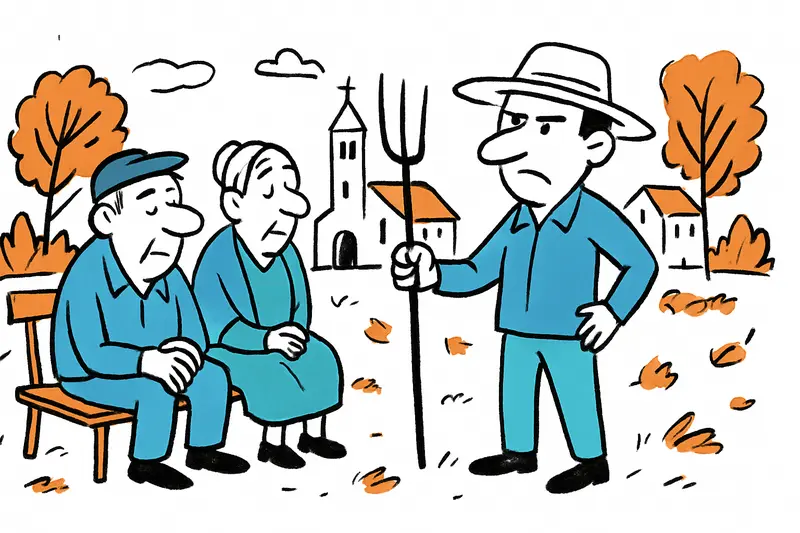
Familiar images of the “real Mallorca” can also be misleading. Old façades, a church rising above the rooftops, a quiet square—it is easy to turn these into a promise: that everything here has remained unchanged and life is pleasantly uncomplicated. But villages do not stand still just because visitors want a break from the modern island. Families need affordable housing, workers need reliable ways to get to work, and shops need customers. These things are less photogenic than an empty alley, but they are just as much a part of the place.
What the Longing for Peace and Quiet Often Leaves Out
Rural excursions are often described in terms of “hidden gems” and places that are “still undiscovered.” For the community, that is not automatically a good thing. More cars can put pressure on narrow streets and parking spaces; at the same time, visitors can support bars and small businesses if they do more than hop out, take a picture and leave again. Both things can be true. So the key question is not whether visitors should come, but how they travel around and what their visit leaves behind in the village.
Accessibility is another blind spot. Anyone recommending a village as a spontaneous destination often takes a rental car for granted. For residents without a car and for travelers who would rather not drive, this matters. Before setting off, check actual bus services and return times instead of assuming a connection exists. On narrow roads, take short journeys slowly and carefully rather than racing to keep to a schedule.
And then there is the question of what “authentic” is supposed to mean. A village is not an unchanged memory of the past that holidaymakers can visit whenever they like. It is a place that continues to evolve—sometimes visibly, often through small decisions: which shop stays open, whether young people return, whether a house is lived in or used only occasionally. Ignoring this turns other people’s everyday lives into pretty decoration.
How to Make a Visit More Considerate
You can make a difference without turning an outing into a test of manners. Park on the outskirts where possible, keep driveways and entrances clear, do not enter private courtyards, and do not photograph people without asking. Taking a break at an open café or shopping at a local store is not a grand gesture, but it makes your visit more meaningful than another quick stop at a viewpoint.
There is no need to tick off a list of attractions while walking through Llubí. A leisurely stroll, a look at the architecture and a quiet pause are enough. Keep your voice down and remember that people live behind those open windows. If you are visiting for a special event or market, check the municipality’s latest notices as well: opening hours and programs can change, and not every event takes place every Sunday.
For the municipality and island policymakers, the practical work lies elsewhere: good connections between towns, clear information about parking and support for businesses that stay open outside the high season. This does not have to start with major campaigns. Sometimes a reliable timetable is more useful than another slogan about “hidden Mallorca.”
Peace and Quiet Is Not a Souvenir
Llubí can be a good reason to experience the island’s interior instead of just driving through it. But the quality of an outing like this is not measured by how remote the village seems to visitors. It is better measured by whether they treat it as a living community—with its own habits, needs and an entirely ordinary Tuesday that happens whether guests are there or not.
So if you visit in autumn, do not expect to discover a secret island. Aim for something simpler: arrive, walk slowly, spend a little money locally and leave space for others. The quietest alley does not belong to anyone as an experience. First and foremost, it is part of someone else’s home.
Frequently asked questions
What is autumn weather like in Mallorca’s inland villages?
What should I pack for Mallorca in November?
What can I do in Llubí on an autumn visit?
Can I explore Mallorca’s inland villages without a car?
How can I visit a village in Mallorca respectfully?
Is it worth visiting Mallorca’s interior if I’m used to the coast?
How can visitors support local businesses in Mallorca’s villages?
Do events or markets in Llubí take place every Sunday?
Similar News

Ceiling collapses at Palma police headquarters: DNI office remains closed
After part of the suspended ceiling collapsed, the DNI office on Carrer de Ballester is temporarily closed. Important qu...

When Crisis News Starts to Fade into the Background: How We Can Stay Attentive
Wars and disasters reach us minute by minute. On Mallorca, between the bus ride, work and dinner, the question is how to...
Mallorca in the Wind: Why a Yellow Alert Doesn't Mean a Beach Walk
For Sunday, AEMET is forecasting strong gusts and rough seas in Mallorca. Here’s what the yellow alert means in everyday...

Serious Crash Near Santa Maria: What We Still Don’t Know About the Road to Muro
Three 19-year-olds crashed on the road between Santa Maria and Muro early Sunday morning. Two were seriously injured. Th...

Carrer Apuntadors: When Social Hardship Becomes a Neighborhood Conflict
An arson attack on a shelter in Palma’s old town was more than an isolated act: it raises the question of when legitimat...
More to explore
Discover more interesting content

Can Cap de Bou

Townhouse Lleo 72
