
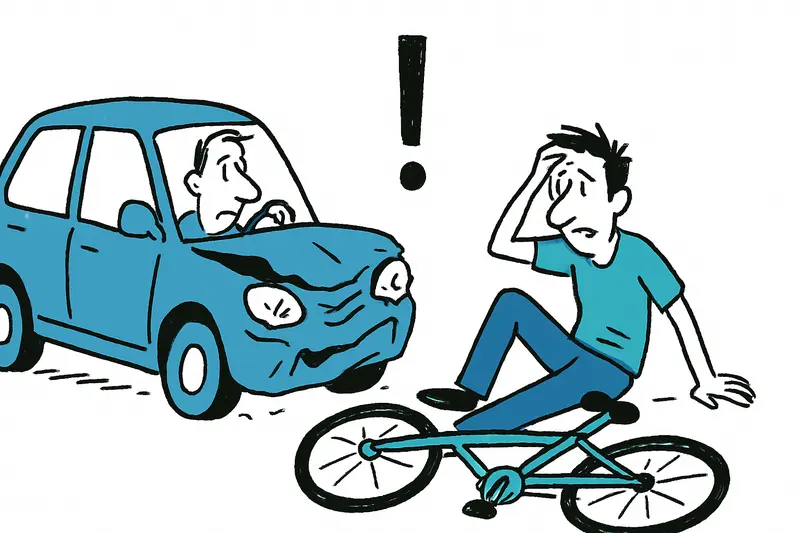
Serious Crash Near Santa Maria: What We Still Don’t Know About the Road to Muro
Three 19-year-olds crashed on the road between Santa Maria and Muro early Sunday morning. Two were seriously injured. The cause remains unknown—and that is where the important debate about road safety begins.
Three Injured, Many Unanswered Questions
Early Sunday morning, a car left the road between Santa Maria and Muro and crashed into a wall. The three people in the car were all 19 years old. Two were seriously injured, while the third suffered minor injuries. The crash happened at around 5:20 a.m., near the two-kilometre mark. Firefighters had to free two of the occupants from the badly damaged vehicle.
The seriously injured were taken to Son Espases Hospital, while the third young man was taken to a Juaneda clinic. The available information does not allow us to say more about the injured people’s condition. Nor is it known why the car left the road. This is no minor gap: the answer will determine whether driver error, a technical fault, the road layout or a combination of factors played a role.
The key question: What could have prevented the crash?
When a crash has such serious consequences, it is tempting to focus immediately on the drivers’ age and how recently they passed their driving test. All three were 19, and according to the information available, they had not held their licences for long. That is relevant, but it is not an explanation. Age alone tells us neither how fast the car was travelling nor what caused the crash. Anyone who rushes to assign blame on that basis is skipping the very facts that still need to be established.
The more grounded question is not just: What did the driver do wrong? It is also: What conditions on this particular stretch could make a mistake especially dangerous? Walls beside the road are nothing unusual in Mallorca. On rural roads, property boundaries and the carriageway are often close together. That describes a common situation on the island, but it does not prove that the wall at this location could have been avoided or that the road was inadequate. That requires an on-site assessment.
What is missing from the public account
So far, there is no information about the speed, direction of travel, weather or visibility, the condition of the car, or any marks on the road. It is also unknown whether police have reconstructed the crash or carried out a technical examination of the site. Without this information, any claim that the road was to blame or that the young people were driving too fast is pure speculation.
After a serious crash, public debate often slips into two simplistic camps: risky young drivers on one side and dangerous roads on the other. That does nothing for the injured and offers little to make the next journey safer. What would help is a clear-eyed assessment: What could those involved see? What was the bend or road section like? Was there evidence of an attempt to swerve? Was the road edge easy to see, and what safety measures would even be feasible at this location? These questions belong in the crash investigation, not in speculation over coffee.
An island road at five in the morning
Anyone who has driven across Mallorca before sunrise knows the transition: beyond a roundabout, things grow quiet, houses become more spread out, and headlights cut a narrow strip through the darkness. On roads like these, every bend seems to arrive sooner than expected. A brief moment of inattention can be enough. This is not an explanation for this crash, but it is part of everyday life on many roads outside built-up areas with street lighting.
For new drivers, the early hour adds another challenge: light traffic can create a false sense of security, while tiredness and lack of experience can affect reaction times. That is not evidence of what happened in this case either. It is a reason to take the first months behind the wheel seriously—and not to assume that passing a test automatically provides experience on narrow, dark country roads.
What could help now
Authorities should establish the circumstances of the crash transparently and then assess whether road or traffic changes at the site would make sense. This should include an expert review of sightlines and the road layout, how clearly the road edge can be seen, and whether additional markings, warning signs or another form of protection around the wall would be feasible. Not every measure is right for every location; what matters is a proper assessment, not a blanket call for guardrails or lighting.
Driving schools and families can also play a part: night driving and country roads should be included in training and supervised practice, rather than being left until someone is driving alone. New drivers should pull over if they are tired, leave more space and avoid matching the speed of other drivers on an unfamiliar road. It sounds simple. On a dark road, simple precautions can matter a great deal.
The crash has affected three young people, two of them seriously. There is no need to add to the drama. A fair response means neither rushing to judge the people in the car nor conveniently ignoring possible hazards beside the road. First, we need to find out what happened. Then Mallorca should consider whether the findings call for a practical change. Not every wall can be removed from every country road—but avoidable risks should not be accepted as an unchangeable part of the island landscape.
Frequently asked questions
What happened in the crash between Santa Maria and Muro?
Do authorities know why the car crashed between Santa Maria and Muro?
Where were the injured people taken after the Mallorca crash?
Was the road between Santa Maria and Muro responsible for the crash?
What is it like driving on Mallorca’s country roads before sunrise?
How can new drivers prepare for night driving in Mallorca?
What should I do if I feel tired while driving in Mallorca?
Should rural roads in Mallorca get more guardrails or street lighting?
Similar News
Mallorca in the Wind: Why a Yellow Alert Doesn't Mean a Beach Walk
For Sunday, AEMET is forecasting strong gusts and rough seas in Mallorca. Here’s what the yellow alert means in everyday...
Carrer Apuntadors: When Social Hardship Becomes a Neighborhood Conflict
An arson attack on a shelter in Palma’s old town was more than an isolated act: it raises the question of when legitimat...
A New Player, an Old Mallorca Question: When Does the Island Truly Become Home?
A German footballer has lived in Mallorca for six years and now plays for FC Germania. His journey raises a bigger quest...

Siurells de Plata 2026: Mallorca Honors Commitment to People, Culture and Nature
At the gala in Son Termes, people and institutions from social services, research, culture, the environment and sport we...
When the Newspaper Is Missing from the Kiosk: What Bild’s Print Exit Means for Mallorca
The print edition of Bild is no longer available to buy on Mallorca. This is more than an empty space on the newspaper r...
More to explore
Discover more interesting content

Can Cap de Bou

Townhouse Lleo 72
