
Lying Instead of Standing: How Prone Paddling Is Conquering Mallorca's Waters
Lying Instead of Standing: How Prone Paddling Is Conquering Mallorca's Waters
On your belly across the sea — prone paddling is bringing fresh energy to Mallorca's watersports. Where to start, which spots are suitable, and why island residents benefit.
Lying Instead of Standing: How Prone Paddling Is Conquering Mallorca's Waters
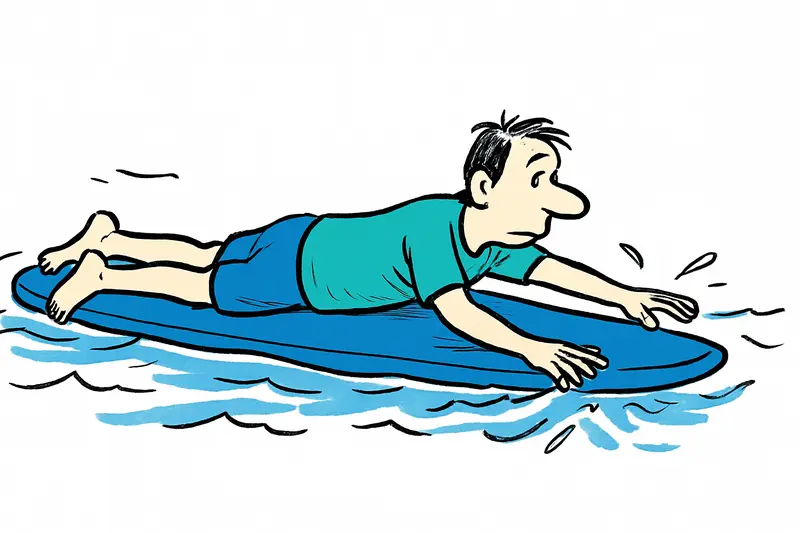
If you walk along the Paseo Marítimo in the morning and suddenly see people 'crawling' belly-first over the waves, you're witnessing a small but neat trend: prone paddling. Instead of standing upright and striking with a paddle, you lie on a long, narrow board and pull yourself through the water with your arms. It sounds simple — but it isn't. The muscles complain quietly at first, and after ten minutes every water bottle feels like a weightlifting test.
The idea did not originate on the island but comes from the waterman tradition of Hawaii and has long roots in California, Australia and South Africa. Lifeguards used similar boards because they allow faster movement through the surf than many other devices. Mallorca's conditions fit well: calm mornings in coves like Alcúdia or Pollença, longer stretches at Es Trenc, and the hustle around Can Pastilla with its surf shops provide ideal starting points.
Right next to the beach in Can Pastilla it often still smells of fresh coffee, the waves lap, and then suddenly someone is lying on an almost four-meter-long board, arms working evenly. The boards are longer and noticeably narrower than regular SUPs; racing models start at about 3.6 meters, and some go well beyond that. On your belly you paddle more efficiently, the waterline changes, and you feel the boat beneath you — an immediate sensation that many find thrilling.
For beginners it may seem unusual at first. But that's exactly the appeal: those with surfing or SUP experience can use prone paddling to specifically improve their paddling endurance. The technique resembles freestyle swimming, only the board provides stability and makes longer distances possible. On the island it is therefore used not only by newcomers but also by wave riders as supplementary training — which is a benefit for the local scene.
Practically speaking, you don't need a paddle and therefore have less equipment to carry across the beach. Still: shade before and after the session, a water bottle, sunscreen and a short warm-up are mandatory. Beginners should start in quiet coves, shallow water and without strong wind. Those who venture into the surf should attempt their first tries under guidance — the dynamics there differ significantly from calm sea.
In Can Pastilla a surf shop has already begun ordering suitable boards on request. That shows: prone paddling is still a niche, but a growing one. For rental businesses, schools and beach kiosks this means: new offerings, new customers, more activity on the water. For islanders and holidaymakers it is an easy, low‑impact way to stay fit and experience the sea differently.
A typical scene: mid‑morning, light breeze, fishing boats tracing their courses in the bay, and a handful of people at the water's edge practicing the rhythmic pull. Children watch curiously, older strollers stop, a dog shakes itself out beside a sunshade. This is not a loud show — it's quiet doing that might, in a year or two, grow into regattas or meetups around Mallorca.
For anyone curious: try it in a sheltered cove, book an hour with a school or ask the local surf shop for a light beginner board. Those who train regularly will notice quick progress: more endurance, a stronger core, a new perspective on the sea. And who knows — soon you might see small groups paddling long distances, from Port d'Alcúdia to Pollença, the island at their back, the wind whispering.
The nice thing is simple: prone paddling suits Mallorca well. It doesn't need much space on the beach, fits into existing offerings and brings people onto the water who might otherwise only watch. An invitation to join in — lying down, looking at the water with the sun on your neck.
Frequently asked questions
When is Mallorca best for a beach holiday?
What should I pack for a Mallorca trip?
How can I get around Mallorca without a car?
Are there family-friendly beaches suitable for swimming in Mallorca?
What outdoor activities are popular on Mallorca?
What are good day trips from Mallorca?
How should I dress when visiting religious sites in Mallorca?
What is the climate like in Mallorca through the year?
Similar News
Housing Shortage in Mallorca: Assessment, Questions, Proposals
Over 2,000 new housing units through repurposing and special rules – sounds like a success. But do they really help peop...
Garbage, Stench, Fire Risk: What Is Really Going Wrong in Son Bauló
An apartment ensemble illegally built for years near Son Bauló is falling into disrepair, largely occupied and creating ...
Legat on Mallorca: Between Football Dreams and Political Alarm
The former pro is intervening in German politics from Mallorca – loud, emotional, without much detail. What does that br...
"Stop Instagramers": Reality instead of filters — A reality check for Mallorca
A platform calls it by its name: self-staging leads to crowded bays, clogged roads and pressure on water resources. What...
Pop Art from New York: Charles Fazzino conjures skylines in Palma
Pop-art star Charles Fazzino drew colorful, three-dimensional city views live at the "Summer Art Night" in Galerie Mensi...
More to explore
Discover more interesting content

Boat Tour with BBQ along Es Trenc Beach
Private transfer from Mallorca Airport (PMI) to Pollensa
