
Munitions Bunker Near Son Sant Joan: Why Mallorca's Citizens Should Have a Say
Madrid plans a semi-underground munitions bunker near Palma Airport. Unease is growing on Mallorca — not just because of the explosives but because of the lack of transparency. What needs to happen now.
A bunker near the airport — and the question of participation
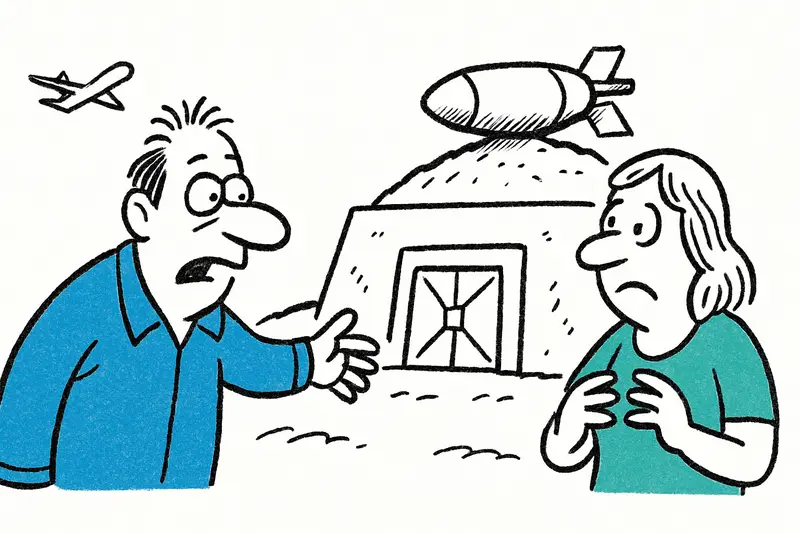
On the edge of Son Sant Joan, where aircraft noise, the smell of diesel and olive trees mark the days, another sound has suddenly grown louder: the low hum of concern. Drafts from Madrid propose a semi-underground munitions bunker near Palma airport – several metres deep, thick reinforced concrete walls, earth coverings, capacities that could theoretically reach up to 75 tonnes. Cost: around €1.8 million. In the WhatsApp groups of Es Pil·larí, at the tables of cafés on Avinguda Joan Miró and among the taxi drivers who see the runway every day, people are talking about it. The key question now is: Can the capital decide whether rockets and bombs are stored next to our planes?
What is on paper — and what is missing
The plans appear technical and matter-of-fact. Length and wall thickness, a protective earth cover to dampen shock waves, formulations such as “20 to 32 guided bombs”. Madrid stresses that in practice far less material will be kept on site because of the proximity to the civil terminal. But precisely that proximity is the problem: any weapons depot being built in the Son Sant Joan military area — small or larger — changes the local risk calculations. What is missing on paper are comprehensible safety calculations for the civil area, information on emergency plans, and clear answers to how such a depot would affect airport service providers, ground staff and neighbouring communities.
Politics, protests and the gaps in the procedure
Criticism is forming across the political spectrum — for different reasons. Left voices demand immediate withdrawal; conservative voices criticise the lack of coordination with the Balearic government. Some defend the project with reference to alliance obligations. What is neglected is the question of the democratic process: How will affected municipalities be involved? What legal options do the island government, city council and residents have to influence the decision? Military planning is often subject to its own approvals — but when civilian infrastructure such as an international airport is affected, the obligatory reference to “strategic necessity” is not an adequate answer.
The risks that are rarely discussed
The debate so far revolves around quantity and distance. But there are other, less visible issues: the risk of contaminating groundwater layers in an accident, the logistical movement of hazardous goods on roads through Palma, liability questions in the event of an incident and the psychological strain on airport employees who will have to work under a different sense of security. Possible scenarios of sabotage or becoming a target are also often taboo. After all, Son Sant Joan is not isolated — fuel depots, maintenance hangars and passenger terminals are in relative proximity.
Concrete steps that would build trust
Chanting demands is not enough. The island needs practical tools to establish transparency and safety. Concretely, I propose:
1. Public hearings and access to expert reports: Independent experts must be able to review safety calculations. The results should be made public.
2. Environmental and risk assessment: A comprehensive, public Environmental Impact Assessment (EIA) including groundwater and soil risks.
3. Emergency plans and drills: Clear evacuation and response scenarios for staff and residents, to be practised jointly with the airport operator, civil protection and municipalities.
4. Capacity limits and spatial alternatives: If munitions must be stored, the choice of location should be questioned — there are military sites with fewer civil interfaces.
5. Citizens' advisory board: An advisory board appointed by the island that is consulted in decisions and regularly receives information.
Why this is more than a local debate for Mallorca
On Sundays maintenance vehicles often park in the lot near the runway; children rarely play there, but employees and residents live with this airport. Mallorca lives from tourism, from security, from trust. A project pushed through without transparent answers and robust protective measures damages exactly that capital. This is not only a safety issue — it is a question of democratic legitimacy.
From the smell of petrol on Avinguda Joan Miró to the rustle of the palms: the coming weeks will show whether Madrid wants to listen to the voices here. We will stay on it and report as soon as new expert reports, approvals or rounds of talks become known.
Frequently asked questions
What is planned near Son Sant Joan airport in Mallorca?
Why are people in Mallorca worried about the munitions depot near Palma airport?
Can Mallorca or Palma decide whether weapons are stored near Son Sant Joan?
What safety checks are being demanded for the Son Sant Joan bunker plan?
How could a munitions depot near Palma airport affect airport workers?
What role could environmental risk play in the Son Sant Joan depot debate?
What are the possible alternatives to storing munitions near Palma airport?
Why does the planned bunker near Son Sant Joan matter for Mallorca beyond security?
Similar News
First Day, First Consequences: What Palma's Rent Freeze Really Means
A new decree stops a planned eviction in Palma — but what really changes for tenants and landlords? A reality check with...
When Housing Becomes a Matter of Survival: Mallorca Between Rental Frenzy and Everyday Life
The case of 87-year-old Maricarmen showed that on Mallorca many people's lives are poised between affordable and uninhab...
Autumn in Mallorca: When Melancholy Gets a Window
Why autumn quietly tightens here — and how to make use of the mood: walks, culture, candles and the light from Palma to ...
Near-miss on Lanzarote: Landing Ryanair Jet and Iberia Takeoff — what really went wrong
On Lanzarote there was a dangerous incident: A Ryanair flight (FR5910) from Dublin landed on runway 03 while an Iberia E...
Eurowings introduces new Premium Business seats on Mallorca routes
From December 1, selected Eurowings flights to Palma and other destinations will feature eight particularly generous sea...
More to explore
Discover more interesting content

Can Cap de Bou

Townhouse Lleo 72
