
Major police operation at Palma's old prison – who counts the consequences?
Major police operation at Palma's old prison – who counts the consequences?
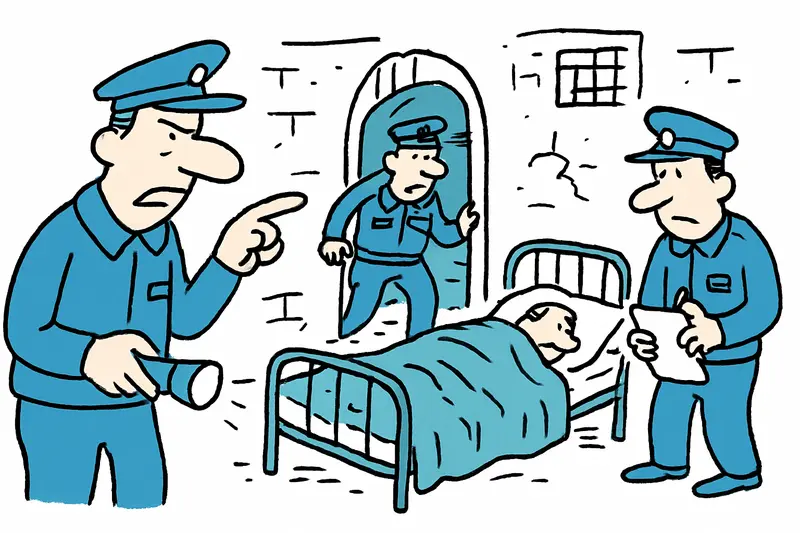
This morning the National Police and the local Guardia searched hundreds of sleeping spots in Palma's decommissioned prison. The aim was to find wanted persons. The action answers some security questions — but leaves others open.
Major police operation at Palma's old prison – who counts the consequences?
This morning sirens filled the damp air around the closed facility, people stopped in doorways and watched as the National Police and the local police, with large numbers, searched the old prison. Hundreds of people who regularly sleep there were checked. The stated aim: to locate wanted persons and suspects in ongoing cases. Similar coordinated actions have been documented in other large-scale police operations such as Raid in Palma and on the Mainland: How Deep Does the Network Reach into Our Neighborhoods?.
Key question
Do such operations really create more security for the neighborhood — or do they merely shift problems a few streets away without offering long-term solutions?
Critical analysis
The operation itself is clear: authorities try to follow up on open investigations and find people of interest. On the other hand, the old prison has been closed since 1999 and over the years has become a sleeping place for people who have no safe shelter. Large-scale checks address security concerns in the short term but can increase social displacement and insecurity among vulnerable people. When hundreds are checked, data and procedures are generated and often evictions follow — but what happens afterwards? Are care services ready, or does the day end with another night under a different bridge? The wider context of these investigations, including rising arrest totals, is detailed in Money-laundering raid in Palma: three more arrests — total rises to 52.
What is missing in the public discourse
In discussions about such operations, terms like “order” or “raid” quickly dominate. Rarely discussed is how the city administration, social services and schools will coordinate to respond to the consequences. Parents and teachers at a nearby school complained — which shows how much the situation already affects everyday life. But there is a lack of clear information on how the immediate needs of those affected will be secured: sleeping places, medical help, psychosocial support, placement into accommodation. Discussions about consequences for the property market and anti–money-laundering measures can be found in Major Raid in Palma: What the Searches of Law Firms Mean for the Island.
A scene from everyday life in Palma
I stood this morning at the edge of the operation, near a school whose bell would ring ten minutes later. Officers moved in groups across the forecourt of the facility; the cobblestones were still wet from yesterday's rain. Parents stopped with children at the street corner, voices hushed, the school bus honked, and a teacher pulled her jacket tighter as she expressed concern that her pupils felt uneasy when walking past.
Concrete solutions
- Immediate measures: During such checks, mobile social teams and basic medical assistance must be present on site so that people are not simply thrown back onto the street. A fixed procedure for temporary placements after checks can prevent chain reactions.
- Medium term: The city should set up a local coordination body that brings together police, social services, schools and neighborhood representatives. A joint plan to support those affected after operations must be developed.
- Long term: Empty buildings like the old prison need a clear strategy: renovated and repurposed with a social housing component, or properly secured and managed so that no permanent informal camps form. Preventive offers — more low-threshold counseling centers, accommodation options and employment programs — reduce the likelihood that places will become emergency shelters again.
Pointed conclusion
Police presence can bring short-term relief. In the long run it is not enough. Without accompanying social infrastructure the situation remains brittle: neighbors are unsettled, parents protect children, and people without homes remain in limbo. If Palma is serious about security and social peace, the first question after every operation must be: where will those who suddenly have no night stay go?
Frequently asked questions
Why did police search Palma’s old prison complex?
Is it safe to walk near Palma’s old prison during a police operation?
What happens to people sleeping in Palma’s old prison after a police check?
Why are neighbours and parents worried about the old prison in Palma?
What should Mallorca do after a large police operation at an abandoned building?
Why do abandoned buildings in Palma become informal sleeping places?
What long-term solution is suggested for Palma’s old prison site?
Do police raids in Palma solve the problem of homelessness?
Similar News

More water than last year: Mallorca's reservoirs breathe easier
September rain refilled the Tramuntana's reserves: overall fill around 35 percent, Cúber at 40.42 percent, Gorg Blau at ...
Three Luxury Hotels in Banyalbufar: Lots of Money, Many Questions
A Danish investor plans three exclusive accommodations in Banyalbufar — including the historic Son Valentí. The announce...
2.1 tonnes of cocaine on sailing yacht off Spain's coast – a reality check for the coastguard
A 14-metre yacht was seized with 2.1 tonnes of cocaine. Who monitors the ports, how does the international hunt succeed ...

Heat Bonus in Mallorca: 100 Euros Extra for Outdoor Staff at MarSenses
MarSenses pays employees who worked outdoors in August an extra €100 as recognition. Lighter uniforms, reduced hours for...

Renovating in Mallorca: What You Really Can Do Without Neighbour Consent
Many think they can do whatever they want in their apartment. That's partly true — but only as long as structural elemen...
More to explore
Discover more interesting content

Can Cap de Bou

Townhouse Lleo 72
