
Are we prepared? Hurricane gusts up to 151 km/h – Mallorca under storm
Are we prepared? Hurricane gusts up to 151 km/h – Mallorca under storm
At Puig Major hurricane gusts of up to 151 km/h were recorded overnight. Authorities advise caution and parts of the coast are already closed. A critical assessment: Are warnings and infrastructure sufficient?
Are we prepared? Hurricane gusts up to 151 km/h – Mallorca under storm
Measurements from Puig Major, Orange alert from noon and a daily life that suddenly becomes uncertain
On the night into Wednesday the island's highest point, Puig Major, registered wind gusts that can only be described as hurricane gusts: 151 km/h reported the local weather channel Meteo de les Illes, while other observers spoke of 145 km/h. Such values exceed the 120 km/h threshold at which meteorologists speak of severe hurricane gusts. AEMET sees a close interaction of several Atlantic low-pressure systems; as "Kristin" passes over the island, "Joseph" is already positioned as new bad weather off the coast, as discussed in Severe Weather Warning for Mallorca: Are Our Towns and Beaches Prepared?.
Authorities have reacted: from 12:00 many areas are under an Orange alert for the Tramuntana, the southwest and extended coastal zones. Parks and promenades, such as the Paseo Sagrera in Palma, remain closed, as detailed in Orange storm cripples Palma: parks closed, markets cancelled – Is the city well prepared?, and Emergències 112 strongly recommends not staying outdoors. Anyone who stood at the Port d'Andratx harbor by the lighthouse this week saw meter-high waves hitting the breakwater and boats wildly pitching.
Key question: Are the island and its administration really prepared for such peaks, or do we always react only when roofs are blown away and streets are underwater? This is not a rhetorical question but one that demands an honest reality check.
Short-term analysis: warning levels are issued, but local extremes like the gust on Puig Major show how sparse the network of measuring stations and precautionary measures in mountain and coastal zones still is. Orange is declared from noon, but measurements were already taken during the night — good warning systems must close that gap. In addition: many damages are caused not only by the pure wind but by poorly secured items, loose roof tiles, unsecured solar panels and blocked gutters. This reflects previous coverage of west-wind alerts in Yellow Warning: When the west wind sweeps across Mallorca — how prepared is the island?.
What is missing in the public discourse: the discussion often ends with spectacular images of fallen trees. Rarely does it address the quiet but costly consequences for the island: insurance issues for holiday renters, the permanent threat to avenues of pine trees, erosion problems at small coves, and the language of communication. Mallorca is home year-round to people from many countries. Warning notices in a handful of languages, reliable SMS alerts and clear instructions in hotels and on beaches are still often lacking, as raised in Storm warning in Mallorca: Is the island prepared for wind and rain?.
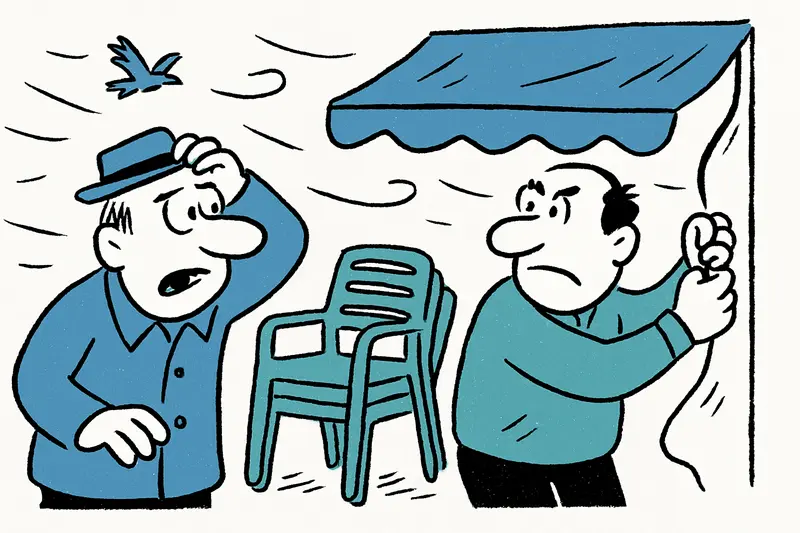
An everyday scene: on Passeig del Born this morning café owners are stacking their plastic chairs, a garbage truck drives with an open container, a dog pulls on its leash because its owner fears the café tables will fly away. At the harbor a fisherman fumbles for his ropes at dawn, while a restaurant owner in Port de Sóller secures the awning with a rope. Such small actions decide whether at the end of a storm only a troubling day remains or days-long damage.
Concrete proposals so we have to improvise less: 1) Early, multilingual alert chains via SMS and WhatsApp, linked to automatic measuring stations in sensitive zones. 2) A mandatory on-site check in municipalities: systematically secure loose signs, advertising structures, construction sites and weakened trees, especially before the tourist season. 3) Prioritized cleaning of gutters and outlets at known flood spots and checks of sediment traps. 4) Temporary closure of marinas and promenades based on defined measurement thresholds, not only after visible damage. 5) Short, mandatory information for holiday rental hosts to provide to guests during storm warnings — in German, English, Spanish and Catalan. 6) In the long term: expansion of the measuring network, clearer regulations for fastening roof installations and subsidy programs for storm-proofing older buildings.
Authorities are doing what they can: alert levels have been set, emergency services are on call, and there are recommendations from Emergències 112. But practical measures like secured assembly points, transparent information about shelters or coordinated help for elderly people in rural municipalities are still missing in many places.
Conclusion: Mallorca has storm experience, yet peaks like 151 km/h show that practice alone is not enough. It's about systems: better measurements, clear multilingual communication, targeted infrastructure maintenance and simple rules for operators and residents. Those who put their garden furniture in the cellar today are doing the right thing. Those who still hope tomorrow that "nothing will happen" risk much more than a rainy holiday day.
Short and sharp: We must think faster than the wind.
Frequently asked questions
How dangerous are storm gusts in Mallorca during an orange weather alert?
Is it safe to go outside in Mallorca when strong wind warnings are issued?
What should I secure at home in Mallorca before a storm?
Why is Puig Major often mentioned during severe weather in Mallorca?
Are Mallorca beaches and promenades closed during strong storms?
What makes harbours like Port d'Andratx unsafe in stormy weather?
How should holiday rental hosts in Mallorca warn guests about storms?
What do people in Palma usually do when a storm warning is issued?
Similar News

More water than last year: Mallorca's reservoirs breathe easier
September rain refilled the Tramuntana's reserves: overall fill around 35 percent, Cúber at 40.42 percent, Gorg Blau at ...

Three Luxury Hotels in Banyalbufar: Lots of Money, Many Questions
A Danish investor plans three exclusive accommodations in Banyalbufar — including the historic Son Valentí. The announce...
2.1 tonnes of cocaine on sailing yacht off Spain's coast – a reality check for the coastguard
A 14-metre yacht was seized with 2.1 tonnes of cocaine. Who monitors the ports, how does the international hunt succeed ...

Heat Bonus in Mallorca: 100 Euros Extra for Outdoor Staff at MarSenses
MarSenses pays employees who worked outdoors in August an extra €100 as recognition. Lighter uniforms, reduced hours for...
Renovating in Mallorca: What You Really Can Do Without Neighbour Consent
Many think they can do whatever they want in their apartment. That's partly true — but only as long as structural elemen...
More to explore
Discover more interesting content

Can Cap de Bou

Townhouse Lleo 72
