

'Mallorca at the Limit': A demonstration with a question mark — what's missing from the protest against mass tourism?
'Mallorca at the Limit': A demonstration with a question mark — what's missing from the protest against mass tourism?
The platform 'Menys Turisme, Més Vida' is calling for a large rally on July 26 at the Plaza de España in Palma. A reality check: Which demands are concrete, who needs to act and which solutions are missing from the public debate?
'Mallorca at the Limit' — a demonstration, many open questions
The platform 'Menys Turisme, Més Vida' has announced a new wave of protests: On July 26 at 7:00 PM a large rally is set to take place at the Plaza de España in Palma under the motto Mallorca at the Limit: Will This Weekend Break the Visitor Maximum?. Already this Sunday the group intends to present further actions in front of Palma Cathedral. That is the core, as far as the facts go. Beyond that, the island's discussion begins anew — with familiar arguments, but not always with clear solutions.
Key question
What does 'at the limit' concretely mean for the people who live here, and which measures would actually reduce the burden instead of merely making symbolic gestures?
Critical assessment
The dispute over tourism is not new: crowded buses, long queues in summer, overcrowded beaches and rising rents in neighborhoods like La Lonja and El Mercat are everyday reality. The demonstration targets this feeling of overload. Problematic, however, is that protests sometimes only address the symptoms — noise, rubbish, traffic — without consistently naming the economic, regulatory and planning causes. Who controls the number of beds? Who enforces rules for holiday rentals? Who plans infrastructure with a view to 12 months instead of only the season? These questions often arise but remain diffuse in the public debate; a similar analysis can be found in Reality Check: Why Mallorca Can Hardly Escape Massification.
What's missing from the public discourse
Two levels are missing: first, reliable figures and transparency — how many tourists arrive when, where does the majority spend their nights, what burden does each tourist create? Second, concrete responsibilities: many measures are announced politically, but are rarely implemented in a way that shows measurable effects. Without clear responsibilities, appeals for 'less tourism' can remain a wish rather than a strategy. The call for better data and a sharper tourism strategy echoes points raised in After Eleven Years at the Top: What Mallorca's Tourism Radar Really Needs to See.
A scene from Palma — between normal life and overload
On Passeig del Born in the late morning: delivery vans park, cafés set out tables, a mother with a stroller passes by, a moped brakes, drink menus are exchanged. On the horizon the cathedral, tourists take photos, a group speaks loudly, awnings are rolled out. That is Mallorca: lively, loud, sometimes too cramped. Such everyday scenes show why the concerns are real — and why solutions must be local and concrete.
Concrete solutions — pragmatic and implementable
1) Capacity management: Instead of calling generally for 'fewer tourists', it should be examined whether capacity limits are possible for particularly burdened places — temporary access restrictions for coves or old-town zones, ticketing systems for protected natural areas or limits for day-trip boats.
2) Holiday rental registry and administration: Stricter control of registered holiday rentals, consistent sanctions for illegal offers, transparent publication of violations. This would relieve residential neighborhoods and strengthen the legal market.
3) Redirecting demand: Support programs for off-season, cultural and active tourism benefit not only businesses that otherwise close, but also relieve summer hotspots. At the same time hotels and organizers need incentives to distribute capacities more evenly throughout the year.
4) Infrastructure instead of bans: More investment in sewage, roads, waste disposal and public transport — targeted where pressure points lie. Better bus services and safe bike lanes reduce car traffic in narrow streets.
5) Fair cost distribution: A hypothecated tourism levy, used directly for local infrastructure, social projects and environmental protection and accounted for transparently. This way municipalities feel a direct return.
6) Local participation: Decisions mean nothing without local involvement. Neighborhood councils, seasonal working groups and binding communication channels between municipalities, hoteliers and residents can defuse conflicts early.
Who must act?
The responsible parties sit on several levels: the Palma City Council for urban zones, the Council of Mallorca for island-wide infrastructure, the Government of the Balearic Islands for laws on short-term rentals and port management, and private actors such as hoteliers and tour operators. Without coordination, each individual measure remains piecemeal.
What the demonstration can achieve — and what it cannot
A rally can create pressure, raise awareness and spark conversations. It can mobilize employers and politicians. But it is not enough on its own if no institutional implementation follows. Activism and politics must interlock: clear demands, timetables, transparent indicators of success.
Concise conclusion
'Mallorca at the Limit' strikes a nerve. The demonstration is a warning light — but not a blueprint. If protesters pair demands with concrete proposals and local decision-makers translate those proposals into measurable steps, change could happen. Otherwise it will remain visible discontent with little tangible change. On the streets of Palma, between the cathedral and Passeig del Born, one hears both: the concern and the opportunity — if both are taken seriously.
Frequently asked questions
What kind of weather can you expect in Mallorca in summer?
Is the sea warm enough to swim in Mallorca?
What should I pack for a trip to Mallorca?
When is the best time to visit Mallorca for good weather?
Can you visit Palma de Mallorca in one day?
Is Portals Nous a good place to stay in Mallorca?
What is Cala Major like for a beach day in Mallorca?
Is El Toro in Mallorca a quiet place to visit?
Similar News
When the Tap Only Runs Sometimes: Why Municipalities in the Balearic Islands Are Now Rationing Water
Deià, Valldemossa, Esporles, Sóller and several places on Menorca are scaling back water supply. Who is responsible, why...
Battle for the Ramp: Why Cala Gamba Needs More Than Enforcement
The Guardia Civil intervened in Cala Gamba — residents breathed a sigh of relief, but unease remains. Key question: Are ...
He dances at the Duty-Free: How an airport employee brings a smile to Palma
A Duty-Free employee at Palma Airport created a viral TikTok with dancing breaks. Why the scene is more than just an int...
Stolen Motorcycle in Palma: Fatal Crash in Coll d'en Rabassa Shortly After Theft
A motorcycle parked on Plaza Miquel Dolç in Son Gotleu was reportedly stolen in the early hours. Hours later two men cra...
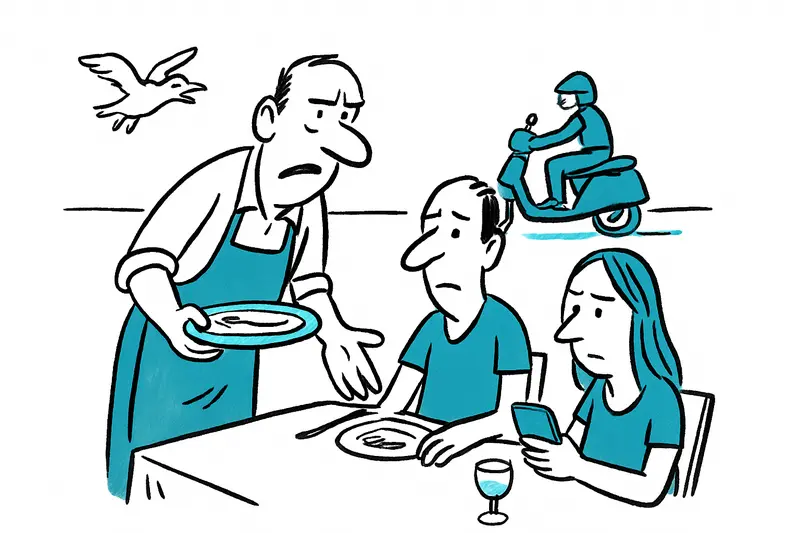
When More Guests Mean Less: Mallorca's Restaurants at the Limit
Despite record visitor numbers, the revenues of many restaurants are shrinking. Why more visitors don't automatically me...
More to explore
Discover more interesting content

Boat Tour with BBQ along Es Trenc Beach
Private transfer from Mallorca Airport (PMI) to Pollensa
