
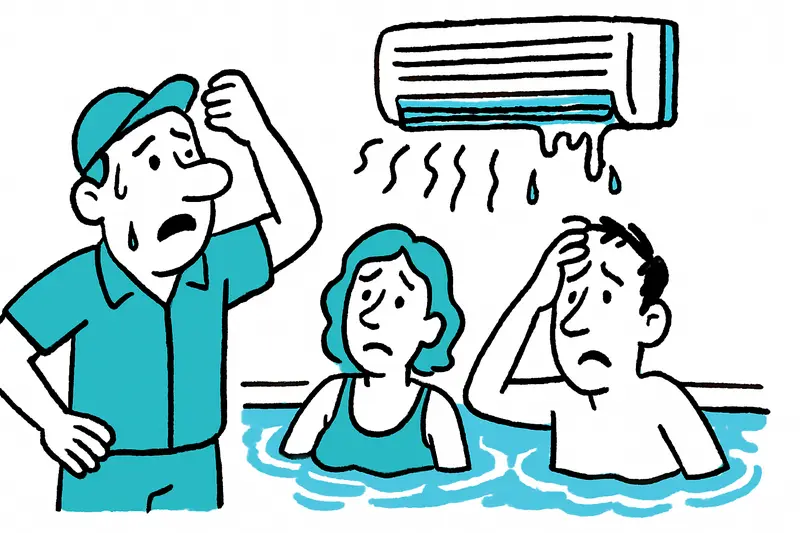
Air conditioning systems in Palma's pools are failing — who protects staff and visitors?
Air conditioning systems in Palma's pools are failing — who protects staff and visitors?
In five municipal swimming pools in Palma, air conditioning systems are not working properly. Employees report health burdens and the union has filed a complaint. A reality check: why do solutions take so long, what is missing in the debate, and what short-term measures can help?
Air conditioning systems in Palma's pools are failing — who protects staff and visitors?
Main question: Why do air conditioning systems in several municipal indoor pools in Palma remain defective for months, even though heat alerts in Palma and occupational safety do not take a break?
For weeks towels and parasols may be in the shade, but not the equipment: in several municipal swimming pools in Palma, reception staff, trainers, cleaning personnel and maintenance teams report ongoing problems with the air conditioning systems. Five locations are affected, specifically Son Ferriol, Génova, Son Roca and Arenal. In one case the union speaks of faults that have lasted for more than two years.
On paper that sounds dry, but anyone working a hot morning at the reception desk in Son Ferriol experiences it differently: the air feels heavy, the smell of chlorine mixes with sweat, a staff member wipes her neck while city buses honk at the Carrer de Son Ferriol junction outside. Visitors briefly open the changing rooms because the system hardly cools there. Children's paddling pools remain open, but the staff are working under strain.
Critical analysis
Several causes seem likely, without all of them having been proven: first, municipal buildings often have a complex ownership and operator structure — procurement, maintenance and repair are handled by different departments or external companies. Second, air conditioning systems in swimming pools are technically demanding: humid environments, chlorine and constant temperature changes promote corrosion and electrical failures. Third, there appears to be no ready-to-deploy replacement equipment: mobile air conditioners help in offices, but not in changing rooms or pool halls.
Another factor is timing: the problems allegedly persist for months, in one case more than two years. This points to structural weaknesses — no quick access to spare parts, delayed tendering, or prioritization that favors other projects. For employees this is more than a comfort issue: in labor law, health protection and safe working conditions are priorities; the risks from overheating and reduced air quality require a response.
What is missing in the public debate
The debate so far revolves around devices that need repair and complaints. Rarely does it go deeper: how are maintenance contracts negotiated? Are there transparent deadlines for repairs? What budgets are allocated for upkeep — and who decides about reallocations? Also scarcely present is the perspective of visitors: parents, older people and swim clubs need reliable information on whether their training or swimming times are affected, and local heat-preparedness coverage could help set expectations.
Everyday scene: A morning in Génova
Early in the morning the phone rings at the Génova reception. A trainer asks whether the children's practice can take place — 28 degrees outside, inside the air is humid. The hair dryer in the repair room is idle, the electrician has gone to another job. A retired couple waits on a bench, a little girl pulls off her swim shorts because she is too hot. Scenes like these show that it is not only about technology but also about social consequences.
Concrete solutions
Short-term: 1) Activate emergency measures: mobile cooling units in changing rooms and reception areas, additional fans and enhanced ventilation during peak times; flexible course schedules so that intensive physical activity does not fall on the hottest hours. 2) Health protection: regular break rules, additional drinking water stations, heat-adjusted duty rosters and first-aid training for heat-related incidents. 3) Communication: up-to-date notices at entrances and on the municipal website so users do not arrive to find closures or restrictions.
Medium-term: 1) Technical audit: external inspection of all affected systems with a priority list and clear deadlines. 2) Review maintenance contracts: renegotiate durations, response times and liability provisions; ensure spare-part stock for critical components. 3) Create transparency: publish a maintenance plan and an emergency fund that enables quick repairs.
Long-term: invest in modern, corrosion-resistant systems; training for in-house maintenance staff; and a municipal contingency fund for infrastructure problems that bypasses bureaucratic delays.
What citizens and workers can do
Employees should document technical defects and request repairs in writing — this creates a paper trail. Users can contact the municipal administration and be persistent: clear questions about timelines and responsible parties are useful. The city administration must respond not only with lip service but with concrete deadlines.
Conclusion: It is not just about broken machines. When air conditioning in public pools fails for months, it reveals gaps in maintenance, procurement and responsibility. A mix of rapid emergency measures, technical audits and transparent communication would noticeably improve the situation. Otherwise the hot air will remain not only outside but also inside Palma's pools — and that affects the health of the people who work and swim there.
Frequently asked questions
Why is the air conditioning in some municipal pools in Palma still broken?
Can visitors still swim at Palma’s municipal indoor pools if the air conditioning is not working?
What can staff in Palma pools do when the building gets too hot?
What temporary solutions can help in Mallorca pool buildings when air conditioning fails?
Which Palma pools are affected by the air conditioning problems?
Why are air conditioning systems in swimming pools so difficult to maintain in Mallorca?
Who is responsible for fixing broken air conditioning in Palma municipal pools?
How can Palma City Hall improve safety in municipal pools during heat waves?
Similar News
When the Tap Only Runs Sometimes: Why Municipalities in the Balearic Islands Are Now Rationing Water
Deià, Valldemossa, Esporles, Sóller and several places on Menorca are scaling back water supply. Who is responsible, why...
Battle for the Ramp: Why Cala Gamba Needs More Than Enforcement
The Guardia Civil intervened in Cala Gamba — residents breathed a sigh of relief, but unease remains. Key question: Are ...
He dances at the Duty-Free: How an airport employee brings a smile to Palma
A Duty-Free employee at Palma Airport created a viral TikTok with dancing breaks. Why the scene is more than just an int...
Stolen Motorcycle in Palma: Fatal Crash in Coll d'en Rabassa Shortly After Theft
A motorcycle parked on Plaza Miquel Dolç in Son Gotleu was reportedly stolen in the early hours. Hours later two men cra...
When More Guests Mean Less: Mallorca's Restaurants at the Limit
Despite record visitor numbers, the revenues of many restaurants are shrinking. Why more visitors don't automatically me...
More to explore
Discover more interesting content

Boat Tour with BBQ along Es Trenc Beach
Private transfer from Mallorca Airport (PMI) to Pollensa
