
Sóller swaps full-body showers for foot showers — real water savings or just symbolic politics?
The municipality of Sóller is replacing full-body showers with foot showers at two harbour beaches. Good idea or half-hearted compromise? A reality check with practical solutions from everyday life in Port de Sóller.
Sóller swaps full-body showers for foot showers — real water savings or just symbolic politics?
A reality check on the measure, its benefits and what is missing from the debate
Early in the morning at the quay of Port de Sóller: fishermen haul boxes, a street sweeper chugs by, and the promenade still smells of sea and fried fish. Tourists in flip-flops roll their suitcases over the cobblestones, children laugh. These are exactly the scenes that make the municipal administration's decision tangible — and at the same time raise questions.
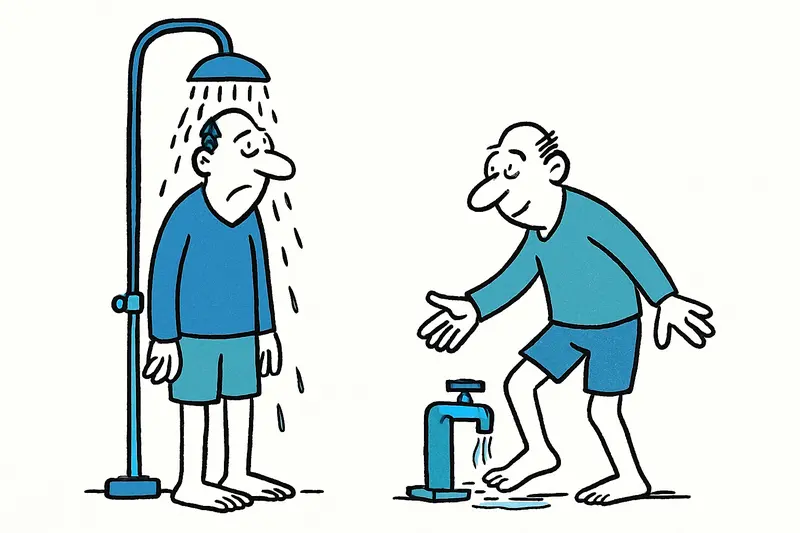
The facts are sparse: the town hall has announced that it will replace the previous full-body showers with foot showers at the beaches Can Generós and Can Repic. Biel Barceló, the municipal councillor in charge, said the measure is intended to save water. In summer it had already been discussed to switch the showers off completely; at that time the municipality reacted by temporarily turning them off during drought periods, as reported in Showers off, pools forbidden — how the town is dealing with drought. In other places, such as Cala Millor, there have for some time been only foot showers, and several municipalities have taken broader measures Water alarm in Mallorca: Seven municipalities turn off the tap — is saving alone enough?.
Key question: Is replacing the showers enough to actually save water — or does it remain a symbolic intervention?
Critical analysis: The replacement is a step in the right direction because it targets sources of consumption directly at public beaches. But without accompanying measures the effect may remain limited. Public showers are only a part of urban water consumption; hotels, private gardens, golf courses and leaks in the infrastructure play at least as large a role. User behaviour matters too: if people continue to rinse off with bottles or buckets after swimming because they can't find a full-body shower, water may be used uncontrollably and inefficiently.
What's missing from the public debate: transparency and numbers. The administration does not name a savings target and provides no estimate of how much water should be saved by the exchange. Without comparison values, the measure is difficult to evaluate. There is also a lack of perspective on alternative solutions such as rainwater harvesting, greywater treatment or temporary water quotas during the dry season.
Another aspect: user behaviour and enforcement. Foot showers are less attractive for washing the whole body — that is intended. But they benefit from simple technology — a push button, a short runtime, sensors — only if these components are properly set. Otherwise the showers remain open or are tampered with. Cleanliness and maintenance are also decisive: clogged nozzles or broken sensors lead visitors to improvise and use water where it is easier accessible.
Everyday scene: On a hot afternoon you can observe Spanish families setting up a clothesline next to a foot shower or youngsters fiddling with water bottles. Small habits decide the success of big words. Anyone who wants to reduce water consumption must address these habits — not just the hardware.
Concrete solutions Sóller could now add:
1) Measurement and transparency: Install meters on the beach lines and make consumption data public. Savings targets in cubic metres per season help to assess the measure.
2) Technology instead of bans: Sensor-controlled foot showers with clear maximum times, flow limiters and vandal-proof fittings reduce waste without unnecessarily restricting the visitor experience.
3) Rain and greywater: Collection tanks behind the promenades could supply water for the showers. This reduces pressure on the drinking water network and is a visible sign of sustainable management.
4) On-site information: Clear signs in several languages, brief notices from the beach patrol and local campaigns (e.g. at Sóller market or in the Ferrerias) change behaviour more effectively than bans alone.
5) Seasonal differentiation: Flexible rules for heat and dry periods: in drought switch to minimal operation; in wetter weeks other measures can be tested.
6) Cooperation with businesses: Involve hotels and landlords in Port de Sóller — joint saving programmes create bigger levers than isolated beach measures, as local hoteliers demand stricter controls.
Concise conclusion: Replacing the full-body showers is not a bad start, but not yet a breakthrough. Without figures, technical standards and accompanying measures it remains a visible, well-communicated but potentially limited step. The residents and visitors of Port de Sóller quickly notice whether the measure has substance — in the truest sense of the words. If the town hall now works on transparency, technology and education, a symbolic gesture could become a sustainable practical example. If it is left as a mere refit, there will be renewed discussions in two summers — this time with less trust from the local people.
Frequently asked questions
What kind of weather can Mallorca expect in the coming week?
Is it still warm enough to swim in Mallorca right now?
What should I pack for Mallorca in a changeable week?
Is Mallorca still a good destination for outdoor plans when the weather is mixed?
What is the weather usually like in Palma de Mallorca during unsettled days?
Is Port de Sóller a good place to visit if the forecast is not perfect?
Can you still visit Sóller if the weather turns unsettled in Mallorca?
How should I plan a beach day in Mallorca if the forecast changes?
Similar News
Can Malle hits really work in Hamburg? A reality check for the premiere of "ALLE LIEBEN MALLE"
Premiere at the Großmarkt: thousands of attendees, stars from the Megapark and long beer queues. Why the concept works —...

Adrien Brody strolls through Mercat de l'Olivar – celebrity visit leading to Sa Pobla
Actor Adrien Brody was casually spotted at the Mercat de l’Olivar: tapas, fish stalls and later a stop in Sa Pobla spark...
Who can pick up whom? The complicated life of Mallorca's taxis
Three years after the inter-municipal service, empty runs are rarer — but there is a lack of equal treatment, transparen...

When the Tap Only Runs Sometimes: Why Municipalities in the Balearic Islands Are Now Rationing Water
Deià, Valldemossa, Esporles, Sóller and several places on Menorca are scaling back water supply. Who is responsible, why...
Battle for the Ramp: Why Cala Gamba Needs More Than Enforcement
The Guardia Civil intervened in Cala Gamba — residents breathed a sigh of relief, but unease remains. Key question: Are ...
More to explore
Discover more interesting content

Boat Tour with BBQ along Es Trenc Beach

Private transfer from Mallorca Airport (PMI) to Pollensa
