
Between Waves and Berth: Mallorca's Problem with 'Floating Holiday Rentals'
A new national law allows private boat rentals – right in the middle of high season. What does this mean for beaches, seagrass and quality of life along Mallorca's coasts? A critical assessment with concrete solutions.
Between Waves and Berth: Mallorca's new nautical unease
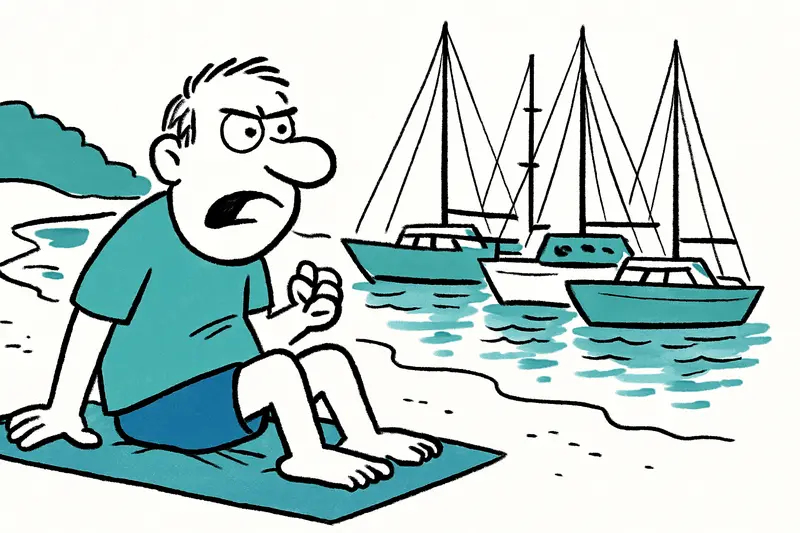
Anyone who spreads their towel by the sea on a hot summer day expects sun, the sound of waves and perhaps the distant clatter of a sailboat's mast. This year, however, another sound has mixed in with the usual noises: the engine of briefly moored excursion boats, the murmur of voices from people boarding pontoons, and the occasional clink of anchor chains against the rocks. The reason: a new law allows private boat owners to rent out their boats to holidaymakers for up to three months a year – a nautical Airbnb that is stirring up Mallorca's coasts.
Key question
How much boat tourism can Mallorca tolerate before the damage outweighs the benefits? This question runs like a reef ridge through conversations in cafés from Puerto Portals to the small harbor bars in Cala Figuera.
Analysis: More income, more problems
The central government's intention is clear: to stimulate the maritime economy and open up new income sources for owners. In the short term this seems tempting. For a family in Alcúdia that rents out their motorboat, it sounds like extra pocket money. For businesses in Palma, an expanding market can extend the season. But the calculation misses several digits: overcrowded anchorages, damaged seagrass meadows and increasing litter on the beaches. Seagrass (Posidonia) is not decorative marine turf but habitat and coastal protection — and it is easily destroyed by anchor chains.
Less discussed is how unevenly the benefits are distributed. Small entrepreneurs and professional charter companies face competition from private renters who often do not meet minimum standards, lack proper insurance or clear safety concepts. And while yacht owners enjoy Mallorca's sun, fishermen and local bathers suffer from reduced access to coves. Recent local reporting documents how Drunk Boats, Battered Bays: When Private Boat Rentals Put Mallorca's Coasts at Risk, illustrating some of the noise, damage and safety risks in coves like Port d'Andratx.
Aspects that receive too little attention
1. Control and liability: Who checks whether anchor spots are not located in protected zones? What about liability if a rented boat damages a seagrass meadow or endangers a swimmer? There is a lack of personnel-intensive controls at sea and of clear sanctions.
2. Night moorings and noise: A growing number of rental boats brings new nighttime noises to previously quiet coves — music, generators, constant boat traffic. For residents by the sea who want to hear the Tramuntana rustle in the trees, this becomes a burden; incidents such as those reported when Trouble over license-free boat rentals: When Es Carbó becomes a racetrack show how license-free boats can escalate noise and safety issues.
3. Economic displacement: Private rental can put pressure on small charter businesses and local boatyards. Economic value creation sometimes remains outside the communities when platforms, rather than local operators, dominate the market, a dynamic explored in Airbnb Puts the Balearic Islands Under Pressure: Deleting Illegal Listings — What It Means for Mallorca.
Concrete opportunities and solutions
There are ways to use the new opportunities without destroying the coast. Some proposals could take effect quickly:
- Clear zoning: Define where rentals are allowed and where they are not, especially around seagrass meadows, nature reserves and quiet bathing coves.
- Seasonal restrictions: The three-month allowance could be handled more flexibly — lower limits in particularly sensitive months or shifting availability toward the shoulder seasons.
- Licensing & insurance: Renting only with mandatory safety checks, liability insurance and proof of environmental requirements.
- Fees & funds for protection measures: A levy on short-term rentals that is directed into cleaning, mooring buoys and controls.
- Digital monitoring: A publicly accessible database of all authorized rentals and berths, plus an app through which citizens can report illegal anchoring.
Such measures would not solve everything, but they would shift the debate from symbolic politics to practical steps. They would create room for local stakeholders — harbor masters, fishermen, environmentalists and residents — to participate in decisions.
What does this mean on the ground?
For bathers it could mean that soon a field of hulls lies further out, disturbing the clear view of the sea and restricting beach traffic. For residents in Portixol or Cala Ratjada, more boats mean more traffic and more noise in the evenings. For the small restaurants along the promenade there is a chance to attract additional guests — if the infrastructure grows accordingly.
In the end, it is also about identity: does Mallorca want to remain an island with open, clean coves, or will it gradually turn into a mosaic of floating holiday rentals and temporary marinas? The decision is made not only in Madrid but also here on the coast, in conversations with harbor chiefs, fishing families and the people who check the buoys early in the morning.
A call for practical action
The debate must not wither into political symbolism. Quick, pragmatic steps are needed: more controls in protected areas, uniform rules for rentals, transparent fee models and above all the involvement of the local community. Otherwise we risk that the typical Mallorcan summer scent of fried fish and sea salt will soon be overlaid by the smell of diesel and chemical cleaners.
For the holidaymaker there remains a simple piece of advice: place your towel further from the little makeshift wooden jetty, keep an eye on the children — and at the next café con leche on the harbor promenade ask how the neighborhood is dealing with the new boat rentals. The answer often reveals more than any regulation.
Frequently asked questions
What are floating holiday rentals in Mallorca?
Why are Mallorca residents worried about more rental boats in summer?
Can renting a boat damage Posidonia seagrass in Mallorca?
What rules could help control private boat rentals in Mallorca?
Is boat rental in Mallorca replacing local charter businesses?
Is it still possible to swim safely in Mallorca’s coves when more boats are moored nearby?
What is happening with boat rentals in Port d’Andratx?
How could Mallorca manage boat rentals without hurting the coast?
Similar News

Masked Images, Real Panic: When Social Media Aesthetics Alarm Neighbors
Five German content creators filmed on a recently vacated detention site using deceptively realistic props. The result: ...

Why the Striped Breams in Cala Pí Should Be a Wake-up Call
Once again bathers in Cala Pí were surrounded while swimming by small, nippy fish — some wounds bled. Time for clear rul...

Daily from New York: How Palma's Air Traffic Is Growing — and What Must Change
United will increase the Newark–Palma service to daily flights in 2027 (Boeing, 231 seats). Strong tourist numbers clash...

When Love Ends in Shards: Destruction in Son Vida and the Questions That Remain
In Son Vida a relationship dispute escalated: a woman destroyed furniture in a luxury villa, later pressed a panic butto...

Who Bears the Burden? Mallorca Between Tenant Protection and Landlord Fears
Madrid's new housing decrees strengthen tenant rights — but on Mallorca concern is growing: will the law drive small lan...
More to explore
Discover more interesting content

Can Cap de Bou

Townhouse Lleo 72
