
Trouble over license-free boat rentals: When Es Carbó becomes a racetrack
License-free rental boats are causing trouble in front of Es Carbó and in many bays of Mallorca: excessive speed, damaged buoys and endangered Posidonia meadows. What's missing: clear rules, more controls and mandatory briefings.
Unclear rules, crowded bays – who pays the price?
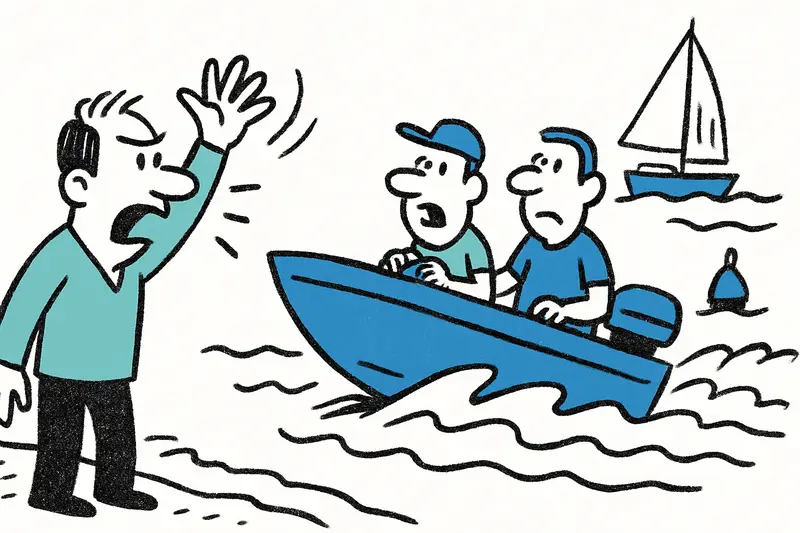
On a hot Saturday afternoon, the sun blazing, seagulls screaming and the hum of small outboards mixing with laughter on the beach: that's how it looked again recently in front of Trouble in Es Carbó: How many boats can the small bay handle?. Two five-metre boats sped side by side through the bathing zone, swimmers waved alarmed, some shouted loudly: “Slow down!” Such scenes have become more common in recent weeks – not only here, but in several popular coves on the island.
The central question
Who bears responsibility when license-free rentals meet overcrowded coasts? It sounds bureaucratic, but it is the crucial question for the safety of people and the future of sensitive coastal ecosystems.
Problems that often go unnoticed
The business model is simple: Drunk Boats, Battered Bays: When Private Boat Rentals Put Mallorca's Coasts at Risk. Convenient for holidaymakers, lucrative for renters. But convenient does not automatically mean safe. Many guests receive at best a brief introduction, if any at all. Language barriers, alcohol, holiday mood and time pressure on weekends are a bad mix. Result: unsafe manoeuvres, collisions with buoys or smaller yachts and frightened swimmers.
“I have no idea how to moor properly,” says Manuel from Port d’Andratx, who often does patrols with his sailboat in the evenings. He describes a recent manoeuvre: a renter missed the gap while docking, brushed two marker buoys and left a track through the Posidonia meadow that you normally only see on calm cruises.
The silent damage: Posidonia and marine life
What you don't see directly on the beach makes the situation more serious: the seagrass meadows (Between Waves and Berth: Mallorca's Problem with 'Floating Holiday Rentals') suffer from reckless anchoring and repeated propeller tracks. These meadows are not mere decoration – they are habitat, erosion protection and water filters at once. Their destruction has long-term effects on fish, beach quality and thus the attractiveness for tourists.
Why simple solutions are not enough
A blanket ban on license-free boats would solve some problems, but is politically and economically sensitive: for many small renters these boats are a source of income, for tourists an affordable access to the sea. In addition, there is a shadow economy: informal rentals and towel-for-trips offers that are hard to control. This difficulty is reflected in cases such as Conflict in Banyalbufar's Cala: When Is Enough Boat Traffic Too Much?.
Critics demand clear, practicable measures
On site we repeatedly hear the same demands: mandatory briefings, clearly marked bathing, anchoring and traffic zones, reduced speed limits near the coast, increased checks on weekends and during peak season as well as age or experience limits for renters. Some council members also discuss digital solutions: short online tests before rental, mandatory GPS tracking for rental boats or a central registration of all providers.
What authorities and renters are doing
The port authority is monitoring the situation and examining possible measures. Some renters have already reacted: mandatory 15- to 20-minute briefings, simple safety trainings and information about local flora and fauna are being offered more frequently. That is positive, but often voluntary – and not always enforceable when customer demand is high.
Proposals that would have an impact
Concrete, implementable steps could help bridge the gap between safety and economic viability:
1. Mandatory short briefing: A compulsory 20-minute briefing including a safety check, docking manoeuvres and local rules – also possible via video in several languages.
2. Zoning: Clearly visible separation of bathing, traffic and anchoring zones, complemented by temporary closed areas on heavily frequented weekends.
3. Speed limits and controls: Lower speed limits near beaches and targeted checks by port police or municipal boats on critical days.
4. Digital traceability: GPS trackers for rental boats or mandatory logbooks make it easier to investigate damage and help identify patterns of misconduct.
5. Awareness and incentives: Training for renters, badges for responsible providers and reduced insurance premiums for properly trained renters can create incentives.
An appeal from the harbor
On the jetty in Port d’Andratx I met a retiree who was quietly looking out to sea and said: “We need rules that protect everyone – not just sanctions, but clear guidance.” She is right. It is not about closing access to the sea, but about making it safe and sustainable.
Whether stricter laws will come or more self-responsibility from renters will emerge – time will tell. Until then: anyone renting a boat should ask twice whether a briefing is provided. And anyone who rents, please drive more slowly, listen to the water, respect the reed beds and the people on the beach. Our coves are loud on summer days – but they don't like horns, ramming or rapid getaways.
Frequently asked questions
Are licence-free boat rentals in Mallorca safe for beginners?
What should I check before renting a boat in Mallorca without a licence?
Why are Mallorca's small coves becoming a problem for boat traffic?
What is Posidonia and why does it matter in Mallorca?
What rules would make boat rentals safer in Mallorca?
Is Es Carbó in Mallorca affected by overcrowded boats?
What should I do if a rental boat in Mallorca enters a bathing zone?
When is the best time to rent a boat in Mallorca to avoid crowds?
Similar News

First Day, First Consequences: What Palma's Rent Freeze Really Means
A new decree stops a planned eviction in Palma — but what really changes for tenants and landlords? A reality check with...

When Housing Becomes a Matter of Survival: Mallorca Between Rental Frenzy and Everyday Life
The case of 87-year-old Maricarmen showed that on Mallorca many people's lives are poised between affordable and uninhab...
Autumn in Mallorca: When Melancholy Gets a Window
Why autumn quietly tightens here — and how to make use of the mood: walks, culture, candles and the light from Palma to ...
Near-miss on Lanzarote: Landing Ryanair Jet and Iberia Takeoff — what really went wrong
On Lanzarote there was a dangerous incident: A Ryanair flight (FR5910) from Dublin landed on runway 03 while an Iberia E...

Eurowings introduces new Premium Business seats on Mallorca routes
From December 1, selected Eurowings flights to Palma and other destinations will feature eight particularly generous sea...
More to explore
Discover more interesting content

Can Cap de Bou

Townhouse Lleo 72
