
Mallorca as a Transit Point for Cartels: Who Controls the Coast?
Mallorca as a Transit Point for Cartels: Who Controls the Coast?
Speedboats, container transfers, cocaine storage: The security agencies' report paints a picture of growing professionalism among smugglers. What is missing from the public debate?
Mallorca as a Transit Point for Cartels: Who Controls the Coast?
Key question: Why are the Balearic Islands increasingly used as a transhipment point, and what can island society do about it?
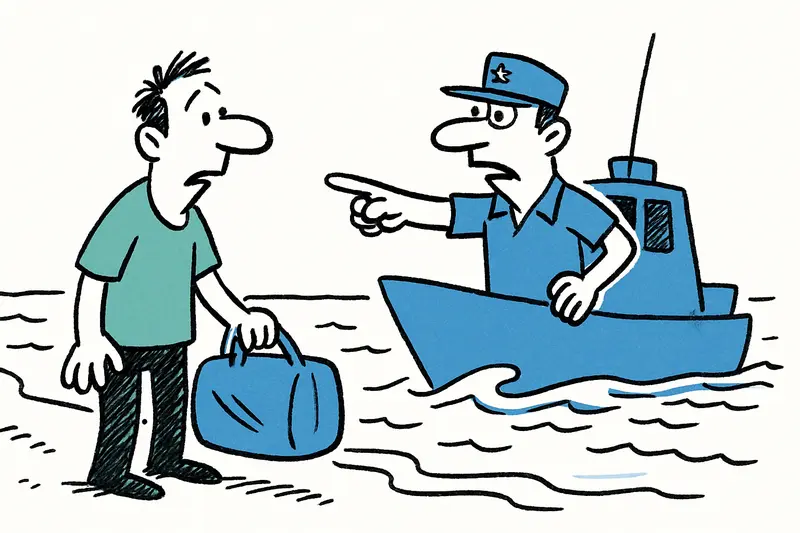
On a late morning at the Passeig Marítim, a swell draws the boats into a calm, almost routine display: sailors stow lines, waterfront cafés fill with regulars, and in the distance the drone of a patrol boat cuts through the air. These everyday scenes sit alongside a less visible but persistent problem: ferries, freighters and fast runboats now form part of a transnational network that establishes temporary storage on the islands.
The facts from the security agencies' situation report are clear, as documented in a raid on Mallorca: as early as 2020 an unattended 7.5-metre fast boat was discovered; in later years several tonnes of hashish were seized, including a find of 8.3 tonnes, and authorities stopped transports containing hundreds of kilograms of cocaine. In summer 2025, for example, a truck carrying 675 kilograms of cocaine was intercepted, reportedly having been stored on the islands. Such figures indicate a shift in tactics: cocaine is increasingly delivered on container ships and then taken over at sea by fast boats before the cargo is staged on islands or forwarded directly to France and Italy.
This change is not merely a technical adaptation. Investigators observe a professionalization: boats are technically upgraded, there are specialised mechanics working on hulls, and groups use remote coves as temporary storage sites. The rugged coastline of the Balearics, with its many small inlets and scarcely monitored landing spots, plays into the smugglers' hands.
At the same time, readiness to use violence is increasing. The security situation has grown more serious: operations against fast boats have not been without consequences, and several officers have died during actions. The risk for men and women in uniform rises, as does the danger for civilian boaters, beachgoers and coastal residents who happen to be near landing sites.
Critical analysis
Authorities see a causal chain: intensified policing pressure on conventional routes, bans on certain speedboats and the cartels' search for new ways. The networks' response is logical: they relocate, they fragment shipments, they use transhipment points. For Mallorca this is less a sudden problem than a gradual but profound change in the role of the islands within the drug trade.
It is important not to view this development solely as a "policing issue." It is a logistical puzzle: port logistics, surveillance of territorial waters, control of small coves, information from freight traffic, and cooperation with neighbouring states – all of these must work together, as seen after large-scale raids in Palma, Inca and Binissalem. Missing or poorly coordinated elements leave gaps that criminal structures exploit.
What is often missing in the public discourse
First: the discussion usually revolves around spectacular seizures – numbers, images, arrests. Too rarely does it address prevention and the question of how containers, logistics companies and small charter operators can be better integrated into situational awareness, as highlighted by reporting on the security gaps at Playa d'en Bossa. Second: the protection of officers and the equipment of the coast guard are insufficiently debated. Third: the role of local actors – fishermen, dockworkers, small marina operators – is often left out, even though they could provide crucial tips.
Everyday scene
A fisherman from Cala Figuera usually speaks not in an official tone but with resigned calm: he used to worry about the weather; now he watches for unusual deliveries in secluded coves. At the beach bar counter in Cala Millor you hear similar stories in the evening: guests who have seen unusual boats, or a charter captain who reported nocturnal repair work on a hull. These anecdotes are no substitute for investigations, but they are valuable puzzle pieces.
Concrete solutions
1) Better maritime sensors: expand radar stations at strategic points, deploy drones to complement patrolling ships, and modernise AIS data analysis to detect false identifiers. 2) Container intelligence: closer cooperation between port authorities, customs and freight companies, targeted spot checks and digital cross-checking of cargo documents. 3) Local reporting systems: a low-threshold hotline and apps for fishermen and coastal residents, combined with protection mechanisms for informants. 4) Protection and training for officers: specialised training for maritime operations, better protective equipment and clearer operational protocols. 5) International coordination: bilaterally coordinated operations with France, Italy and the mainland, plus intensified monitoring of shipping on the high seas where handovers take place.
Concise conclusion
Mallorca stands not only for sun and tourism; the island is part of a larger maritime picture in which container ships, speedboats and secluded coves serve as spaces for criminal logistics. Security agencies are doing visible work, but the gaps in the system are technical, legal and social. Those who focus only on spectacular seizure figures overlook the quiet, daily signs and the long-term investments that are needed.
If island society wants beach kids and charter sailors to continue to drink their coffee by the sea without worry, the answer must be clear now: better sensors, more networking, greater protection for investigators and stronger inclusion of the people who know the sea best.
Frequently asked questions
Why is Mallorca being used as a transhipment point for drug trafficking?
What signs can residents and boaters in Mallorca look out for near secluded coves?
How serious is the drug-smuggling problem around Mallorca?
What makes Mallorca’s coastline difficult to police?
Is Mallorca still safe for beachgoers and sailors near the coast?
What can Mallorca’s local fishermen and marina staff do if they see something suspicious?
What kind of police and coast guard measures are needed in Mallorca?
Why do cartels choose Mallorca instead of going directly to mainland Europe?
Similar News

Rental Car Theft in El Arenal: What This Incident Reveals About Our Gaps
A teenager steals a running rental car in El Arenal, flees on foot, climbs over walls and is caught by the Guardia Civil...
Red Rope in Palma's Library: What Helps Against Selfie Tourism — and What's Missing
Palma's city library cordoned off an area with a red rope to keep selfie tourism away from reading and working activitie...
Fort San Carlos: Museum, Harbor Dispute — and a Conflict That Demands Answers
The military museum at Fort San Carlos sits right on Palma's harbor, with unexpectedly quiet rooms filled with cannons a...

Old Town Under Pressure: When a Doorway Becomes a Sleeping and Shower Place
For months a woman has been living with a parasol, a clothes rack and personal belongings next to the social welfare off...

When Shopping Weighs Heavier: Mallorca Demands a Tax Pause on Food and Fuel
Rising prices are putting pressure on households and agriculture. The Balearic Islands are calling for temporary tax rel...
More to explore
Discover more interesting content

Can Cap de Bou

Townhouse Lleo 72
