
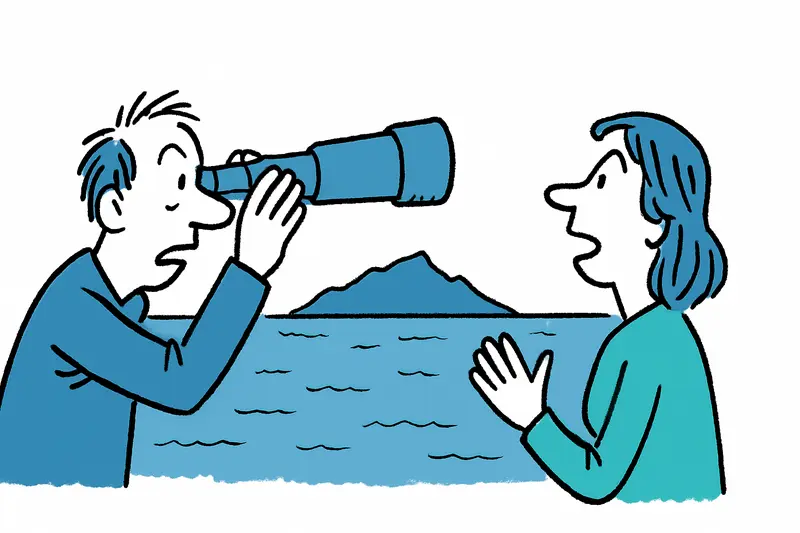
Rare Natural Cinema: Mallorca Above the Sea – Visible from Barcelona
In very clear morning light, observers on the coast of Barcelona were able to make out the silhouette of Mallorca on two consecutive days — a brief, surprising spectacle over some 200 kilometers of sea.
A brief moment many won't forget
In the early morning, while the streetlights still glowed and the cafés in Barceloneta were just opening, some walkers saw something you don't see every day: the outlines of Mallorca on the horizon. Not as a shimmering hint, but as a recognizable silhouette in reddish-orange tones. The spectacle repeated on two consecutive days — enough time for curious people to pull out their phones and take photos.
How is this possible?
Such long-distance views require perfect ingredients: very clear air, almost no haze, no clouds and little light on the sea. Meteorologists from the Barcelona observatory explain that in these moments the atmosphere acts like a crystal-clear window. For a few minutes, contours become visible that would otherwise disappear in the haze. The distance between the two coasts is about 200–210 kilometers — not just a speck on the horizon, but a real piece of land when conditions are right.
Those who stood that morning on the Passeig de Mallorca or at Port Vell heard the soft murmur: "Is that really Mallorca?" Some described the colors as a warm dawn red, others as fading copper, echoing Mallorca's evening sky in red and orange. Particularly striking was the line of the Tramuntana mountains, which stood out clearly against the flat sea.
A small geography update for conversation
By comparison: a flight between Palma and Barcelona usually takes 25 to 40 minutes. The fastest ferry connection, for example from Alcúdia, takes about three and a half hours; with a private sailing yacht you should reckon in days — roughly 20 hours. Such figures help to better grasp the spatial distance when the island suddenly appears on a foreign horizon.
For many, the event was a welcome break from the gray everyday life. On promenades people exchanged memories of similar sightings from past winters; some older residents said such things happened "more often before", before the air became hazier, as noted in reports on seeing the Northern Lights over Mallorca. Others took practical photos: the best shots around 7:15 a.m., when the light is lower and contours appear sharper.
Although the spectacle was brief, it remains a topic of conversation in small bars and at bus stops. Such natural moments do good — they remind us how connected land and sea are despite the distance. And who knows: on the next clear morning you might look out to sea and be surprised again.
Frequently asked questions
Can you really see Mallorca from Barcelona?
What weather conditions make Mallorca visible from the mainland?
Why does Mallorca sometimes look reddish-orange at sunrise from Barcelona?
What is the best time to photograph Mallorca from Barcelona?
How far is Mallorca from Barcelona?
How long does it take to get from Barcelona to Mallorca?
Where in Barcelona is Mallorca most likely to be seen?
Is it normal to see the Tramuntana mountains from Barcelona?
Similar News
Palmanova: Bathers rescue unconscious man — but questions remain
In the morning, an approximately 65-year-old man was pulled unconscious from the water off the coast of Palmanova. Rescu...
Arrests after Beach Thefts: How Safe Are Mallorca's Beaches Really?
After a large-scale operation, 19 suspects were arrested. The case raises questions: why were thieves able to strike for...
No more tap water in Cala Millor – what happens when the tap runs dry?
Sant Llorenç del Cardassar has cut fresh water services at beaches due to the drought and issued further usage bans. Who...

Trash everywhere at Consell–Alaró station: Why the mess doesn't just disappear
The station between Consell and Alaró is full of bottles, bags and littered fences. Who is responsible remains unclear —...

When coercive fines aren't enough: Could holiday rental owners soon face prosecution?
The island administration is stepping up action against unauthorized holiday rentals: high daily coercive fines up to €5...
More to explore
Discover more interesting content

Can Cap de Bou

Townhouse Lleo 72
