
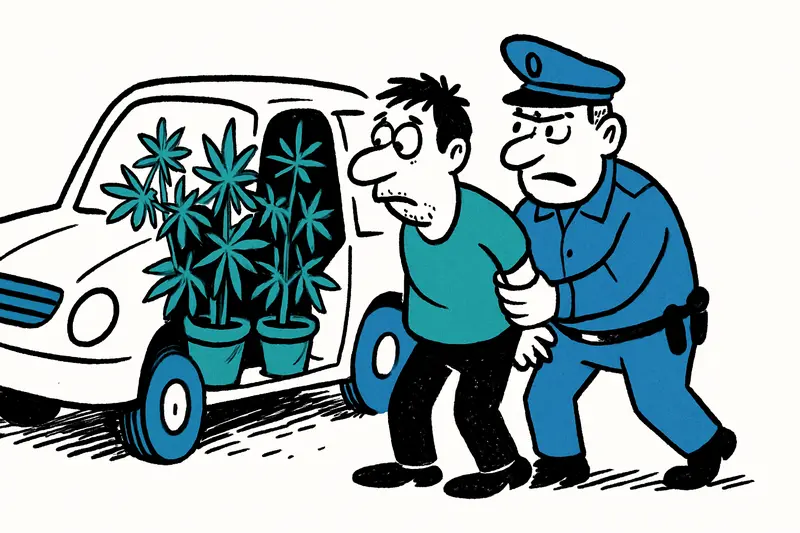
Plants in the trunk: Arrest in Colonia de Sant Jordi raises questions
A 35-year-old man was arrested in Colonia de Sant Jordi with five full-grown cannabis plants in his car. Why such findings will require more than just police work in the future — a look at impacts, open questions and possible solutions for the community.
When the petrol ran out — and the scent revealed what was really in the car
Late in the afternoon, just before 5:30 p.m., a car stopped in Colonia de Sant Jordi. The driver said he had run out of fuel. The Guardia Civil arrived, but instead of a simple breakdown the officers were met with a strong smell of marijuana as they approached. Sunset, a light sea breeze, and suddenly there was a stir on the otherwise quiet beachfront promenade.
Five large plants — not holiday flowers
During the search, officers found a total of five mature cannabis plants in pots in the trunk and on the back seat. Well cared for, too large to be a spontaneous souvenir. The 35-year-old was arrested on the spot and later taken to the station. The car was left behind and towed away, while a few passersby stopped to watch — some curious, others with the typical Mallorcan shrug.
Main question: What does such a find say about the situation on the ground?
The incident is more than a police report. It raises the question: How common is private cannabis production here — and how does the small community deal with it? Is this a one-off crime, a hidden market inland on the island, or simply the end of a private but illegal hobby? The answer matters for the police, but above all for residents and local politics. It is also relevant to determine where the plants came from and whether similar cases have occurred in the region — for example, Drug discovery on a ferry from Barcelona: Three arrests in Palma and the questions that remain.
Aspects that are rarely discussed
First: neighborhood dynamics. Colonia de Sant Jordi is not an anonymous place — people see and hear one another. Still, illegal activity can remain under the radar for a long time because many want to maintain appearances or are afraid of conflict. This can also be seen in other local operations such as Raid in Son Oliva: Three Women Arrested – Are Cannabis Clubs Just a Front for Trafficking?. Second: environmental issues. Indoor or balcony cultivation brings fertilizer, waste and sometimes chemicals that can quietly contaminate drains or soils. Third: police resources. Such a find ties up not only officers on site but also forensic teams, administration and storage space for seized plants, and cases like Drugs at the wheel in Cala Ratjada: One crash, many questions also consume resources.
What the investigation must clarify now
The Guardia Civil is currently examining whether this is possession, cultivation or trafficking. That may sound technical, but it has concrete consequences: different classifications lead to different penalties and different investigative paths — for example, the question of whether other people or supply chains are involved, and whether matters could escalate into larger operations such as the Arrest of 'El Indio' in Palma: A Step Forward with Many Questions. It is also relevant to determine where the plants came from and whether similar cases have occurred in the region.
Concrete opportunities and approaches
1. More transparency and communication: Regular, clear information from the local police could curb rumors and reassure neighbors. Not every arrest needs to be sensationalized, but clarification helps.
2. Strengthen neighborhood networks: In small towns like Colonia, good community relations often help. Neighborhood groups, local WhatsApp chats or town meetings can collect tips and enable a faster response — without immediately fostering distrust.
3. Prevention and harm reduction: Where private use exists, information on legal risks, disposal of plant waste or safe handling of fertilizers would be useful. It sounds unromantic, but it helps both the environment and public health.
4. Review resources: Local authorities should review with the Guardia Civil whether current capacities for forensic work and investigations are sufficient — especially in months with higher traffic and tourism influence.
Old coastal road, new challenges
On the road in Colonia de Sant Jordi, a few locals still sat on the low walls, the last rays of sun reflecting on the sea. Such scenes show that the town remains calm at its core, yet incidents like this are a reminder that quiet streets can also hold surprises. For those involved, the consequences can be serious; for the community, the task is to combine openness and safety.
Anyone who saw something should contact the Guardia Civil — matter-of-factly, not sensationally. That is the best way to turn rumors into facts and draw the right conclusions.
We will continue to follow the story and report as soon as the authorities confirm more details.
Frequently asked questions
What should I do if I smell cannabis near a car or property in Mallorca?
Is private cannabis cultivation a police issue in Mallorca?
Why do police pay attention to cannabis plants found in a car in Mallorca?
What happens after a drug-related arrest in Mallorca?
Is Colonia de Sant Jordi usually a quiet place?
Can police in Mallorca tow a car after finding illegal plants inside?
How common is cannabis cultivation in smaller towns in Mallorca?
What should residents in Colonia de Sant Jordi do if they notice suspicious activity?
Similar News

Palma's Subway Project: Environmental Review Begins — More Questions Than Answers
The environmental review for Palma's planned subway extension to Son Espases has started, raising concerns and unanswere...

When Tents Return by the Sea: Palma Between the Congress Palace and Sleeping Places
Tents repeatedly appear in Albert Camus Park and on the beach at Can Pere Antoni. Why don't evictions solve the problem ...
Alleged Rape in Palma: How Home Videos Changed the Investigation
A woman reports an assault in Palma. Secretly recorded videos are said to have supported her account. Why migrant women ...

After Major Partners Exit: Palma Rewrites the Rules for the Waterbus
The port authority has changed the rules for the planned waterbus: removal of rigid minimum revenue guarantees, higher u...
Rats in Llucmajor: How Uncollected Garbage Became a Health Problem
In Llucmajor, uncollected trash bags, overflowing containers and rain are leading to increased rat sightings. An assessm...
More to explore
Discover more interesting content

Can Cap de Bou

Townhouse Lleo 72
