
Raid in Son Oliva: Three Women Arrested – Are Cannabis Clubs Just a Front for Trafficking?
In Son Oliva the National Police dismantled a cannabis club. Three women are in pretrial detention. An analysis: what do we know, what's missing from the discussion, and how can Palma respond?
Raid in Son Oliva: Three Women Arrested – Are Cannabis Clubs Just a Front for Trafficking?
Key question
How deeply rooted is illegal sales activity in so-called cannabis clubs and what is missing from Palma's approach to the issue?
What happened
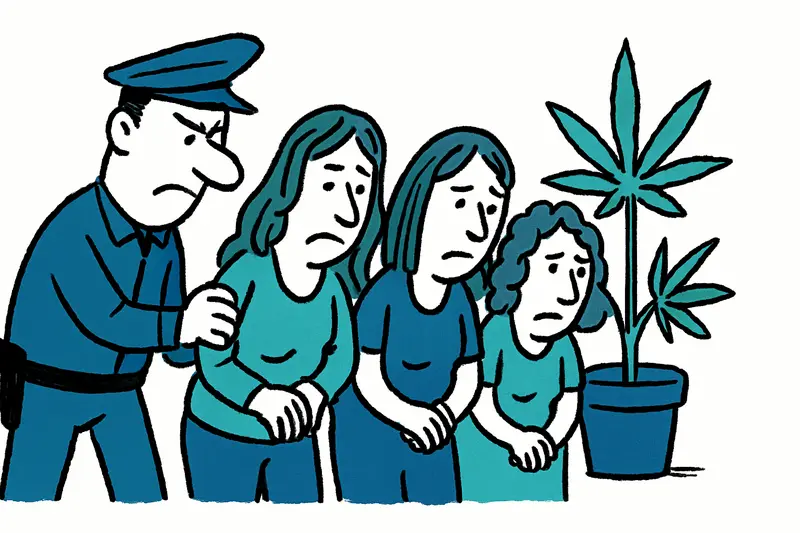
The National Police raided a club room in the Son Oliva district. Three women were arrested on suspicion of drug trafficking. During the search, officers found around a dozen people consuming on site. Seized were about 300 grams of marijuana, roughly 200 grams of hashish, about 50 pre-rolled joints, hash oil and other high-THC products. The police also confiscated nearly €3,000 in cash, several scales, distribution equipment and surveillance cameras, apparently used to monitor operations in the club. The investigation took place in the context of inquiries into organized drug trafficking; a search warrant was obtained based on tips from third parties (Raid on Mallorca: Network of Drug Trafficking and Money Laundering Shakes Palma and Surroundings).
Critical analysis
At first glance the pattern is familiar: a space that looks like a private room but functions as a distribution point. The quantities seized and the technical equipment indicate less of a private-use situation and more of an organized operation. It remains puzzling how such spaces can remain undiscovered for so long. Inspections, complaints from neighbors or targeted investigations sometimes lead to New Raid in Mallorca: More Arrests — But Are the Roots of the Problem Untouched? — but they only intervene once the structures are already in place.
What is often missing from the public discourse
There is a lot of reporting on police operations, but little on the causes: why do these offers emerge in neighborhoods like Son Oliva? Rent prices, precarious working conditions, demand from tourists and locals and a legal gray area certainly play a role. Voices from the neighborhood and data on how many club rooms are actually commercially active are also lacking. Equally missing is a clear debate on harm reduction: controls alone do not eliminate supply, they at best shift it.
Everyday scene from Son Oliva
On a cool afternoon: an EMT bus rattles down the main street, the bakery on the corner smells of ensaimada, two older women discuss their shopping list. Near the club building, residents have observed for months that people come and go in the evenings, sometimes with backpacks, sometimes alone. The sound of children laughing at the playground mixes with occasional engine noise — the neighborhood wants safety and quiet, not a haven for illegal trade.
Concrete solutions
- Better information channels for residents: clear guidance on how and when to anonymously report tips to the authorities (antidroga@policia.es, www.policia.es or 091) without fear of reprisals.
- Municipal monitoring offices: closer communication between the city administration, police and property managers so that suspicious uses are identified more quickly.
- Moderate the regulatory discussion: instead of only banning, the island should examine whether controlled, registered forms of cannabis clubs with strict conditions would make abuse more difficult. This requires political debate and legal clarification.
- Social projects and prevention: low-threshold addiction counseling in the neighborhoods, multilingual education and services for those affected to reduce demand and stigma.
- Complement controls with forensics: anonymously accessible drug-checking centers can detect acute dangers from highly concentrated products and thus prevent health harm.
Why Palma should act
A sole focus on raids only addresses the tip of the problem. Palma needs coordination: police, city hall, neighborhood associations and health services must share information and develop strategies together. The balance is difficult: after all, public consumption and private cultivation of cannabis are prohibited in Spain — yet the reality is more complex than a simple legal violation.
Conclusion
The raid in Son Oliva is a clear signal: illegal distribution structures exist even in seemingly quiet neighborhoods (see Major raid in Palma and Son Banya: How extensive is the network behind the 17 arrests?). But: regular operations alone do not solve the problem. Palma needs more precise instruments, open neighborhood channels for reporting grievances and a factual debate about possible regulation and prevention models. Son Oliva wants its peace back — and answers that are more than just police sirens.
Frequently asked questions
Why do some cannabis clubs in Mallorca end up being linked to drug trafficking?
What was found during the police raid in Son Oliva, Palma?
Can residents in Mallorca report a suspected drug house or cannabis club anonymously?
Why is Palma worried about illegal cannabis sales in neighborhood clubs?
Is cannabis legal in Mallorca if it is used inside a private club?
What signs can suggest a cannabis club in Mallorca is operating illegally?
What do Mallorca authorities say is missing from the response to illegal drug sales?
Why is Son Oliva in Palma mentioned in relation to cannabis trafficking?
Similar News

Maribel: Five Decades of Service – Housekeeper from Peguera Celebrated with a Special Honor
Over 50 years in the hotel business: María Isabel “Maribel” Molinos was honored in Palma at the Nit del Turisme by Unive...

Orange Alert over Parts of Mallorca: Are We Prepared?
Dark clouds and an announced wet spell have triggered an Orange alert in parts of Mallorca. A reality check: what's miss...

Sundair & Co.: Sale speculation and what it could mean for Mallorca
Rumors about a possible sale of the airlines Sundair and Fly Air 41, which belong to Schauinsland-Reisen — and whether b...
Anne Wünsche in Mallorca: A job offer with a catch — who fits the role of personal assistant?
Influencer Anne Wünsche has left Berlin and is urgently looking for a full-time personal assistant in Mallorca. Why the ...

Daily from New York: Palma Between Boom and Strain
United will increase the Newark–Palma route to daily flights in 2027 using Boeing aircraft (231 seats). What does the in...
More to explore
Discover more interesting content

Can Cap de Bou

Townhouse Lleo 72
