
Mask Recommendation in the Balearic Islands: Sufficient Caution or Too Vague?
Mask Recommendation in the Balearic Islands: Sufficient Caution or Too Vague?
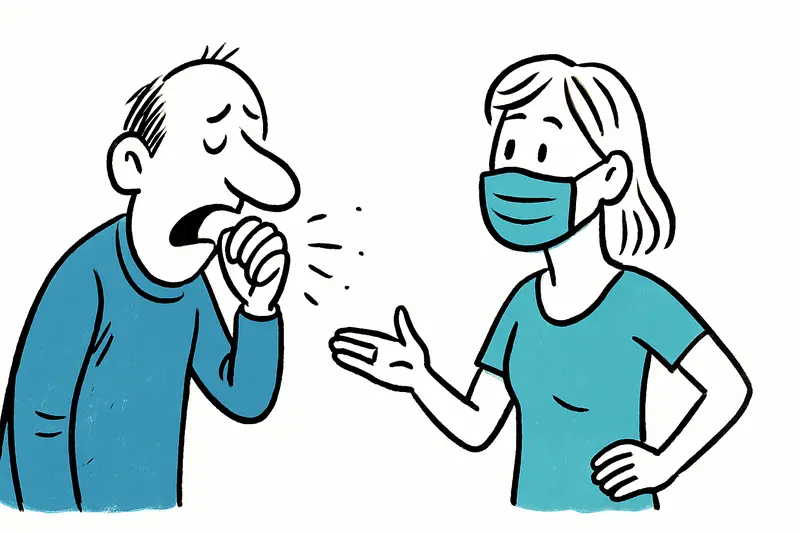
The Balearic health authority advises people with cold or flu symptoms to wear a mask when in contact with at-risk groups. A reality check: is that enough — and what is missing specifically in Mallorca?
Mask Recommendation in the Balearic Islands: Sufficient Caution or Too Vague?
Key question: Is recommending that only people with symptoms and those in contact with at-risk groups wear a mask enough to noticeably cushion a flu wave in Mallorca?
Critical analysis
Since 4 December 2025, the Balearic Islands' recommendation on masks is that people with cold or flu symptoms wear a mouth-and-nose covering when in contact with at-risk groups. At the same time, the Spanish Ministry of Health in Madrid has adopted a national action plan with four risk levels that regions can adapt individually. On paper this sounds like a graduated approach. In practice, however, much remains vague: a recommendation is not a rule, and without clear communication and concrete implementation steps it only reaches those who are already cautious.
On the ground in Palma you can see this: at the Mercado de l'Olivar someone coughs under the apple stall, on bus line 3 commuters exchange quiet sentences, and in the café on Passeig del Born an older woman sits alone with her coffee — but a clearly visible request to keep distance or to provide masks is often missing. Such everyday scenes show that recommendations can easily be drowned out by the city's noise level.
What is missing in the public discourse
The debate focuses primarily on whether masks are recommended or mandatory. More important would be to openly discuss how the recommendations are to be put into practice: Who provides masks for residents of care homes? How are employees in the health and service sectors informed and protected? What role do employers play when staff with symptoms still go to work — because they cannot afford to stay away? All of this often remains unmentioned.
Equally thin is the discussion about testing, vaccination offers and targeted protective measures for particularly vulnerable groups. The four risk levels of the national plan provide a framework, but say little about what concrete measures should apply in schools, markets or nursing homes if case numbers rise.
Specific weaknesses in Mallorca
In practice, clear signs are often missing at busy public places — markets, port facilities, airport transit areas. Pharmacists report that medical masks sell out faster when a new wave is announced. In rural municipalities, where bus connections are sparse and personal contacts are more important, the spread of information is slower. It is also unclear whether there are short-term supply plans for high-risk facilities, such as nursing homes or social centers in the island's interior.
Concrete solution approaches
1) Clear signage at places with public traffic: markets, ports, bus stations and town halls need clear, multilingual notices — German, Spanish and Catalan — indicating when and for whom a mask is recommended.
2) Free masks for those at particular risk and in care facilities: a short-term distribution via pharmacies or mobile teams would close gaps.
3) Employer rules and short-term sick leave: clear guidelines, combined with pragmatic financing for small businesses so symptomatic employees can stay at home without existential worries.
4) Focus on workplaces with close customer contact: bus drivers, market sellers and care staff need priority information, protective equipment and, where possible, air filters or regular testing.
5) Local information campaign: radio spots, posters in Palma neighborhoods (for example in Avinguda d'Argentina) and information actions at weekly markets reach many people directly.
6) School concepts: no blanket panic, but clear rules on how to act in case of cases in classes — masks, temporary distancing measures, communication to parents.
Everyday scene as a reminder
A Tuesday morning in Palma: a fruit seller at the Plaça de la Llotja puts on a mask as an older man with a cough approaches. Nearby, a mother is on the phone with her child's teacher, asking nervously whether there was an infection case in the class today. Such small episodes show: caution is possible if local structures and clear information are in place.
Punchy conclusion
The Balearic health authority's recommendation is a sensible step — but it remains incomplete as long as it is not accompanied by pragmatic measures. A mask mandate is not the only answer; more important is that the island administration, municipalities, employers and health centers bridge the gap between recommendation and everyday life. Otherwise caution risks remaining just a good intention.
Frequently asked questions
Is a mask recommendation enough to slow a flu wave in Mallorca?
When should people in Mallorca wear a mask during flu season?
What is missing from the current mask debate in the Balearic Islands?
Are masks still important in Palma’s busy public places?
Should care homes in Mallorca get special mask protection during a flu wave?
What should employers in Mallorca do if staff have flu symptoms?
How are schools in Mallorca supposed to respond if flu cases rise?
Where can people in Mallorca find clearer mask information locally?
Similar News

Palma: Car Flips Over – Seniors Rescued, Questions About Traffic Safety
On a major arterial road in Palma, a car flipped onto its roof after a heavy collision. An elderly couple was freed and ...
Calvià opts for style over rowdiness – a plan for year-round, diversified tourism
Calvià wants to shake off Ballermann images by 2030 and boost hiking, sports, culture and gastronomy tourism. Hotels, th...

Autumn Is Coming — When the Rain System Will Cool Mallorca and What We Must Learn
AEMET warns: the chance of rain increases on Thursday and Friday — temperatures will fall. An opportunity to prepare our...

Eurowings in Palma: Expansion, Approval Chaos and the Reality Test for Island Planning
Eurowings is significantly increasing its presence in Palma and is even considering technical maintenance on site. The i...

A.M.Y.: Between Finca, Cornfield and Schoolyard – a 13-Year-Old Who Gets Mallorca Humming
With sunglasses, a rock guitar and the courage to sing over nagging voices: Amy Horber, 13, lives with her family on Mal...
More to explore
Discover more interesting content

Can Cap de Bou

Townhouse Lleo 72
